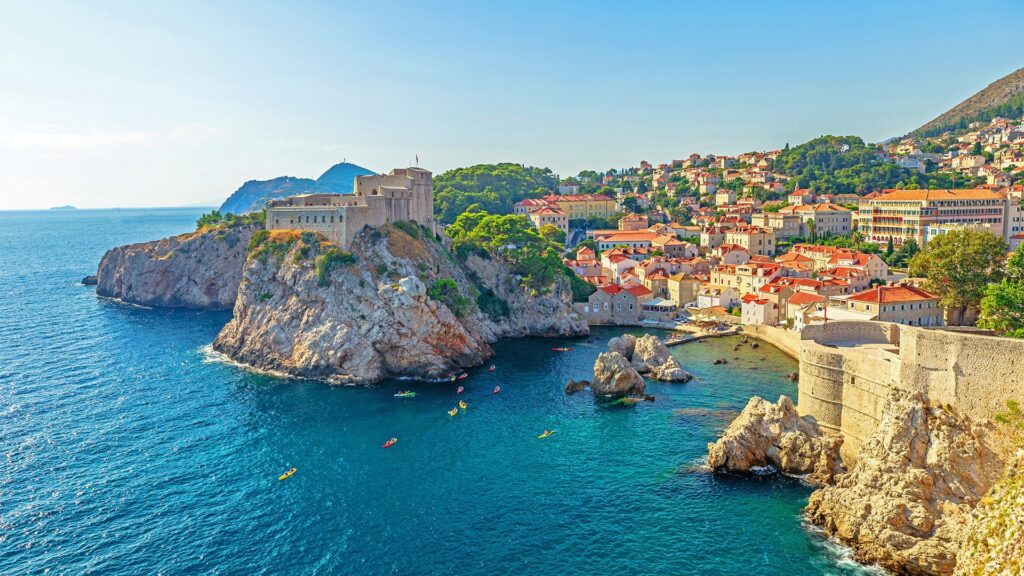
Split and Zadar suit an off-season break built around museums, historic streets and everyday city life. Rovinj and Poreč offer a smaller Istrian setting, while Šibenik combines a stone old town with fortress viewpoints. Dubrovnik makes sense when its walls and architecture are the main reason for travelling.
Choosing coastal towns in Croatia to visit off-season depends on more than visitor numbers. Spring and early autumn can support a varied outdoor holiday; winter calls for a more selective itinerary, with shorter opening hours and fewer seasonal services. The best base is somewhere you would still enjoy if a boat trip were cancelled or an afternoon turned wet.
Explore This Guide
TogglePlanning an Off-Season Coastal Break
Quick Planning Answer
- For a winter city break: Choose Split for Roman sights and a three-night stay. Choose Zadar for a shorter break centred on the old-town peninsula, waterfront and museums.
- For an Istrian weekend: Choose Rovinj for old-town walks and nearby forest paths, or Poreč for the Euphrasian Basilica and a compact historic centre.
- For fortresses and mainland excursions: Consider Šibenik, allowing for steps and seasonal access arrangements at nearby attractions.
- For a landmark-focused break: Choose Dubrovnik, keeping island excursions optional.
- For trip length: Allow two or three nights in one base. A week is better spent within one region than trying to cover the entire coast.
Shoulder Season and Winter Are Different Trips
There is no single off-season experience along the Croatian coast. Spring and early autumn generally give more scope for combining sightseeing, longer walks and excursions, although holidays and popular weekends can still attract visitors. September, in particular, should not automatically be treated as quiet low season.
Winter puts the emphasis on architecture, museums, food and short outdoor outings between changes in the weather. Seasonal restaurants, resort facilities and excursion services may close. A central address becomes more useful when the beach is no longer the focus of the holiday.
Coastal winters can bring rain and strong winds. Bura and jugo can affect exposed walks and maritime transport, so a sunny photograph is a poor guide to what to pack. Bring layers, a waterproof outer jacket and shoes with grip for wet stone paving.
Swimming should be a bonus rather than the reason for an off-season booking. Early autumn may suit sea swimming when conditions allow; spring sunshine does not mean the water has warmed to summer temperatures. For dependable pool time, confirm that the accommodation has an indoor pool open during your stay.
For more on weather and choosing a winter base, see the guide to visiting Croatia in winter.
1. Rovinj for Old-Town Walks and Coastal Nature
From the Harbour to St. Euphemia
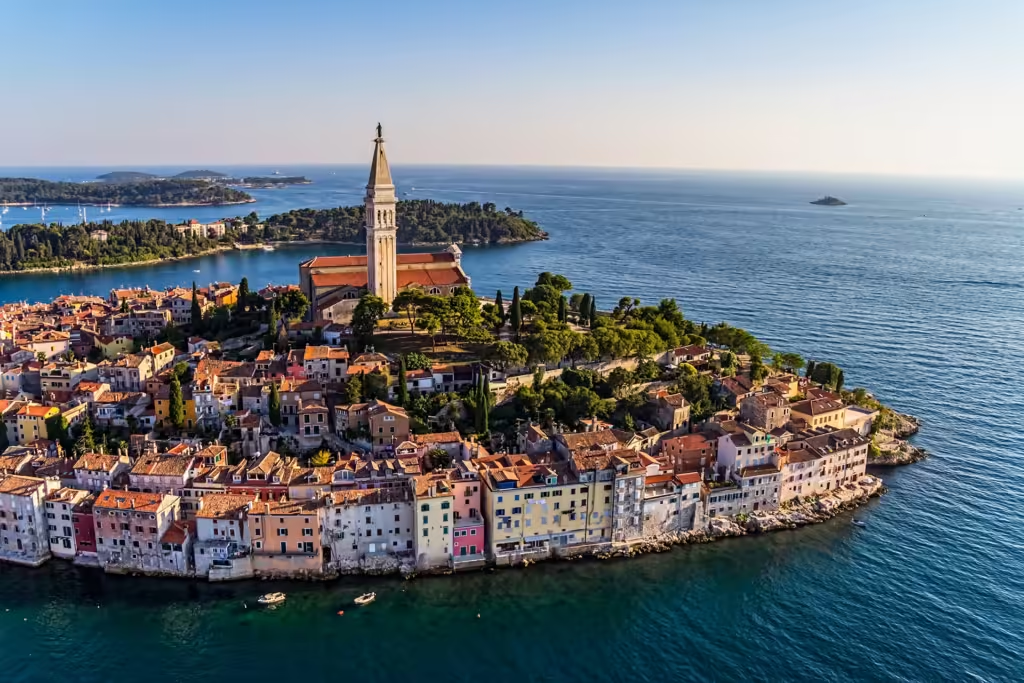
Rovinj suits couples and independent travellers who enjoy exploring a compact town without filling every hour with attractions. Its old centre rises towards the Church of St. Euphemia, with narrow lanes, steps and harbour views shaping a natural walking route.
Start around the harbour, head through the historic streets and climb towards the church. The old town is uneven and sloping, so a waterfront address can be more convenient than a room high on the peninsula when travelling with luggage or limited mobility.
Coastal Walks at Golden Cape
Golden Cape Forest Park, also called Zlatni rt or Punta Corrente, adds a different kind of outing south of the centre. Its tree-lined paths and coastal setting make it useful for a dry-weather walk when swimming is not part of the day.
Rovinj is a good choice when the town itself and its surroundings are enough to sustain the break. For winter visits, avoid relying on a long list of galleries, seasonal shops or boat excursions to fill the itinerary. Two nights allow time for both the historic centre and a separate coastal walk.
2. Poreč for Mosaics and an Istrian Base
Poreč has a clear cultural focus: the UNESCO-listed Euphrasian Basilica complex and its early Christian mosaics. Build the visit around that monument, then explore the old streets around Decumanus and Marafor before walking along the waterfront.
Visiting the Euphrasian Basilica
The basilica is a working religious site with a separate visitor timetable. Sightseeing access is restricted around services, Sundays and religious holidays, making it worth checking the visiting day before arranging a short break around it.
Baredine Cave and Western Istria
Nearby Baredine Cave can broaden an Istrian itinerary, but it is not an attraction to assume will be available throughout winter. Winter visits require advance arrangements, and the operator also schedules closure periods. Treat it as a confirmed excursion rather than a spontaneous rainy-day backup.
Poreč works for a short cultural stay or as a base for driving around western Istria. For a longer winter visit, choose accommodation with convenient access to the town centre; a resort location selected for summer beaches may offer less practical value once seasonal facilities close.
3. Šibenik for Fortresses and Stone Streets
Šibenik rewards travellers interested in architecture and hilltop viewpoints. The Cathedral of St. James anchors the lower old town, while St. Michael’s Fortress rises above it, overlooking the bay and St. Anthony’s Channel.
From the Cathedral to the Fortress
Explore the cathedral area and waterfront first, then take the uphill streets towards the fortress. This is a town of stairways and changes in level, so it is less straightforward for anyone who needs a largely step-free sightseeing route. On a short winter day, give the fortress priority before its earlier closing time.
Visiting Krka from Šibenik
Krka National Park is a possible mainland excursion, especially with a car, but a winter visit needs different planning from a summer boat outing. The park’s regular visitor boats between Skradin and Skradinski buk operate seasonally. Choose the entrance and route using current park information rather than assuming that arriving in Skradin means boarding a boat. For seasonal access advice beyond Krka, see the guide to visiting Croatia’s national parks in winter.
Two nights make a sensible town break. Add another night when a park visit is a priority, leaving room to move outdoor activities around the weather. Šibenik is particularly useful when heritage and a mainland excursion matter more than beach services or island hopping.
4. Zadar for a Compact Cultural Break
Zadar brings together the Roman Forum, historic churches and contemporary waterfront installations on its old-town peninsula. The Sea Organ uses wave movement to create sound, while the nearby Greeting to the Sun adds a light display after dark.
Waterfront Walks and Museums
These outdoor landmarks fit naturally into a walking day, but an exposed seafront is not always comfortable in strong wind. Pair the waterfront with an indoor visit, such as the Museum of Ancient Glass or exhibitions at the Rector’s Palace, rather than making sunset the only planned activity.
Arrivals and Island Connections
The peninsula is a practical sightseeing base because several major landmarks sit within the same compact area. Distinguish it from Zadar’s main bus station and Gaženica ferry port when organising arrival; neither should be assumed to be beside an old-town apartment.
Zadar suits two or three nights of history, museums and waterfront walks. For a car-free winter trip, judge it on those city experiences first. Island day trips add value only when the actual outward and return sailings make the excursion worthwhile.
5. Dubrovnik for Walls and Museums
Inside the Walled City
Dubrovnik suits a visit centred on the walled city, Stradun and its maritime history. Cooler conditions can make an outdoor sightseeing day more manageable than summer heat, but shorter opening hours reduce the time available for ticketed visits.
City Walls and Museums
Keep a suitable weather window for the city walls, which involve steps and exposed sections. Use a wetter part of the day for an indoor attraction such as the Cultural History Museum in the Rector’s Palace. Dubrovnik Museums operate winter schedules with weekly closing days, so a museum-heavy visit needs a little sequencing.
Lokrum and Mount Srđ
Lokrum should be an optional addition. Access and sailings are seasonal, with winter closures or limited opening arrangements, so it cannot be treated as a dependable year-round escape from the city. The cable car to Mount Srđ also has seasonal closure periods and weather restrictions.
Choose Dubrovnik when the old town would justify the journey even without those excursions. Two or three nights provide more flexibility than a rushed day trip. Lower-season demand also does not guarantee empty streets: holidays, events and cruise calls can affect particular days.
6. Split for a Broader Winter City Break
Split is a strong choice for travellers who want a coastal base with more than a resort atmosphere. Diocletian’s Palace forms part of the living historic centre, with streets and squares woven through the former Roman complex.
Diocletian’s Palace and the Riva
Explore the Peristyle and surrounding lanes, then continue to the Riva. The public streets within the palace area are distinct from ticketed monuments and interiors, so walking through the neighbourhood does not require buying one all-encompassing palace ticket.
Marjan and Island Connections
In settled weather, add Veli Varoš and a walk towards Marjan for a change from the historic core. The climb introduces slopes and steps, making it a separate choice from a level waterfront stroll. Leave the longer outdoor walk flexible and use poorer weather for indoor cultural visits.
Split also gives access to island ferries, but a functioning ferry route does not mean every island excursion, restaurant or connecting bus operates as it does in summer. Three nights work well for a city-focused stay; add time for a confirmed mainland or island outing instead of building the whole break around boats.
Where to Stay for an Off-Season Coastal Break
A convenient address usually matters more than proximity to a summer beach. Choose somewhere with open dining options nearby, suitable heating and a manageable arrival route.
Rovinj: The harbour edge and lower centre suit easy access to restaurants and old-town walks. Staying deeper inside the old town adds atmosphere but can involve steps and carrying luggage. The Lone Bay area makes more sense when a particular hotel’s facilities are part of the reason for booking.
Poreč: Stay in or close to the historic centre for a sightseeing weekend. A more distant resort can work for a hotel-based break, provided its dining, wellness facilities and transport arrangements are confirmed for your stay.
Šibenik: The lower old town and waterfront reduce the amount of climbing involved in everyday outings. Accommodation higher in the historic centre may have appealing views, but check the approach and luggage access carefully.
Zadar: Choose the peninsula for convenient sightseeing. For a road trip, accommodation outside the pedestrian core with confirmed parking may make arrival easier; weigh that against the walk to restaurants and monuments.
Dubrovnik: The old town or accommodation near Pile Gate suits a short sightseeing visit. Check the precise address because steps can change the practicality of an apparently central room. Gruž can suit bus and ferry connections, with local transport needed for visits to the walled city.
Split: The historic centre and its immediate edges suit walking-based visits. Veli Varoš is convenient for combining the centre with the Marjan side of town, although individual streets can be steep. Drivers should prioritise a clearly explained parking arrangement.
Before paying, confirm heating, check-in arrangements and which advertised facilities will actually be operating. Compare central stays with parking or indoor facilities according to how you intend to spend the break, rather than choosing on the room rate alone.
Getting Around Without Relying on Summer Services
For a single-town break, walking and local transport can remove the need for a car. First check how you will reach the accommodation from the airport, main bus station or port. Airport routes and transfers vary seasonally, so transport availability should shape the booking rather than become an afterthought.
A car becomes more useful for inland Istria, smaller settlements and flexible mainland excursions. Historic centres still have pedestrian streets and parking restrictions outside summer; confirm where to leave the vehicle and how far luggage must be carried.
Use a date-specific timetable for every ferry or bus excursion, checking the return as well as the departure. Regular island services and seasonal sightseeing boats serve different purposes. Leave room for weather disruption when an onward flight or another fixed booking follows a boat journey.
Combining Coastal Towns in One Trip
Keep a short holiday geographically focused. Rovinj and Poreč are a logical pairing for an Istrian driving break; stay in one and visit the other instead of changing rooms just to cover both.
For a five-night road trip, spend two nights in Zadar and three in Split, stopping in Šibenik on the way. Add a night in Šibenik if you want a separate day for Krka National Park.
Dubrovnik works well as its own short break or as one part of a longer southern itinerary. Adding it to a brief Istrian weekend would shift too much of the trip towards travelling between regions.
Frequently Asked Questions
Is off-season travel on the coast always cheaper?
Accommodation may cost less than during peak summer, but there is no universal discount. Limited transport options, holiday demand and extra transfers can change the overall cost. Compare the complete trip, including arrival transport and parking.
Are coastal towns suitable for an off-season family break?
They can be when the activities match the children’s interests. Museums, short sightseeing walks and a confirmed indoor pool can support the trip. Check steps and uneven paving before choosing a historic-centre apartment with a pushchair.
Do guided tours run outside summer?
Some do, but a tour advertised online may not depart on every date. Check availability before arranging the day around it, especially for boat excursions or activities needing a minimum group size.
Disclosure: This page may contain affiliate links. This means that we get a small commission from any purchase you make, at no additional cost to you!