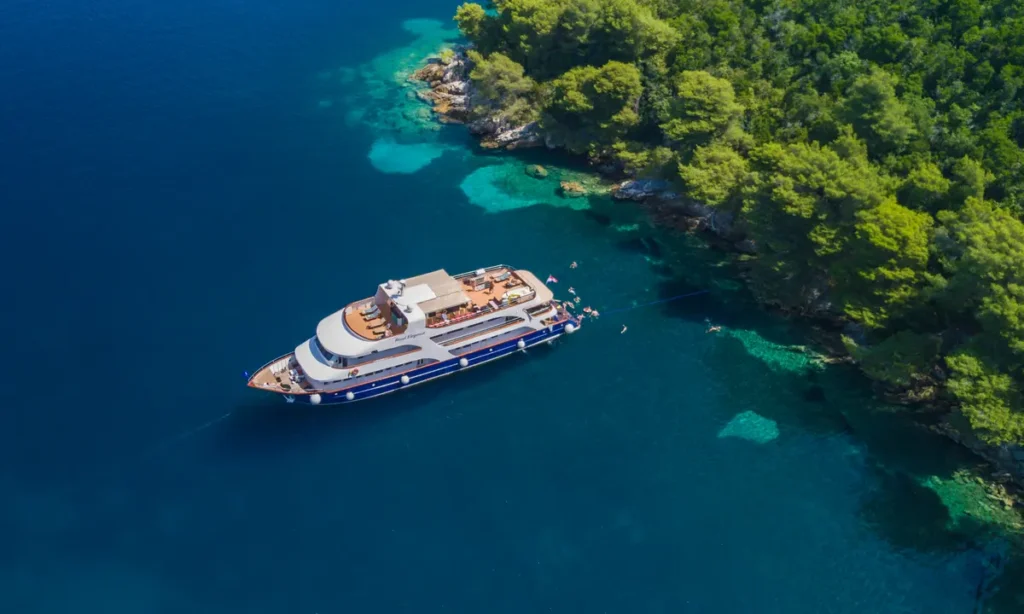
Travelling to Croatia by ferry can be a practical and memorable alternative to flying or driving the entire way. International ferries cross the Adriatic from Italy to Istria, Zadar, Split and Dubrovnik, while Croatia’s domestic network connects the mainland with dozens of inhabited islands.
The right route depends on where your Croatia holiday begins, whether you are travelling with a vehicle and how much flexibility you need. Car ferries are useful for road trips, while fast passenger ferries suit travellers combining Italian and Croatian coastal cities without a car.
Schedules vary significantly by season. Some international connections operate only during the warmer months, while others run less frequently outside summer. Always confirm the current timetable with the ferry operator before booking accommodation or onward transport.
Explore This Guide
ToggleQuick Ferry Planning Answer
Choose your ferry route according to your first destination in Croatia:
- For Istria: Take a seasonal fast ferry from Venice to Pula, Rovinj, Poreč or Umag. These are passenger services and do not transport cars.
- For Split and Central Dalmatia: Ancona to Split is the most useful route, particularly for travellers bringing a car, motorcycle or camper.
- For Zadar and Northern Dalmatia: The seasonal Ancona to Zadar connection is a fast passenger service.
- For Dubrovnik and Southern Dalmatia: Bari to Dubrovnik provides a convenient link between southern Italy and the Dubrovnik region.
- For Split from southern Italy: Bari to Split can work well for itineraries combining Puglia with Central Dalmatia.
If you are still comparing arrival options, see the complete guide to getting to Croatia.
Main Ferry Routes from Italy to Croatia
International ferry routes change more often than domestic Croatian services. Frequency, operating periods and departure times can vary between seasons, so treat the following routes as planning options rather than fixed year-round connections.
Venice to Istria
Seasonal fast ferries connect Venice with Pula, Rovinj, Poreč and Umag on Croatia’s Istrian coast. The journey usually takes around three hours, although the exact duration depends on the departure port and sailing.
These services are best for foot passengers combining Venice with an Istrian holiday. They are operated by fast passenger vessels rather than car ferries, so you cannot bring a car.
The most suitable arrival port depends on your plans:
- Pula is best for Roman history, southern Istria and connections near Pula Airport.
- Rovinj suits couples, old-town stays and travellers looking for a scenic coastal base.
- Poreč works well for families, resort holidays and exploring central Istria.
- Umag is useful for northwestern Istria and onward travel towards Slovenia.
Services usually operate from late spring to early autumn. Check the current Adriatic Lines ferry schedule before planning your journey.
Ancona to Split
Ancona to Split is one of the most useful ferry routes between Italy and Croatia. It connects central Italy with Split, the main transport hub for Central Dalmatia.
This route is particularly practical if you are travelling with a car, motorcycle or camper. Split provides road connections along the Dalmatian coast and ferry access to Brač, Hvar, Vis, Šolta, Korčula and Lastovo.
Crossings may operate during the day or overnight. Journey times and onboard facilities depend on the scheduled vessel, so check whether your sailing offers cabins, reserved seating or only standard passenger areas.
Ancona to Zadar
The Ancona to Zadar route connects Italy with Northern Dalmatia. It operates as a high-speed passenger service, making it suitable for travellers without a vehicle.
The Croatian terminal is at Gaženica, outside Zadar’s historic centre. Local buses, taxis and ride-hailing services provide onward transport into the city.
Zadar is a useful base for Pag, Nin, Dugi Otok, Ugljan, the Kornati archipelago and the national parks of Northern Dalmatia. As this is a seasonal route, check the operating period carefully before building your itinerary around it.
Bari to Dubrovnik
Bari to Dubrovnik is the most practical sea connection between southern Italy and Southern Dalmatia. It suits travellers combining Puglia with Dubrovnik, the Pelješac Peninsula, Korčula or Montenegro.
Ferries arrive at Gruž Port rather than directly beside Dubrovnik Old Town. Gruž is connected with other parts of the city by local buses and taxis.
This route can carry vehicles on scheduled car-ferry sailings, but availability and frequency vary by season. Reserve early if you are travelling with a car during the busiest summer period.
Bari to Split
Bari to Split offers another option for combining Puglia with the Croatian coast. It can be particularly useful for travellers continuing towards Split, Makarska, Trogir or the Central Dalmatian islands.
The service does not operate with the same frequency throughout the year. Compare the sailing date with your accommodation and onward travel plans before booking.
Jadrolinija currently lists Split–Ancona, Zadar–Ancona, Dubrovnik–Bari and Split–Bari among its international Croatia–Italy routes.
Car Ferry or Passenger Catamaran?
Understanding the type of vessel is essential when planning ferry travel in Croatia.
Car ferries
Car ferries transport foot passengers, cars, motorcycles and, subject to vessel limits, campers and other larger vehicles. They are slower than catamarans but are the only option if you need to take a vehicle across the sea.
Always enter the correct vehicle category, length and height when booking. Roof boxes, bicycle racks, trailers and camper dimensions may affect the fare and available space.
Catamarans and passenger ships
Catamarans and other high-speed services are primarily intended for foot passengers. They are faster and often connect coastal cities with popular island towns.
Cars cannot be transported on these services. Bicycle rules also vary between operators and vessels. Jadrolinija does not permit standard bicycles on its catamarans, while some other operators may accept them for an additional fee.
Check the vessel type before booking. A route to Hvar Town, for example, may be a passenger catamaran, while a car ferry to the island normally arrives at Stari Grad or another vehicle port.
Is a Ferry the Right Choice for Your Trip?
A ferry is a strong option if you are combining Italy and Croatia, travelling with a vehicle or want the journey across the Adriatic to become part of the holiday.
Consider flying instead if you are travelling from another part of Europe and have limited time. International ferry departures are less frequent than flights, and reaching Ancona or Bari may add another stage to the journey.
For a multi-country rail or bus trip, first compare the complete journey to the Italian departure port.
Always verify the final ferry timetable directly with the operator, even when using a transport comparison platform.
Arriving at Croatia’s Main Ferry Ports
Pula, Rovinj, Poreč and Umag
Istrian passenger ports are close to their respective town centres. This makes them convenient for travellers staying locally without a car.
Public transport between Istrian towns is more limited than in larger European cities. If your accommodation is outside the arrival town, check the bus timetable or arrange a transfer in advance.
Zadar
International ferries use Gaženica Port, which is separate from the passenger harbour beside Zadar Old Town. Do not assume you can walk directly from the international terminal to your old-town accommodation with luggage.
Domestic passenger boats may use the old-town harbour, while many car ferries depart from Gaženica. Always confirm the exact terminal shown on your ticket.
Split
Split Ferry Port is beside the main bus station and close to the historic centre. It is one of Croatia’s easiest arrival points for continuing by bus, ferry or on foot.
The area becomes very busy during summer. Allow extra time if you need to transfer between an international ferry and a domestic island service.
Dubrovnik
Dubrovnik’s ferry terminal is in Gruž, not beside the Old Town walls. Local buses and taxis connect the port with the Old Town, Lapad, Babin Kuk and other accommodation areas.
Gruž is also Dubrovnik’s main domestic ferry port for services towards the Elaphiti Islands, Mljet and other parts of Southern Dalmatia.
Continuing to the Croatian Islands
Croatia has an extensive network of domestic car ferries, passenger ships and catamarans. The best connection depends on whether you are travelling with a vehicle and where you plan to stay on the island.
Common examples include:
- Split to Supetar for Brač by car ferry
- Split to Stari Grad for Hvar by car ferry
- Split to Hvar Town by passenger catamaran
- Split to Vis by car ferry
- Split to Vela Luka for western Korčula
- Zadar Gaženica to Preko on Ugljan by car ferry
- Dubrovnik to the Elaphiti Islands by passenger ferry
You do not need a car for every Croatian island. Hvar Town, Korčula Town and many smaller harbour villages work well for travellers arriving on foot. A vehicle is more useful when staying in remote bays, villages or rural accommodation.
Explore the Croatian islands before deciding which port and ferry route fit your trip. For domestic transport planning, see the guide to bus, train and ferry travel in Croatia.
Booking Tickets and Arriving at the Port
Buying a ticket does not always mean that you have reserved a place on a specific ferry.
On routes with reservations, the ticket is valid for the selected departure and guarantees space according to the booking conditions. On routes without reservations, vehicles are normally boarded according to their arrival order and vessel capacity.
For reserved services, arrive at the port at least 45 minutes before departure. For busy non-reservation car-ferry routes, arriving one to two hours early can be sensible in peak season. Particularly popular island crossings may require even more time.
Before travelling:
- Confirm the port and terminal, not only the destination city.
- Check whether the service accepts vehicles.
- Enter the correct vehicle dimensions.
- Download the ticket before reaching the boarding area.
- Carry a valid passport or identity document for international travel.
- Leave enough time between separate ferry, bus, train or flight bookings.
- Recheck the operator’s travel notices on the day of departure.
The Jadrolinija travel FAQ explains current reservation, vehicle, bicycle, luggage and pet rules.
Luggage, Bicycles and Pets
Luggage allowances differ between operators and vessel types. High-speed services usually have stricter limits than large car ferries. Check the allowance before arriving with oversized bags or sports equipment.
Bicycles are not automatically accepted on every passenger service. Some operators allow them for a fee, while Jadrolinija does not accept standard bicycles on its catamarans. A bicycle carried on a vehicle may also affect the total declared vehicle length.
Pets are permitted on many services, but rules depend on their size and the vessel. Dogs may need to remain on a lead and wear a muzzle, while smaller pets may need an approved carrier. Larger animals can be restricted to the open deck or designated onboard boxes.
Never assume that the rules are identical across operators. Confirm the conditions for the exact sailing before purchasing a non-refundable ticket.
Weather, Delays and Cancelled Sailings
Strong winds and rough seas can delay or cancel ferry services. High-speed catamarans are generally more sensitive to difficult conditions than larger car ferries.
Avoid planning a tight connection between a ferry and a flight, international train or separate boat service. If the connection is important, consider spending the previous night near the departure port.
Check operator notices before leaving your accommodation. If a sailing is cancelled, follow the operator’s instructions regarding rebooking, refunds or alternative departures.
Sailing to Croatia on a Private Boat
Private-boat formalities depend on the vessel’s registration, flag, country of arrival, skipper qualifications and the citizenship of the people on board. Schengen membership does not remove every maritime, customs, safety or registration requirement.
Before entering Croatian waters, confirm:
- Required vessel and insurance documents
- Accepted skipper qualifications
- Crew and passenger documentation
- Entry procedures for the country from which you are arriving
- Navigation safety and environmental fees
- The correct port or harbourmaster office for any necessary formalities
Croatia’s official e-Nautics service can be used by eligible boat owners to report an arrival and arrange navigation-related fees online.
For marina locations, approach information and regional sailing bases, browse the Croatia ports and marinas guide.
Ferry Travel Mistakes to Avoid
The most common ferry-planning problems are easy to prevent:
- Booking a passenger catamaran when you need to transport a car
- Assuming every ticket reserves a place on a specific departure
- Arriving at the wrong Zadar or Dubrovnik terminal
- Planning a same-day connection with no delay margin
- Using an old timetable found on a blog or search result
- Forgetting to include a roof box, bicycle rack or trailer in vehicle dimensions
- Assuming bicycles and pets are accepted on every vessel
- Expecting all international routes to operate year-round
Use third-party booking platforms for comparison, but confirm important information on the operator’s official website.
FAQs
Can you travel to Croatia by ferry from Italy?
Yes. International ferries connect Italy with Pula, Rovinj, Poreč, Umag, Zadar, Split and Dubrovnik. Routes and operating periods vary, and many services are seasonal.
Can you take a car on a ferry to Croatia?
Cars can be transported on scheduled car-ferry services such as selected routes from Ancona or Bari. Fast ferries between Venice and Istria and high-speed catamarans generally carry foot passengers only.
Which Italian port is best for ferries to Croatia?
Venice is best for reaching Istria without a car. Ancona is useful for Zadar and Split, while Bari is the main option for Dubrovnik and southern approaches to Split.
Should ferry tickets be booked in advance?
Advance booking is recommended for international routes, passenger catamarans and any journey involving a vehicle during summer. On routes without vehicle reservations, early arrival may still be necessary because boarding depends on available capacity.
Are ferries in Croatia reliable?
Ferries are an essential part of Croatia’s transport network and generally operate reliably. However, schedules change by season, and strong winds or rough seas can cause delays and cancellations.
Is it easy to travel around Croatia without a car?
Yes, particularly if you stay in major coastal cities or walkable island towns. Buses, passenger ferries and catamarans connect many popular destinations. A car becomes more useful for remote beaches, smaller villages and rural accommodation.
Plan the Rest of Your Croatia Journey
Arriving by ferry can place you directly in one of Croatia’s most appealing coastal regions. Choose Venice for Istria, Ancona for Northern or Central Dalmatia, and Bari for Split or Dubrovnik.
Before booking, confirm the vessel type, operating date, departure terminal and vehicle rules. Then continue planning with the guide to getting around Croatia and compare the islands, cities and regions that fit your route.
Disclosure: This page may contain affiliate links. This means that we get a small commission from any purchase you make, at no additional cost to you!