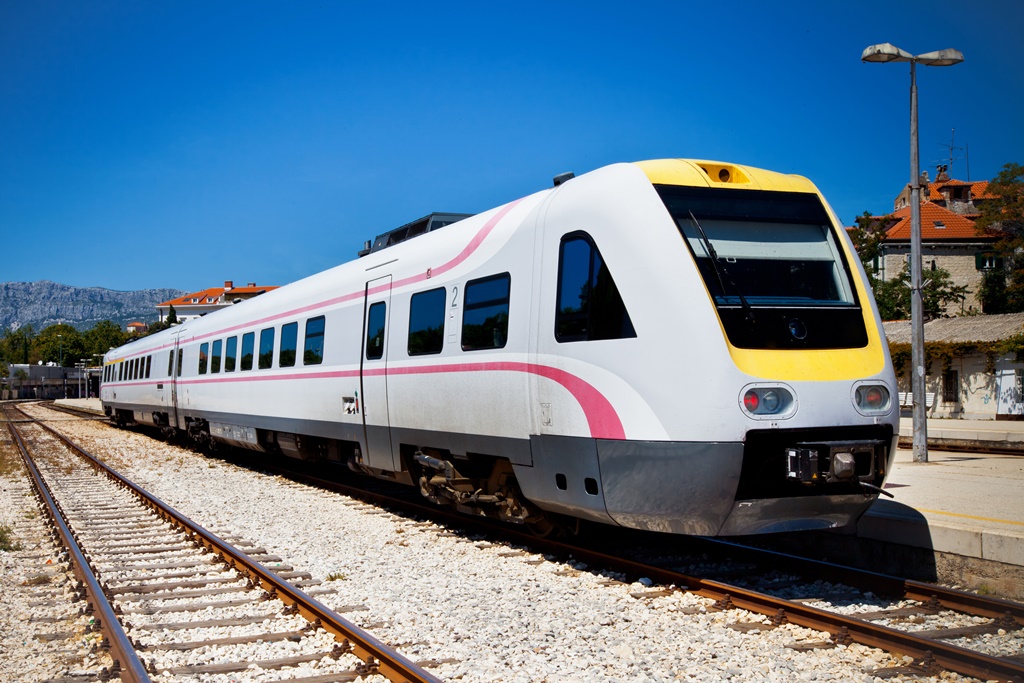
Train travel in Croatia works best for reaching Zagreb and for selected journeys to Split, Rijeka, Osijek and northern Croatia. It can be comfortable and scenic, but the railway network does not cover the coast as extensively as the bus network.
For Dubrovnik, the islands and many smaller seaside towns, travelling by bus, ferry or car is usually more practical. Always check the official HŽPP timetable for your exact date because seasonal services, railway works and replacement buses can change journey times.
Explore This Guide
ToggleIs Train Travel in Croatia a Good Choice?
Croatia’s railway network is centred on Zagreb, making the capital the most useful starting point for domestic train journeys. Trains can also be a good option if you are arriving from Slovenia, Austria, Hungary, Germany or Switzerland.
Choose the train for:
- Travelling between Zagreb and selected inland cities
- Reaching Split from Zagreb without driving
- Journeys between Zagreb and Osijek, Varaždin or Karlovac
- Arriving in Croatia from Ljubljana, Graz, Vienna or Budapest
- A slower journey with more space to move than on a bus
- Travelling with an Interrail or Eurail pass
Consider another option for:
- Dubrovnik, which has no railway station
- Zadar and many smaller Dalmatian coastal towns
- Island holidays requiring a ferry connection
- Fast travel between several coastal destinations
- National parks, rural areas and small villages
- Flexible multi-stop itineraries
If you are comparing several forms of transport, start with our guide to getting around Croatia or compare buses, trains and ferries on the Croatia transport booking page.
Best Domestic Train Routes in Croatia
Croatian domestic trains are operated by HŽ Putnički prijevoz, usually shortened to HŽPP. The following routes are among the most useful for visitors, but departure times and journey lengths should always be checked for the chosen date.
Zagreb to Split
The Zagreb–Split route is Croatia’s main long-distance train journey to the Adriatic coast. Day trains normally take around seven to eight hours, while seasonal night services take longer.
The route passes through inland Croatia and mountain landscapes before reaching Dalmatia. It is a relaxed alternative to driving, although buses may offer more departures and can sometimes be faster.
Seat reservations are required on some Zagreb–Split services, particularly seasonal day and night trains. Check the train details before buying your ticket.
Once in Split, you can continue by bus towards Trogir, Omiš, Makarska or Dubrovnik, or take a ferry to islands such as Brač, Hvar, Vis and Šolta.
Zagreb to Rijeka
The direct journey between Zagreb and Rijeka normally takes approximately four to five hours. It connects the capital with Croatia’s main northern Adriatic port and can work well for travellers continuing towards Opatija, the Kvarner islands or the Slovenian coast.
Before booking, compare the train with the bus. Buses are often more frequent, while the train may suit travellers who prefer a quieter journey and are not in a hurry.
Zagreb to Osijek
The journey from Zagreb to Osijek usually takes around five and a half to six hours, depending on the service.
This is one of the most useful railway connections for exploring Slavonia and eastern Croatia. Osijek can be used as a base for the Drava River, Kopački Rit Nature Park, Baranja wine country, Vukovar and Đakovo.
Zagreb to Karlovac and Northern Croatia
Shorter train journeys from Zagreb can work well for Karlovac, Varaždin, Čakovec and other destinations in central and northern Croatia.
These routes are especially useful for travellers based in Zagreb who want to explore beyond the capital without renting a car. Weekend and evening frequencies may be limited, so check the return journey before leaving.
Split to Šibenik
Train travel between Split and Šibenik usually requires a change at Perković station. Connections may not run frequently enough for every day-trip plan, and replacement buses sometimes operate on parts of the route.
Compare the full journey with a direct bus before booking, especially if you have luggage or need to arrive at a specific time.
Zagreb to Pula
Pula has a railway station, but Istria’s rail network is not directly connected to the rest of Croatia without travelling through Slovenia.
Connections from Zagreb are limited and can involve an indirect route or changes. For most visitors, a direct bus or rental car is more practical for reaching Pula, Rovinj, Poreč and other parts of Istria.
International Trains to Croatia
Zagreb is Croatia’s main international railway hub. Direct routes and convenient connections vary by timetable, but Croatia is linked by rail with Slovenia, Austria, Hungary, Germany and Switzerland.
From Slovenia
Ljubljana has direct or connecting trains to Zagreb. Other services may link Ljubljana with Rijeka or Pula, depending on the season and timetable.
Travellers starting in Slovenia can check current routes and ticket offers through Slovenske železnice as well as HŽPP.
From Austria
Zagreb can be reached from Graz and Vienna by direct train or with a straightforward connection. Seasonal overnight services may also link Vienna and Graz with Split.
From Hungary
Regular international services connect Budapest with Zagreb. During the summer season, additional trains may operate towards Rijeka or Split.
From Germany and Switzerland
International daytime or overnight trains can connect Zagreb with cities such as Munich, Stuttgart and Zurich. Routes, sleeping-car availability and required reservations can change, so confirm the complete journey with the railway operator before booking accommodation or onward transport.
Seasonal Trains to the Croatian Coast
International coastal trains are highly seasonal. Depending on the current timetable, services may connect:
- Rijeka with Ljubljana, Vienna and Warsaw
- Rijeka with Budapest
- Split with Graz and Vienna
- Split with Budapest
- Ploče with Mostar and Sarajevo
Some routes operate only on selected days and for a limited summer period. Check the current HŽPP seasonal train list rather than relying on a timetable from a previous year.
How to Buy Train Tickets in Croatia
Domestic Tickets
Domestic e-tickets can be purchased through the HŽPP website or mobile app. Tickets are also available from station ticket offices, selected ticket machines and on the train.
According to HŽPP, domestic tickets bought online are currently 10% cheaper than tickets purchased at a station ticket office. Tickets bought on the train are normally 10% more expensive than ticket-office prices.
Read the current purchase rules and access the official booking system through the HŽPP ticket information page.
You can print an e-ticket or show it to the conductor on a smartphone. Keep the ticket available for inspection throughout the journey.
International Tickets
HŽPP’s online ticket system is primarily intended for domestic travel. International tickets may need to be purchased from an international ticket office or through the railway operator in the country where the journey begins.
For international routes, compare the itinerary on HŽPP and the relevant foreign railway website. This is particularly important for night trains, sleeping compartments and journeys involving several operators.
Seat Reservations
A ticket and a seat reservation are not always the same thing. Reservations may be required on selected InterCity, night and seasonal trains, including some services between Zagreb and Split.
When travelling with an Interrail or Eurail pass, the pass covers the journey but not necessarily the seat reservation. The Interrail Croatia train guide can help with general planning, but HŽPP should be used to confirm current Croatian train information.
Practical Tips for Train Travel in Croatia
Check Railway Works Before Departure
Railway upgrades and maintenance can lead to timetable changes, delays or replacement buses on part of a route.
Check HŽPP traffic information shortly before departure, even if you purchased your ticket earlier. When a replacement bus is used, bicycle transport and accessibility conditions may differ from those on the train.
Allow extra time if you are connecting to an international train, flight, ferry or last bus of the day.
Travelling with Luggage
Standard luggage can usually be carried onto the train and placed in the available storage area. Keep valuables, passports and electronics with you.
Luggage lockers are available at Zagreb Main Station and the main stations in Split and Rijeka. Check the current locations, sizes and prices on the HŽPP luggage storage page.
Taking a Bicycle on the Train
Bicycles are permitted only on selected trains, and the number of spaces can be limited. Look for the bicycle symbol in the timetable and check whether a bicycle ticket or reservation is required.
A folding bicycle carried as hand luggage may be accepted on services that cannot take a standard bicycle. Confirm the rules before departure, particularly for international trains and replacement buses.
Travelling with Pets
Pets are allowed on many Croatian trains, but ticket, carrier, muzzle and documentation requirements depend on the animal and route. International journeys may have additional entry and railway-operator rules.
Carry the pet passport and confirm the conditions with every operator involved in an international journey.
Accessibility and Reduced Mobility
HŽPP provides assistance for passengers with disabilities and reduced mobility. Travellers are asked to announce the journey in advance so assistance can be arranged for boarding, leaving the train and travel between stations.
Contact HŽPP at least 24 hours before the planned journey and check the official accessibility information. Do not assume that every small station, train or replacement bus offers step-free access.
Train, Bus, Car or Ferry?
Choose the train when:
- Your journey starts or ends in Zagreb
- A suitable direct service is available
- You prefer comfort over the fastest possible journey
- You are travelling to Split, Rijeka, Osijek or northern Croatia
- Train travel is part of a wider European rail itinerary
Choose the bus when:
- You are travelling to Dubrovnik, Zadar or smaller coastal towns
- The train requires inconvenient changes
- You need more departure choices
- You are travelling between destinations along the Adriatic coast
Choose a rental car when:
- You want to visit national parks, villages or rural areas
- Your itinerary includes several small destinations
- You need flexibility for beaches and accommodation outside town centres
- Public transport would require several changes
Read the Croatia car rental guide before comparing vehicles and rental conditions.
Choose a ferry when:
- Your final destination is an island
- You are continuing from Split, Zadar, Rijeka or Dubrovnik
- Your itinerary includes island hopping
A common and practical combination is to take the train from Zagreb to Split and continue by ferry to an island. For southern Dalmatia, continue from Split by bus towards Dubrovnik.
Train Travel Mistakes to Avoid
- Do not assume every coastal city has a railway station.
- Do not copy departure times from an old article or travel forum.
- Do not book a tight connection after a long-distance train.
- Do not assume an Interrail pass includes every reservation.
- Do not bring a full-size bicycle without checking available spaces.
- Do not rely on a seasonal international train without confirming its operating dates.
- Do not choose the train automatically without comparing the total bus journey.
- Do not forget to check for railway works and replacement buses.
Final Planning Checklist
Before travelling by train in Croatia:
- Search the exact route and date on HŽPP.
- Check whether the train is direct or requires changes.
- Confirm whether a seat reservation is required.
- Review current traffic and railway-work information.
- Compare the total journey with the bus.
- Leave enough time for ferry or international connections.
- Confirm bicycle, pet or accessibility arrangements in advance.
- Download or screenshot your ticket and essential journey details.
For more transport planning, explore the main Getting to Croatia guide.
Train Travel in Croatia FAQ
Is train travel a good way to explore Croatia?
Train travel is useful for Zagreb, Split, Rijeka, Osijek and parts of northern and eastern Croatia. It is less practical for most coastal itineraries, Dubrovnik, the islands and smaller seaside towns.
How long does the train from Zagreb to Split take?
Day trains normally take around seven to eight hours, depending on the service and current timetable. Seasonal night trains take longer. Always check HŽPP for the selected date.
Does Dubrovnik have a railway station?
No. Dubrovnik does not have a railway station. Travellers can take a train to Split and continue by bus, or travel to Dubrovnik by bus, car or plane.
Where can I buy Croatian train tickets?
Domestic tickets can be purchased through the HŽPP website or app, at ticket offices, selected ticket machines and on the train. International tickets may need to be purchased at an international ticket office or from a foreign railway operator.
Do I need to reserve a seat?
Reservations are not required on every train, but they are compulsory on selected InterCity, night and seasonal services. Check the conditions shown for your specific train before travelling.
Disclosure: This page may contain affiliate links. This means that we get a small commission from any purchase you make, at no additional cost to you!