Bus travel is usually the most practical public transport option for journeys between Zagreb, Croatia’s coastal cities and many popular tourist towns. Buses serve more destinations than trains, but routes, luggage rules and ticket conditions vary between operators.
Book busy summer and international routes in advance, confirm the exact boarding stop and allow extra time before flights or ferries. For rural areas, remote beaches and flexible day trips, a rental car may still be the better choice.
Explore This Guide
ToggleBus Travel in Croatia at a Glance
- Best for: city-to-city travel, visitors without a car and one-way journeys along the coast
- Main hubs: Zagreb, Split, Zadar, Rijeka, Dubrovnik and Pula
- Book ahead: international routes, summer weekends and popular coastal connections
- Check before departure: boarding point, ticket format, luggage fees and change conditions
- Allow extra time: coastal traffic, border controls and connections with flights or ferries
- Consider another option: rural areas, small villages, remote beaches and multi-stop day trips
For a wider comparison of transport options, see our guide to getting around Croatia.
Is Bus Travel in Croatia a Good Choice?
Croatia does not have one national long-distance bus operator. Several private and regional companies run different routes, use separate booking systems and apply their own rules.
This means bus travel can be convenient, but planning requires more than checking one national timetable.
Choose the Bus If You Want To
- Travel between Zagreb and the main coastal cities
- Visit several Croatian towns without renting a car
- Make a one-way journey without returning a rental vehicle
- Reach destinations that are not connected to the railway network
- Continue from a major city to a smaller coastal base
- Combine city stays with ferries to the islands
Buses are particularly useful for reaching cities such as Split, Zadar, Šibenik, Dubrovnik and Pula.
Consider Another Transport Option If You Want To
- Explore rural Istria, inland Dalmatia or remote villages
- Visit several beaches or national parks in one day
- Travel with large amounts of luggage or sports equipment
- Reach accommodation far from a bus station
- Follow a flexible itinerary without fixed departure times
- Make a late-night connection after arriving by plane
Smaller destinations may have only a few departures per day, particularly outside the main travel season. Some local routes do not appear on international comparison websites, so always check the regional operator as well.
Getting to Croatia by Bus
International coaches connect Croatia with neighbouring countries and major European cities. Zagreb is the main international hub, while some services continue towards Istria, Kvarner and Dalmatia.
Routes and frequencies change throughout the year. Treat the examples below as useful journey ideas and check your chosen travel date before making accommodation or onward transport arrangements.
From Slovenia and Italy
Ljubljana–Zagreb is one of the most useful international bus connections for travellers arriving from Slovenia. Depending on the operator and season, additional services may link Ljubljana with Rijeka, Istria or the Dalmatian coast.
From northern Italy, search for services from Trieste towards Pula, Rovinj, Rijeka or Zagreb. Direct routes are convenient when available, but some journeys require a change in Slovenia or Croatia.
Always check the exact departure point. International buses may use a central bus station, airport stop or roadside boarding location rather than the city’s main railway station.
From Austria, Germany and Hungary
Zagreb is the most useful arrival point for coaches from Vienna, Munich, Frankfurt, Budapest and other Central European cities. Some services continue directly to the coast, while others require a transfer in Zagreb.
A direct overnight coach may save one hotel night, but compare the arrival time carefully. Arriving very early can be inconvenient if accommodation check-in, local buses or luggage storage are not yet available.
For long overnight journeys, check whether the selected vehicle lists reclining seats, power sockets, Wi-Fi or a toilet. These facilities should never be assumed, even when they are shown for another departure from the same company.
From Bosnia and Herzegovina, Montenegro and Serbia
International buses connect Croatian cities with destinations such as Sarajevo, Mostar, Kotor, Podgorica, Belgrade and Novi Sad. Common arrival points include Zagreb, Split and Dubrovnik.
Journeys from Bosnia and Herzegovina, Montenegro or Serbia involve border controls. The scheduled travel time may increase during busy periods, so avoid booking a tight ferry, flight or separate bus connection immediately after arrival.
Carry the travel document required for your nationality and route. Keep it with you rather than inside luggage stored below the bus.
Comparison platforms are useful for checking several operators in one search, but they may not display every local or regional bus service.
Popular Intercity Bus Routes in Croatia
The routes below are useful starting points when planning bus travel in Croatia. Direct departures and journey times vary by date, operator and season.
Zagreb to Split
This is one of Croatia’s main long-distance routes. It suits travellers combining the capital with central Dalmatia or continuing from Split to islands such as Brač, Hvar, Vis or Šolta.
If connecting with a ferry, allow a generous buffer. The main Split bus station is close to the port, but road delays can still cause missed sailings.
Zagreb to Zadar
This route is useful for reaching northern Dalmatia without a car. Zadar is a practical base for the old town, beaches, island trips and excursions to national parks.
Check whether your bus terminates in Zadar or continues farther south. A through service may make intermediate stops and take longer than a more direct departure.
Zagreb to Rijeka
Buses are useful for combining inland Croatia with the Kvarner region. From Rijeka, travellers can continue towards Opatija, Crikvenica, Istria or several island destinations.
Do not assume that a Zagreb–Rijeka ticket includes an onward connection. Separate regional tickets may be required.
Zagreb to Pula
This connection suits visitors using Pula as a base for southern Istria. For Rovinj, Poreč or smaller Istrian towns, compare a direct bus from Zagreb with a connection through Pula or Rijeka.
The fastest-looking itinerary is not always the easiest. A slightly later direct bus may be safer than two separate tickets with a short transfer.
Zagreb to Plitvice Lakes
Some buses between Zagreb and the Adriatic coast stop near Plitvice Lakes National Park.
Before booking, confirm:
- The exact park entrance or bus stop
- Your planned arrival and departure points
- The time between the stop and your park entrance slot
- Where luggage can be stored
- Whether a return bus departs from the same location
A day trip by public bus is possible when schedules fit, but an overnight stay gives more flexibility and reduces the risk of missing the final departure.
Zadar to Šibenik and Split
This coastal corridor works well for travellers building a car-free Dalmatia itinerary. Zadar, Šibenik and Split can be combined as separate bases without returning to the previous city.
Some departures are direct, while others make multiple stops in smaller towns. Check the full route before choosing between the cheapest and fastest ticket.
Split to Makarska and Dubrovnik
The southbound coastal route is useful for reaching Makarska, the Makarska Riviera and Dubrovnik.
Summer road traffic can cause delays, especially on busy coastal sections. Do not schedule a flight or time-sensitive tour immediately after the expected arrival.
Pula to Rovinj and Rijeka
Buses link the main destinations of Istria and Kvarner, but not every departure serves all three cities. Check whether the route is direct or requires a change.
Rovinj bus station is within walking distance of the centre, although accommodation in outer resort areas may require a local bus, taxi or transfer.
How to Buy Bus Tickets in Croatia
Tickets may be available through comparison platforms, the operator’s website, a bus station, a mobile app or directly from the driver. Available sales channels depend on the route.
Compare the Route Before Booking
When comparing departures, look beyond the advertised price. Check:
- Total journey time
- Number of stops or changes
- Exact departure and arrival points
- Luggage charges
- Seat reservation fees
- Refund and change conditions
- Whether the ticket must be printed
- Whether separate tickets are issued for connecting services
A comparison platform can help identify the main options. If a route is missing, search the websites of local operators and the departure bus station.
Mobile and Printed Tickets
Many operators accept tickets displayed on a phone, but this is not a universal rule. Read the booking confirmation and follow the instructions printed on the ticket.
Arriva Croatia states that its online tickets can usually be shown on a phone or tablet, but the booking will indicate if printing is required. Other operators and station booking systems may use different rules.
Download the ticket before leaving Wi-Fi coverage. A screenshot or offline PDF can be useful if the mobile signal is weak at the station.
Tickets Bought at the Bus Station
Large bus stations usually have ticket counters or ticket machines, but opening hours and payment methods vary. Arrive early if you still need to buy a ticket, find the platform or pay for luggage.
Useful official station websites include:
The ticket may show a platform number, but platforms can change. Confirm the departure display when you arrive.
Buying a Ticket from the Driver
Some operators sell tickets on board when seats are available. This should be treated as a backup option rather than the main plan for a popular or long-distance route.
The driver may accept only certain payment methods, and passengers with advance reservations normally board first. Buying from the driver is particularly risky during busy travel periods.
Return Tickets and Separate Operators
A return ticket is not automatically cheaper, more flexible or valid with another company. Check whether the return journey has a fixed departure or requires a separate reservation.
When outbound and return services are operated by different companies, two one-way tickets may be the only practical option. Each ticket will have its own change, cancellation and luggage conditions.
Main Bus Operators and Station Websites
Different companies serve different parts of Croatia. A route shown by one operator may not appear in another company’s search.
Useful websites include:
- Arriva Croatia – domestic, regional and international services
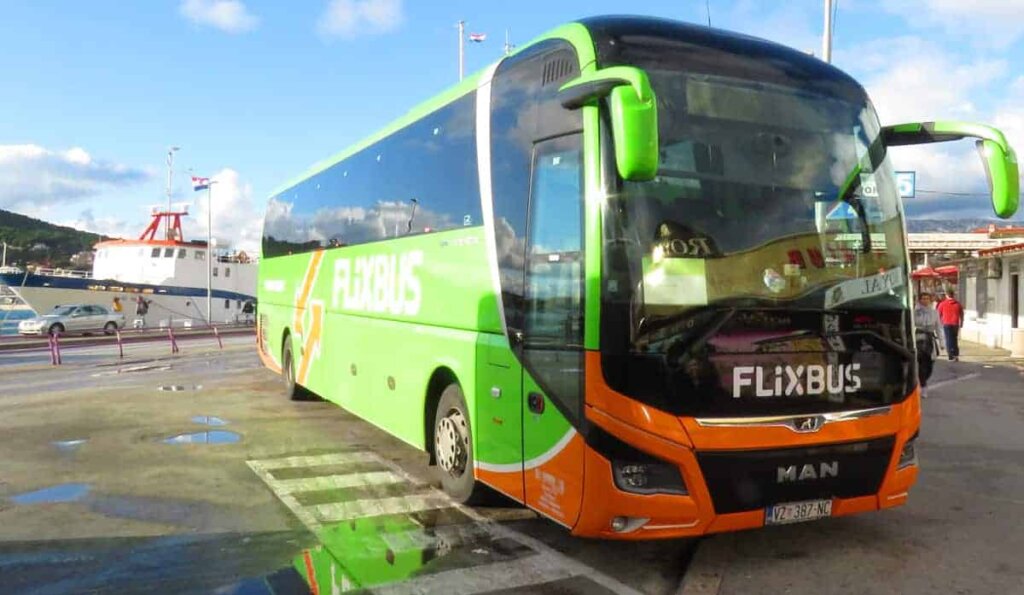
- FlixBus – international and selected domestic routes
- Nomago – regional and international connections
- Brioni Pula – services centred on Istria and intercity routes
- Croatia Bus – selected domestic and international services
- Zagreb Bus Station – departures, arrivals and station information
- Split Bus Station – schedules and station information
This is not a complete list. Regional operators may provide the best or only service for smaller destinations.
Luggage, Bicycles, Pets and Accessibility
Each operator sets its own conditions. Never assume that rules from one company apply to another bus using the same route.
Hand Luggage and Checked Luggage
Small hand luggage may be included when it fits in the overhead area or under the seat. Larger suitcases are normally stored below the bus, and an additional fee may apply.
Arriva, for example, allows suitable hand luggage free of charge but charges for passenger luggage according to its current price list. Other companies use different allowances and prices.
Keep the luggage receipt until you collect your suitcase. Label larger bags with your name and contact details, especially on routes with multiple intermediate stops.
Do not place passports, money, medication, electronics, keys or essential documents inside checked luggage.
Bicycles and Large Equipment
Bicycles, surfboards and other large equipment are accepted only on certain services and when storage space is available. Some companies require advance approval, while others decide at boarding.
Contact the operator before buying a non-refundable ticket. A standard search result does not confirm that a bicycle or oversized item will be accepted.
Travelling with Pets
Pet policies differ significantly between operators. Some accept only assistance dogs, while others apply restrictions based on the animal, carrier and route.
Check the selected company’s written conditions before booking. Do not rely on general advice about pet travel in Croatia.
Passengers with Reduced Mobility
If you need boarding assistance, wheelchair space or help with mobility equipment, contact the operator and terminal in advance. Vehicle accessibility can differ even between departures on the same route.
Confirm both the bus and the arrival station. An accessible coach does not guarantee that every platform, toilet or transfer point will be step-free.
Summer Delays and Important Connections
Bus timetables show planned travel times, not guaranteed arrival times. Summer traffic, roadworks, accidents and border controls can all affect a journey.
Congestion is most likely on:
- Roads leading from Zagreb towards the coast
- The Adriatic coastal road
- Approaches to Split and Dubrovnik
- Busy sections around tourist resorts
- Routes involving border controls
- Weekends and major holiday changeover days
Connecting with a Ferry
Split, Zadar and Dubrovnik have bus and ferry facilities within the wider central area, but walking time and luggage still matter.
Avoid buying the final possible bus before an important sailing. Ferry companies are not normally responsible when a separately booked bus arrives late.
See our Sea Travel guide before combining a bus with an island connection.
Connecting with a Flight
Airport buses and long-distance coaches are different services. A ticket to Split, Zadar or Dubrovnik city does not necessarily stop at the airport.
For a flight connection:
- Check where the bus terminates
- Add transfer time from the station to the airport
- Allow for summer traffic
- Avoid relying on the final possible connection
- Consider travelling to the airport city one day earlier for an important long-haul flight
Check the Final Bus of the Day
Evening services can be limited outside larger cities. Before planning dinner, a tour or a ferry arrival, check the last practical bus to your accommodation.
A taxi may be available, but a long transfer to a smaller town can cost far more than the original bus ticket.
Reaching Croatian Islands by Bus
Some buses continue to islands connected by bridges or vehicle ferries. However, through services are route-specific and may change with the season.
Pag and Krk are connected to the mainland by road bridges. Other islands may be reached by a bus that boards a car ferry, while some journeys require passengers to buy separate bus and ferry tickets.
Before travelling to an island, check:
- Whether the bus travels onto the island
- Whether the ferry is included
- If a change is required at the mainland port
- Where the island bus stop is located
- Whether local buses continue to your resort
- The final return departure of the day
For simple island hopping, it may be easier to travel by bus to a main port and continue as a foot passenger.
Bus, Train, Car or Ferry?
The best option depends on the route rather than one transport type being best for the whole country.
Choose a Bus For
- Zagreb to major coastal cities
- Travel between Dalmatian cities and towns
- One-way journeys without a rental car
- Destinations not served by train
Choose a Train For
- Selected inland routes
- A more relaxed journey when the timetable fits
- Travelling between Zagreb and rail-connected cities
See our complete Train Travel guide.
Choose a Rental Car For
- Rural areas and small villages
- Multiple stops in one day
- Remote beaches and nature areas
- Accommodation outside town centres
- Travelling with children or substantial luggage
Compare the practical details in our Car Rental in Croatia guide.
Choose a Ferry For
- Island hopping
- Direct passenger routes between coastal cities and islands
- Travelling with a vehicle to islands served by car ferries
Use our Plan Your Trip hub to compare transport, accommodation and other travel options.
Common Bus Travel Mistakes to Avoid
- Waiting at the wrong stop because the city has several departure points
- Assuming every online ticket can be shown on a phone
- Ignoring luggage charges until boarding
- Booking separate connections with too little time between them
- Planning a ferry or flight immediately after a long coastal bus journey
- Assuming the return ticket is valid with any operator
- Relying on buying a popular route from the driver
- Expecting Wi-Fi, power sockets or a toilet on every vehicle
- Forgetting to check the final bus to a smaller destination
- Leaving passports or essential medication in checked luggage
FAQs
Is Bus Travel Reliable in Croatia?
Buses are widely used for intercity travel, but delays can occur because services share the same roads as other traffic. Reliability is usually better when the itinerary does not depend on a tight connection.
Allow extra time during busy coastal periods and before flights, ferries or separately booked tours.
Should Bus Tickets Be Booked in Advance?
Advance booking is recommended for international services, popular coastal routes and departures during busy travel periods. It is less important for local services with frequent departures, although some local tickets cannot be booked online.
Booking ahead confirms a seat, but always read the luggage and cancellation conditions before paying.
Do Croatian Bus Tickets Need to Be Printed?
It depends on the operator and booking system. Many mobile tickets are accepted, but some confirmations still require printing.
Follow the instructions shown on the ticket rather than assuming that a PDF on your phone will always be sufficient.
Is Luggage Included in the Ticket?
Not always. Hand luggage may be included, while a suitcase stored below the bus can require a separate fee.
Check the operator’s luggage allowance and carry a small amount in an accepted payment method in case the fee is collected during boarding.
Can Croatian Islands Be Reached by Bus?
Yes, some buses travel to bridge-linked islands or continue aboard car ferries. Other journeys require a separate ferry and local island bus.
Confirm the full itinerary because online searches may display only part of the journey.
What Happens If a Bus Is Cancelled or Delayed?
Start by contacting the operator or station and keep your ticket, booking confirmation and receipts.
EU bus passenger rights mainly apply to regular long-distance services where the scheduled route is at least 250 kilometres. Depending on the cause and length of the delay, eligible passengers may have rights to information, reimbursement or rerouting. Check the official EU bus and coach passenger rights page for the conditions that apply to your journey.
Plan Your Bus Journey in Croatia
Bus travel in Croatia works best when the route connects major cities or established tourist towns. It is less suitable for remote beaches, rural accommodation and itineraries that require several stops in one day.
Compare operators, check the exact boarding point and read the ticket conditions before paying. If no suitable route appears on a comparison platform, search the regional operator or bus station directly.
Disclosure: This page may contain affiliate links. This means that we get a small commission from any purchase you make, at no additional cost to you!