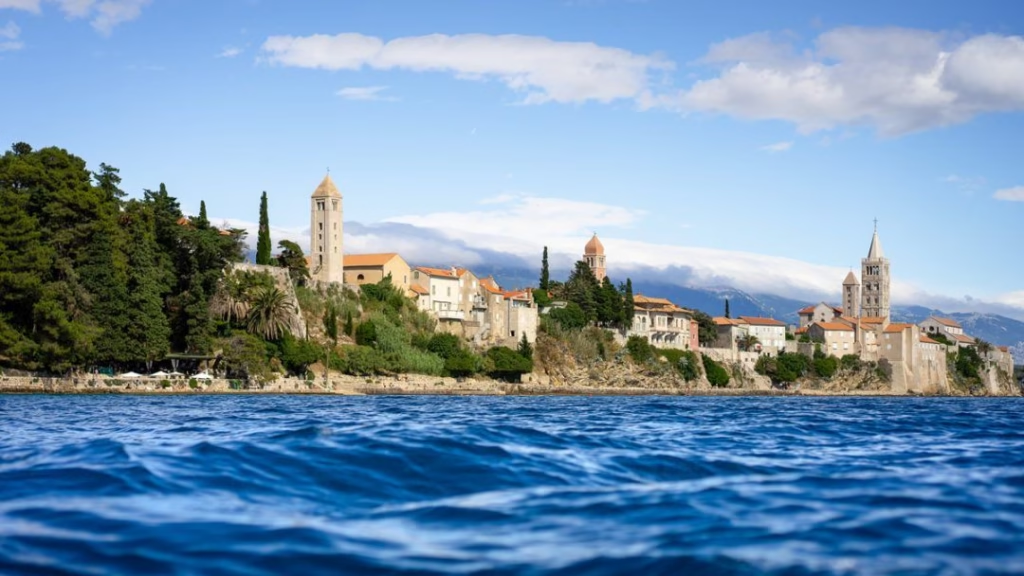
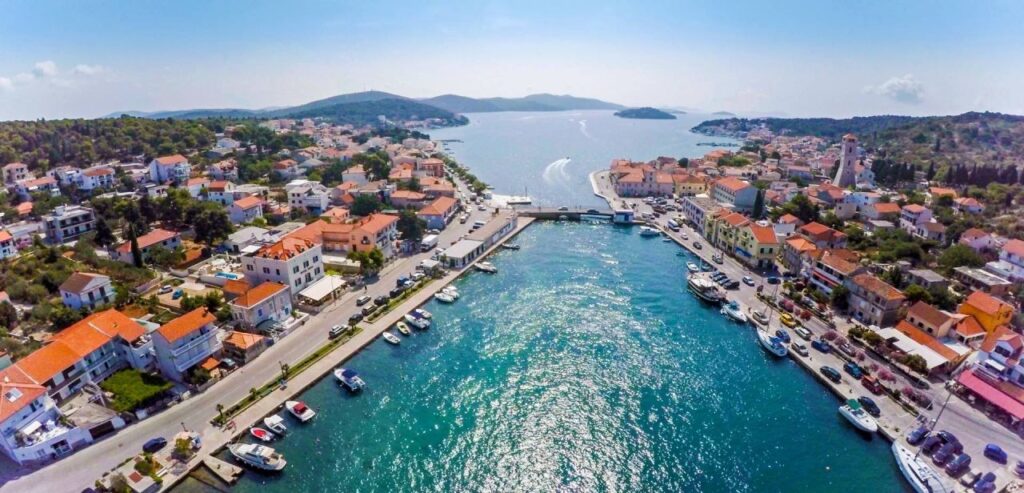
Šibenik-Knin County is one of the best places in Croatia for a culture-led trip.
This is not just a coast-and-beaches region. It is a county of stone cities, fortresses, monasteries, sacred art, old singing traditions, protected local food, and vineyard landscapes shaped by generations of work.
For travelers who want more depth, this part of Dalmatia stands out.
The strongest reason to visit is the mix of major heritage and living tradition. Few parts of coastal Croatia bring UNESCO landmarks and living local traditions together so naturally and at such short travel distances. The county has two UNESCO World Heritage highlights, one UNESCO-recognized cultural tradition tied to Dalmatia, and several places where local identity still feels visible in food, music, wine, and town life.
Explore This Guide
ToggleWhy Šibenik-Knin County stands out for cultural travel
Many parts of coastal Croatia are known first for beaches, but Šibenik-Knin County stands out just as much for culture.
Here, heritage is one of the main reasons to visit, not just something added between coastal stops.
The real appeal comes from:
the Cathedral of St James in Šibenik
St Nicholas’ Fortress at the entrance to St Anthony’s Channel
the wider Šibenik fortress network
religious heritage around the Krka River
inland strongholds such as Knin Fortress
klapa singing, one of Dalmatia’s best-known traditions
Drniški pršut, Skradin risotto, and Babić wine
That makes the county especially good for travelers who enjoy history, architecture, local food, and places with a strong regional identity.
UNESCO sites in Šibenik-Knin County
Cathedral of St James in Šibenik
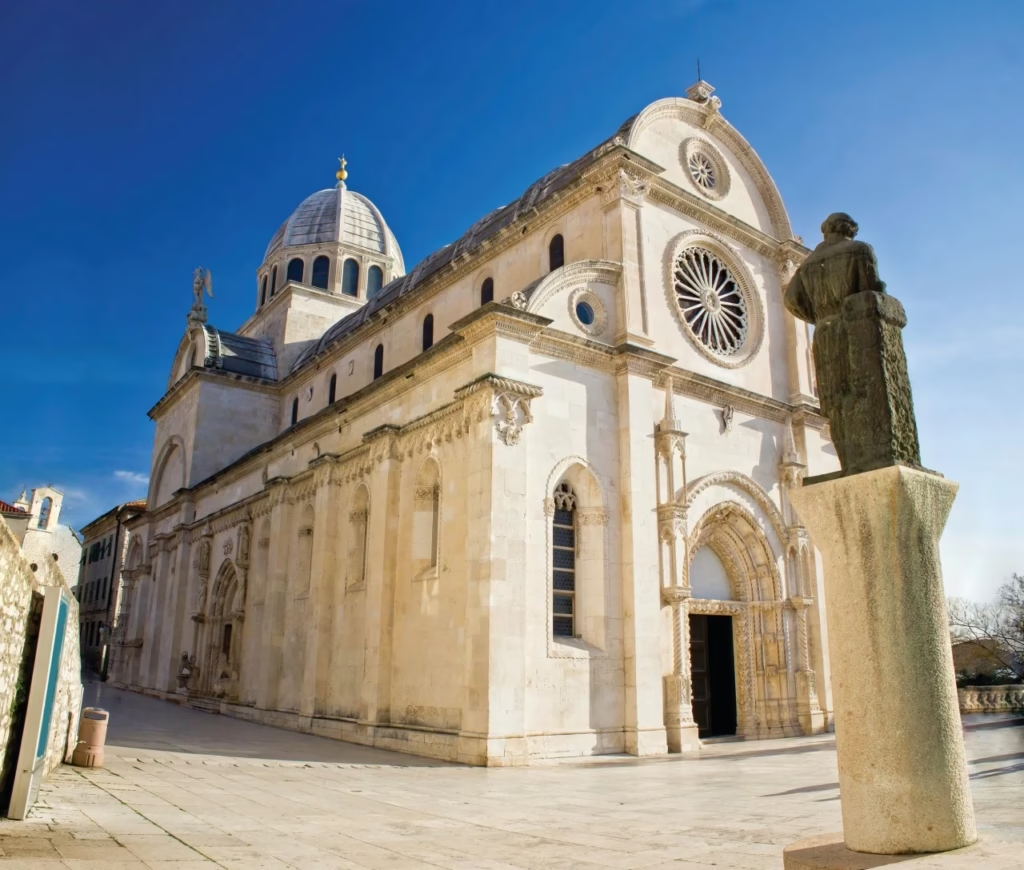
The Cathedral of St James is the county’s most important UNESCO-listed monument.
It is also one of the strongest cultural reasons to visit Šibenik at all. UNESCO values it for the way it reflects artistic exchange between Northern Italy, Dalmatia, and Tuscany, and for its exceptional stone construction.
For travelers, the cathedral is more than a landmark to photograph.
It is the building that explains why Šibenik feels different from many other Adriatic towns. The sculpture, the façade, the details around the apse, and the position inside the old town all make it a natural starting point for a culture-focused walk.
It is best seen slowly.
Do not treat it as a quick stop between lunch and the waterfront. Build time around it, then continue into the surrounding lanes and squares.
St Nicholas’ Fortress
St Nicholas’ Fortress is the county’s second UNESCO World Heritage highlight.
It is included in the Venetian Works of Defence between the 16th and 17th centuries. That gives the county a very unusual pairing: one UNESCO site tied to sacred and civic art, and another tied to military architecture and maritime defense.
The setting matters as much as the structure.
The fortress stands at the sea entrance to St Anthony’s Channel, where Šibenik once protected its access from the Adriatic. That location makes the visit feel more dramatic than an ordinary fort stop.
This is not just a building to tick off.
It is a place that helps travelers understand how important Šibenik was inside the Venetian defensive world. In practice, the visit is usually more planned than spontaneous, so it works best as a dedicated cultural half-day.
Heritage beyond UNESCO
The county’s cultural value goes beyond its two UNESCO headline sites.
Many travelers first come for the cathedral or Krka, then discover a much deeper cultural landscape across the county.
Šibenik old town
Šibenik old town is one of the county’s best cultural experiences in its own right.
It is not just a route between attractions. The stairways, stone passageways, little squares, churches, and worn façades are part of the experience.
This is a place for slow walking.
Travelers who enjoy atmosphere, urban history, and architectural detail often find Šibenik more rewarding than places that are prettier at first glance but feel less layered.
The Šibenik fortress system
Šibenik has one of the strongest fortress networks in Croatia.
St Michael’s Fortress, Barone Fortress, and St John’s Fortress turn the city into more than a cathedral stop. They explain the military logic of the town, add panoramic views, and show how defense shaped daily life in the city.
For a culture-first trip, this is one of the best ways to structure a day in Šibenik:
start at the cathedral
walk the old town lanes
visit one or two fortresses
end with a slow evening in the historic center
That sequence makes the city feel coherent.
Monasteries and sacred heritage on the Krka River
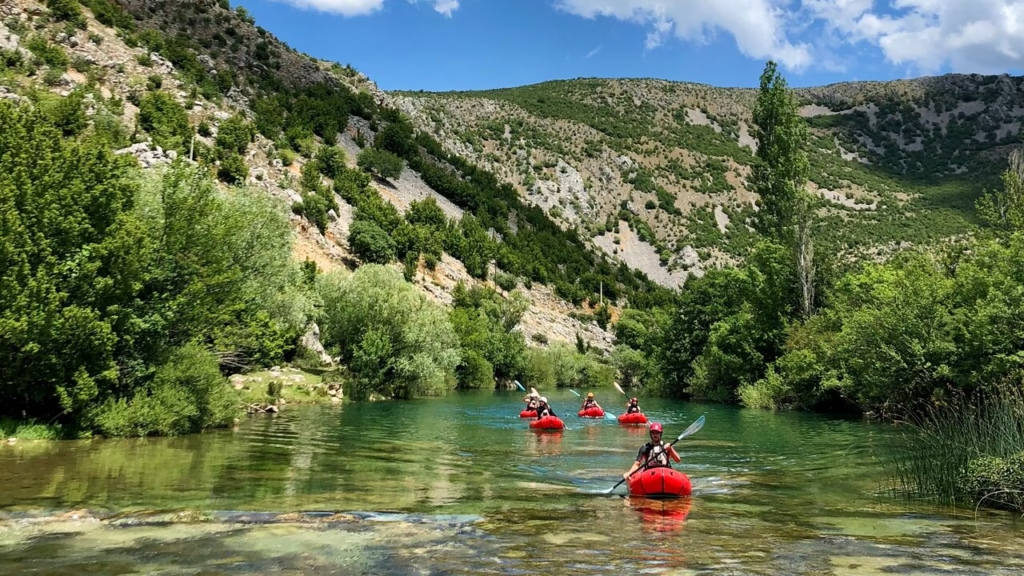
Krka is worth including in a culture-focused trip because it also has monastery heritage and historical depth.
Krka matters for more than waterfalls. Visovac Monastery, Krka Monastery, and the wider religious and historical landscape along the river add a spiritual layer to the county. Visovac feels more isolated and contemplative, while Krka Monastery adds a stronger inland monastic and Orthodox heritage dimension.
That makes Krka relevant even for travelers who are not primarily interested in nature.
Burnum and the deeper historical layer
The county also reaches back into the Roman period.
Burnum, inside the Krka area, helps expand the county story beyond medieval and Venetian heritage. It is not the first stop for most visitors, but it adds depth for travelers who want a broader historical arc.
Knin Fortress
Knin Fortress shifts the article inland and strengthens the county’s identity beyond the coast.
It is one of Croatia’s major fortifications and gives the region a different kind of historical weight. This stop works especially well for travelers exploring by car and for those who want to see the county beyond its seaside highlights.
Local traditions that make the county feel distinct
The county’s cultural appeal is not only about what travelers can see, but also what they can hear, taste, and experience in daily life.
Šibenik-Knin County is especially good for that because several traditions still shape the visitor experience in an immediate way.
Klapa singing
Klapa is one of the best-known traditions of Dalmatia.
It is multipart a cappella singing, and it remains closely tied to the atmosphere of coastal towns and summer evenings. It is also recognized by UNESCO as intangible cultural heritage.
That matters here because klapa is not just background folklore.
In and around Šibenik, it still feels connected to place, voice, stone squares, and the slower rhythm of the Adriatic evening. Even hearing it once in the right setting can become one of the most memorable parts of the trip.
Drniški pršut
Drniški pršut is one of the county’s clearest food markers.
It has Protected Geographical Indication status and is more than a standard cured meat stop on a menu. It gives travelers a direct link to the inland side of the county and to food traditions that feel regional rather than generic.
If the goal is authentic local flavor, this is one of the first things worth seeking out.
Skradin risotto
Skradin risotto is one of the county’s most famous culinary traditions.
What makes it memorable is not only the taste, but the sense of ritual around it. It is associated with long preparation and is traditionally prepared by the men of Skradin.
That makes it feel like a local story, not just a restaurant dish.
This connection between food and identity is what makes Skradin risotto more memorable than a standard local dish.
Primošten and Babić wine
Primošten is not only a photogenic old town.
It is also tied to one of the county’s best-known wine identities: Babić. The nearby Bucavac vineyard landscape helps explain why the wine story matters. This is a hard-work landscape, shaped by dry-stone walls and generations of cultivation.
That background gives the wine more meaning.
Primošten Vineyards are also on Croatia’s UNESCO Tentative List, which adds extra heritage interest even though they are not part of the county’s current World Heritage listings.
Konoba culture and local menus
Not every tradition needs to be monumental.
Part of the county’s cultural appeal comes from simpler places: konobas, local olive oil, grilled fish, peka, buzara-style seafood, and sheep cheese. These details help the county feel lived in, not staged.
For many travelers, this is where culture becomes easiest to enjoy.
A better way to structure the trip
A culture-focused trip through the county feels richest when it combines heritage sites, local food, and old towns.
One cultural day
If time is short, use Šibenik as the focus.
A strong one-day plan is:
Cathedral of St James
slow walk through the old town
one or two fortresses
evening meal in a konoba
Two to three days
This is the best length for many travelers.
A good culture-led plan can include:
one day in Šibenik
one half-day or full day for St Nicholas’ Fortress
one day for Skradin and the cultural side of Krka
Four to five days
This allows the county to open up properly.
A well-balanced trip can include:
Šibenik and its fortresses
St Nicholas’ Fortress
Skradin and Skradin risotto
Visovac or Krka Monastery area
Primošten and the Babić wine landscape
Drniš pršut or Knin Fortress if traveling by car
Best bases for a culture-focused trip
Not every base suits this kind of trip equally well.
If the focus is UNESCO sites and local traditions, some towns make far more sense than others.
Šibenik
Šibenik is the best all-round base for a culture-led trip.
It gives direct access to the cathedral, the fortresses, old-town walks, summer atmosphere, and easy day trips toward St Nicholas’ Fortress and Krka. It also works well without a car.
Check stays in Šibenik if the priority is heritage, walkability, and evenings in a historic center.
Skradin
Skradin is a smaller but very appealing cultural base.
It fits travelers who want a slower rhythm, strong food identity, and easy access to the Krka area. It is especially good for couples and for travelers building the trip around local food and river heritage.
Check stays in Skradin for a slower base with strong tradition and dining appeal.
Primošten
Primošten works best for travelers who want wine, stone landscapes, and old-town atmosphere.
It is less important than Šibenik for major heritage monuments, but stronger for a scenic culture-and-wine angle.
Drniš or Knin
These are more niche bases, but they add real value for travelers interested in inland heritage.
They suit road trippers, inland explorers, and travelers who want to go beyond the standard Adriatic route.
Best time to visit for culture and traditions
Late spring and early autumn are often the best months for this type of trip.
That is when walking is easier, the towns feel active, and the county is busy without being as pressured as peak summer.
Summer is still attractive, especially for evening atmosphere and the chance to hear klapa in a real setting.
It is also the busiest season.
Winter is quieter, but Šibenik can still work for a shorter heritage-focused break.
Why this county feels different from a standard Dalmatian trip
The biggest strength of Šibenik-Knin County is balance.
It gives travelers major UNESCO landmarks, but it does not stop there. The county also offers fortress history, sacred heritage, food traditions, singing traditions, and inland cultural depth.
That is why it appeals to travelers who want more than a checklist.
It is a region where the trip can move naturally from stone cathedrals to old songs, from fortified walls to slow-cooked food, and from famous monuments to smaller local details that stay in the memory longer.
FAQs
What are the UNESCO sites in Šibenik-Knin County?
The two main UNESCO World Heritage highlights are the Cathedral of St James in Šibenik and St Nicholas’ Fortress. The fortress is part of the Venetian Works of Defence listing.
What sacred heritage should travelers not miss in Šibenik-Knin County?
Beyond the Cathedral of St James, the county’s cultural depth includes Visovac Monastery, Krka Monastery, and other historic religious sites tied to the Krka River landscape.
What is the most important cultural site in the county?
The Cathedral of St James is the county’s most important cultural landmark and usually the first stop on a heritage-focused trip.
Is St Nicholas’ Fortress worth visiting?
Yes, especially for travelers interested in military history and maritime heritage. It usually works best as a planned cultural visit rather than a casual stop.
What local traditions should tourists look for?
Klapa singing, Drniški pršut, Skradin risotto, and Babić wine are some of the strongest traditions and regional specialties to know.
Is klapa singing connected to UNESCO?
Yes. Klapa singing is recognized by UNESCO as intangible cultural heritage, which gives it special cultural value for travelers.
Where should travelers stay for a culture-focused trip?
Šibenik is the strongest all-round base. Skradin is excellent for food and river heritage, while Primošten adds wine and old-town atmosphere.
Is Krka relevant for a culture-focused trip?
Yes. Beyond the waterfalls, the Krka area includes monastery heritage and historical sites that fit well into a cultural itinerary.
What food is most typical of this county?
Drniški pršut and Skradin risotto are the best-known specialties. Local wine, olive oil, grilled fish, and konoba cooking also matter.
Is Primošten only worth visiting for views?
No. It also matters for Babić wine and the stone vineyard landscape that gives this part of the county a strong cultural identity.
How many days are enough for this kind of trip?
Two to three days work well for the main cultural highlights. Four to five days allow a much fuller experience.
When is the best time to visit for culture?
Late spring and early autumn are usually the best balance of pleasant weather, active towns, and easier sightseeing.
Disclosure: This page may contain affiliate links. This means that we get a small commission from any purchase you make, at no additional cost to you!