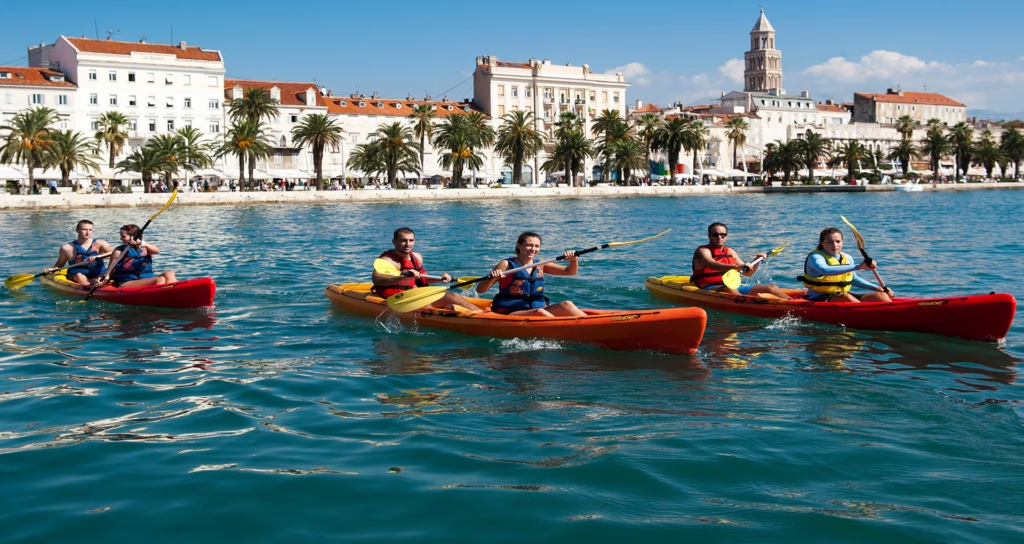
A heritage trip through Zadar County is not only about Zadar Old Town. This part of northern Dalmatia brings together Venetian walls, Roman ruins, mountain forests, island traditions, salt pans, lacemaking, dry stone landscapes and small historic towns.
Not every historic place in the county is a separate UNESCO World Heritage Site. For visitors, the main UNESCO connections are the Zadar City Walls and the beech forest areas of Paklenica National Park.
The Zadar City Walls form part of the transnational Venetian Works of Defence between the 16th and 17th Centuries: Stato da Terra – Western Stato da Mar. The beech forest areas of Paklenica National Park belong to a wider European UNESCO World Heritage property.
Around them, Zadar County also has UNESCO-protected intangible traditions, such as Pag lace and dry stone walling. This makes the region ideal for travelers who want more than beaches. You can walk through Roman and Venetian history in the morning, eat local cheese or seafood at lunch, and finish the day by the sea.
Explore This Guide
ToggleWhy Zadar County is a strong heritage base
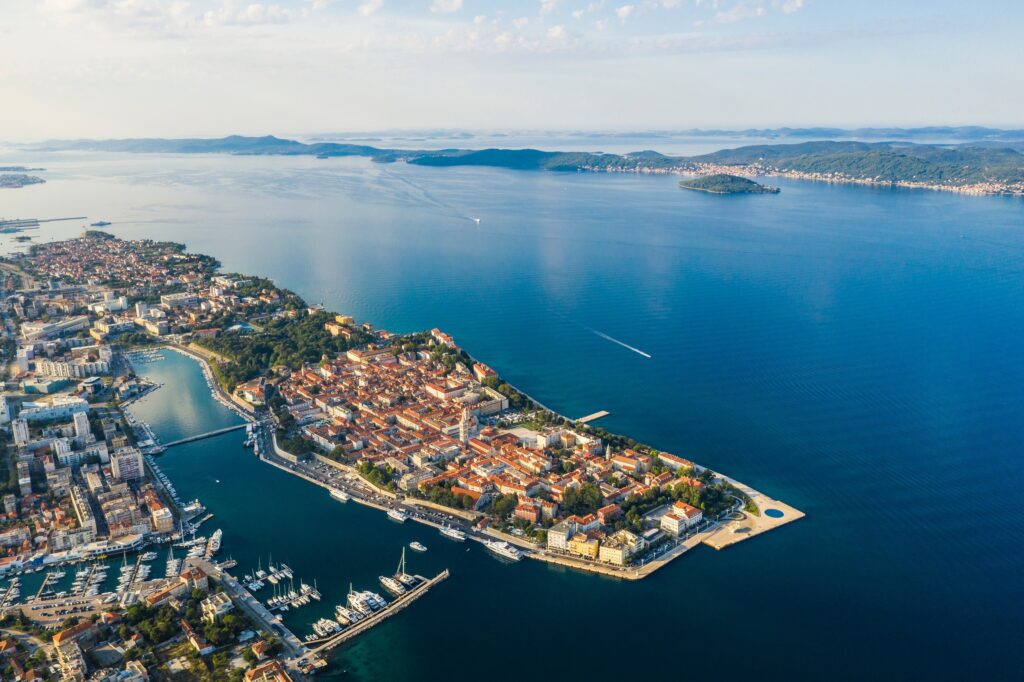
Zadar County works well for a cultural holiday because the distances are manageable. Zadar Old Town gives you UNESCO walls, Roman remains, churches, museums and waterfront walks in one compact area. From there, you can make easy day trips to Nin, Pag Island, Paklenica National Park, Ugljan, Pašman and Biograd na Moru.
It is also a good region for mixed travel styles. Couples can focus on old towns, sunsets and slow island trips. Families can combine heritage with beaches and short walks. Active travelers can add Paklenica, Velebit and the Zrmanja River.
If you want the easiest base for sightseeing, stay in Zadar. If you want a quieter stay with beaches and local character, consider Nin, Pag, Starigrad Paklenica, Biograd or one of the nearby islands.
Zadar City Walls UNESCO: the main World Heritage landmark
The clearest UNESCO landmark in Zadar County is the Zadar City Walls. They are part of the UNESCO World Heritage property called Venetian Works of Defence between the 16th and 17th Centuries: Stato da Terra – Western Stato da Mar.
This is a transnational heritage listing shared by six defence components in Croatia, Italy and Montenegro. In Zadar, the walls show how important the city was during the Venetian period. They were part of a wider defensive system connected with Adriatic ports, sea routes and Venetian power.
The walls are best experienced as part of the living city, not as a closed museum. You see them while walking between gates, squares, harbours and old streets.
Land Gate Zadar
Land Gate is the most recognizable historic entrance into Zadar Old Town. It sits beside Foša Harbour and gives one of the strongest first impressions of the Venetian walls.
This is one of the best photo spots in the city. Come in the morning for softer light and fewer people, or near sunset for a more atmospheric walk. From here, you can continue toward Five Wells Square, People’s Square and the Roman Forum.
Land Gate is also useful for orientation. If you are planning a Zadar old town walking route for history lovers, this is a natural starting point.
Five Wells Square Zadar
Five Wells Square is another important stop near the old defensive system. The square reflects a different side of Zadar’s history. It was linked to water supply and city life, not only military defence.
Today, it is a good place to pause between the walls, gardens and old town streets. It also works well as a transition point between the fortified edge of the city and the deeper historic center.
Foša Harbour and the Venetian walls
Foša Harbour is one of the most scenic places to understand Zadar Venetian walls. The small harbour sits below the fortifications and creates one of the classic views of the city.
It is especially beautiful in the late afternoon. Walk slowly here instead of rushing straight into the old town. The view helps you understand why Zadar was such a strategic coastal city.
Zadar historic sites inside the Old Town
Zadar is one of Croatia’s best cities for layered history. Roman, early Christian, medieval, Venetian and modern elements sit close together. You do not need a complicated plan. The old town is easy to explore on foot.
Roman Forum Zadar
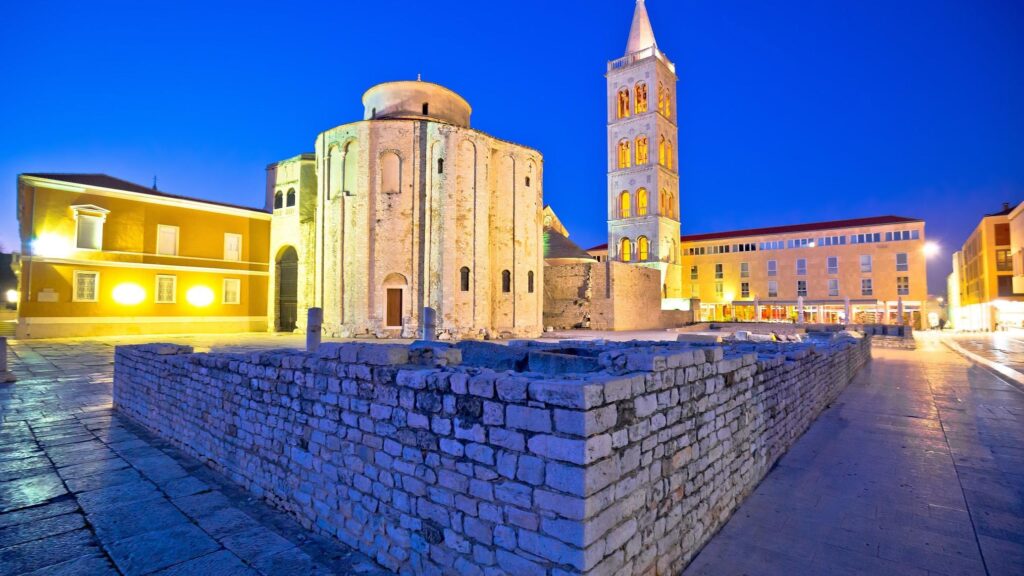
The Roman Forum Zadar is one of the most important ancient sites in the city. It sits in the open air, close to St Donatus Church and the cathedral.
This is not a polished museum experience. That is part of its charm. You see columns, stones and remains in the middle of daily city life. Cafes, churches, streets and tourists all surround the ancient space.
For the best experience, visit early or later in the day. The site feels more powerful when you can slow down and imagine the old Roman city around you.
St Donatus Church Zadar
St Donatus Church is one of the most recognizable monuments in Zadar. Its round shape makes it stand out from the surrounding streets and squares.
It is especially important for travelers interested in Zadar old town history. Together with the Roman Forum, it creates one of the strongest historic scenes in the old town.
Even if you only have one day in Zadar, include this area. It connects ancient history, early medieval architecture and the heart of the old city.
Cathedral of St Anastasia and Kalelarga
The Cathedral of St Anastasia adds another layer to the old town. Its bell tower is a major visual marker, and the surrounding streets are some of the most atmospheric in Zadar.
Kalelarga, the city’s famous main street, is perfect for a relaxed walk. It is not only a shopping street. It also connects historic squares, churches, cafes and local daily life.
This is where Zadar feels less like a checklist and more like a real Adriatic city.
Museums and rainy-day culture
Zadar has several useful museum stops for travelers who want more context or need a rainy-day option. The Museum of Ancient Glass is especially interesting because it focuses on a very specific part of local history.
The Archaeological Museum is another strong choice if you want to understand the Roman and earlier layers of the region. Before visiting, always check current opening hours, especially outside summer.
Paklenica UNESCO: beech forests, canyons and Velebit
Paklenica National Park adds a completely different side to Zadar County UNESCO heritage. While Zadar gives you stone walls and urban history, Paklenica gives you mountains, canyons, forests and protected nature.
The UNESCO connection here relates to specific beech forest areas within Paklenica National Park. They form part of the wider World Heritage property Ancient and Primeval Beech Forests of the Carpathians and Other Regions of Europe. The UNESCO status applies to these specific forest areas, not to every trail, viewpoint or visitor area in the park.
For most visitors, Paklenica is also known for its dramatic canyons, hiking trails and climbing routes. The main access point is near Starigrad Paklenica, which makes it a practical base for nature-focused stays.
Velebit also has UNESCO recognition through the Man and the Biosphere Programme. This is different from World Heritage status, but it still supports the area’s importance for biodiversity, landscape protection and sustainable travel.
How to visit Paklenica from Zadar
Paklenica is one of the best Zadar County day trips if you want culture and nature in the same holiday. You can visit it as a day trip from Zadar, but staying near Starigrad Paklenica gives you a much easier start.
The park is best for travelers who enjoy walking, views and landscapes. Summer can be hot, so start early and carry water. Spring and autumn are usually better for hiking and longer walks.
Before you go, check current entrance rules, trail conditions, cave access and seasonal opening details. Mountain weather can change quickly, even when the coast feels calm.

Pag Island heritage: lace, cheese and stone landscapes
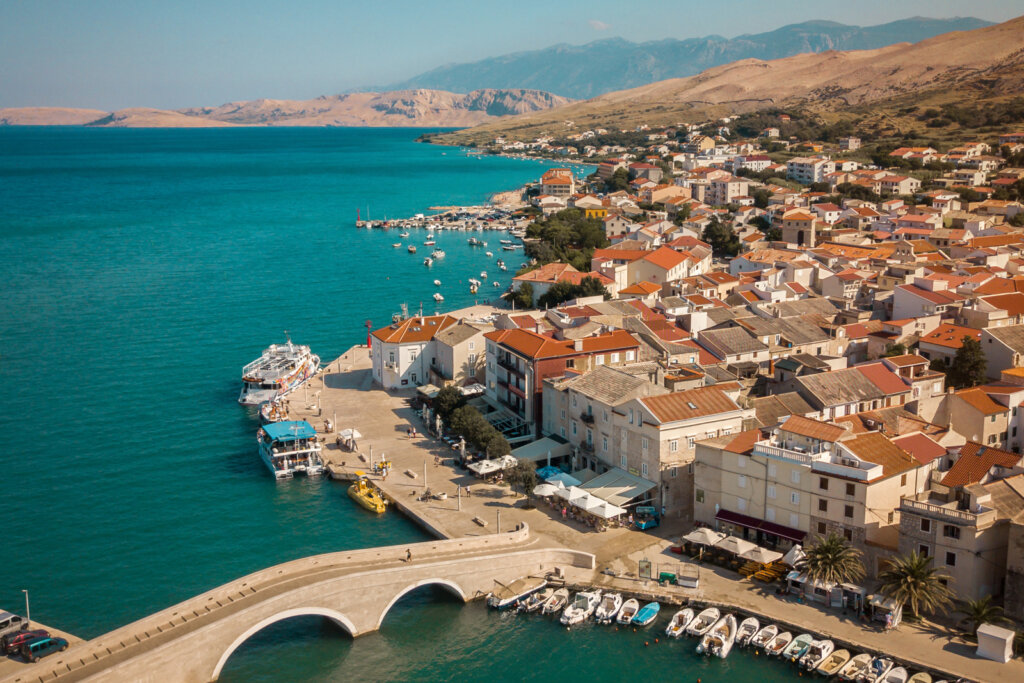
Pag Island is one of the best places in Zadar County for living traditions. It is famous for its pale stone landscapes, sheep, cheese, salt, lace and old town streets.
The most important UNESCO tradition here is Pag lace. This delicate needle lace is part of Croatia’s lacemaking heritage and is closely connected with the town of Pag. It is not only a souvenir. It is a craft passed through generations.
Pag Island heritage also includes food. Paški sir, or Pag cheese, is one of Croatia’s best-known local products. The island’s sheep graze on salty, wind-shaped landscapes, which gives the cheese its special identity.
Where to experience Pag lace
Pag town is the best place to connect the lace tradition with the island setting. Look for local displays, small exhibitions, craft shops or cultural events when available.
Lace demonstrations may not run every day. If lace is an important reason for your visit, check current local information before traveling.
Pag is also a good place for travelers who want a cultural base with beaches nearby. It works well for couples, food lovers and visitors who prefer a slower island atmosphere.
Dry stone walls in Zadar islands
Dry stone walling is one of the most visible traditional landscapes in the Zadar archipelago. Tourists often notice these walls on islands such as Ugljan and Pašman, even before they know their meaning. On Ugljan, dry stone heritage is part of a very old farming landscape, with huts, walls and paths still visible across the island.
Dry stone walls are built without mortar. They shaped fields, paths, boundaries and grazing areas across rocky island terrain. The skill is part of a wider UNESCO-protected intangible heritage tradition.
For visitors, this heritage is best experienced slowly. Walk village paths, look across olive groves, and notice how stone structures divide the landscape. This is not a single monument. It is a cultural landscape.
Ugljan and Pašman for quiet heritage trips
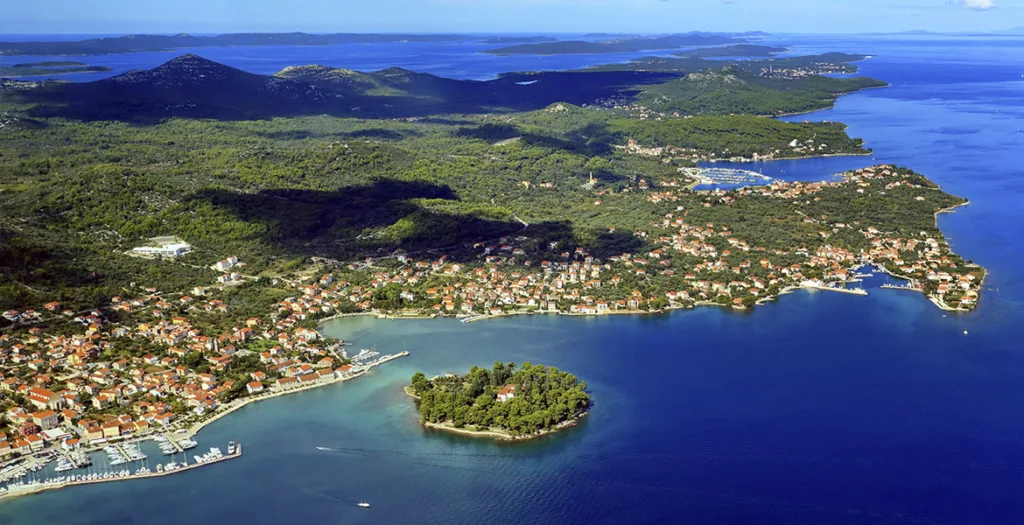
Ugljan is easy to reach by ferry from Zadar, which makes it one of the simplest island day trips. Preko is the main arrival point for many visitors, and the island offers village streets, sea views, olive groves and walking routes.
Pašman feels even quieter in many areas. Tkon and nearby villages work well for travelers who want a slower island base. Dry stone walls, small churches, beaches and walking paths create a softer heritage experience than Zadar Old Town.
These islands are especially good if your trip mixes culture, swimming and simple local atmosphere.
Nin Croatia historic town and salt heritage
Nin is one of the best historic places near Zadar. It is small, walkable and very different from the larger city atmosphere of Zadar.
The old town sits in a compact historic center connected by bridges and surrounded by shallow lagoon scenery. Visitors come for history, salt, sandy beaches and relaxed family-friendly stays. The Church of the Holy Cross is one of the most famous landmarks, often linked with the town’s early medieval identity.
Nin is also known for salt production. Salt heritage adds a practical, local layer to the visit. It connects the town with landscape, food and everyday life, not only churches and stones.
Queen’s Beach nearby gives Nin strong appeal for families. This makes it a smart base if you want heritage in the morning and shallow beach time later in the day.
More heritage day trips in Zadar County
Zadar County has more than one type of heritage day trip. Some places are best for old streets and museums. Others are better for landscapes, local food or island traditions.
Biograd na Moru
Biograd na Moru is a practical coastal base south of Zadar. It is useful for families, boat trips and visitors who want easier access to beaches and nearby nature.
It also has a historic identity connected with the Croatian coast. While it may not feel as monumental as Zadar Old Town, it works well as a relaxed base for mixed itineraries.
Vrana Lake Nature Park
Vrana Lake Nature Park adds nature, viewpoints and birdlife to a Zadar County itinerary. It is not a UNESCO site, but it pairs well with Biograd, Paklenica and coastal stays.
The viewpoint areas are especially useful if you want a break from old town sightseeing. Always check access, road conditions and seasonal rules before planning a visit.
Zrmanja River and Velebit foothills
The Zrmanja River brings a more adventurous landscape into the region. It is known for canyon scenery and outdoor activities.
This area works best for travelers with a car or those booking organized experiences. It pairs well with a trip focused on Velebit, Paklenica and inland scenery.
Novigrad and quiet historic corners
Novigrad is a quieter option for travelers who like small places, water views and slower exploration. It can work as a peaceful stop if you are travelling by car.
Although it is not one of the main UNESCO-focused stops, it adds variety to a heritage-focused route. It shows how Zadar County heritage is spread across small towns, bays and landscapes.
Suggested Zadar County itinerary for UNESCO and heritage
One day: Zadar Old Town heritage walk
Start at Land Gate and Foša Harbour. Continue to Five Wells Square, then walk toward People’s Square and Kalelarga.
Spend time around the Roman Forum, St Donatus Church and the Cathedral of St Anastasia. End at the waterfront for the Sea Organ and sunset.
This is the best option if you have limited time and want the strongest Zadar UNESCO and history experience.
Two days: Zadar and Nin or Ugljan
Use day one for Zadar Old Town. On day two, choose Nin for history, salt and sandy beaches, or Ugljan for island villages and dry stone landscapes.
Nin is easier if you want a short mainland trip. Ugljan is better if you want a ferry experience without going too far.
Three to five days: Zadar, Pag, Paklenica and islands
With more time, build a richer Zadar County cultural itinerary. Spend one or two nights in Zadar, then add Pag Island, Paklenica National Park or an island stay on Ugljan or Pašman.
This route works well for travelers who want UNESCO sites in Zadar County, beaches, local food and nature in one trip.
Where to stay in Zadar County for UNESCO sites and heritage
Choosing the right base makes the trip easier. Zadar County has several good options, depending on your travel style.
Stay in Zadar Old Town for easy sightseeing
Zadar Old Town is the best base for first-time visitors and short stays. You can walk to the UNESCO walls, Roman Forum, St Donatus Church, museums, restaurants and sunset spots.
The trade-off is parking. Old-town stays are best if you want atmosphere and do not mind planning arrival logistics carefully.
Stay in Nin for families and sandy beaches
Nin is a strong choice for families and travelers who want a smaller town. You get historic streets, salt heritage and easy beach access.
It is also good if you prefer a quieter base outside Zadar, while still staying close enough for day trips.
Stay in Pag town for island culture
Pag town is best for visitors interested in Pag lace, cheese, island landscapes and a more local rhythm. It gives you culture and beaches without the same city feel as Zadar.
This is a good base for couples, food-focused travelers and slower island stays.
Stay near Starigrad Paklenica for nature and hiking
Starigrad Paklenica is the best base for Paklenica National Park. Choose it if hiking, Velebit scenery and UNESCO beech forest context matter more than nightlife or museums.
It also works well as part of a road trip along the coast.
Stay on Ugljan or Pašman for quiet island heritage
Ugljan and Pašman are good for slower trips, dry stone landscapes, village walks and simple beach days. They suit travelers who want peace rather than a busy city base.
These islands work best if you are comfortable with ferry planning.
Best time to visit Zadar County UNESCO sites
The best months for heritage sightseeing are May, June, September and early October. The weather is usually better for walking, and the old towns are more comfortable than in peak summer.
July and August are best if you want beaches, ferries and full summer energy. However, sightseeing can feel hot during the day. Plan old-town walks early in the morning or near sunset.
Spring is excellent for Zadar, Nin, Pag and Paklenica. Autumn is also strong for culture, food, hiking and quieter stays. Winter can be peaceful in Zadar, but some island services, restaurants and attractions may have reduced hours.
Practical tips before you go
Check opening hours before visiting museums, churches and exhibitions. Smaller heritage attractions may change schedules by season.
For Paklenica, check entrance rules, trail conditions and cave access before your visit. Wear proper shoes and carry water, especially in warm months.
For island trips, check ferry schedules on the day before travel. Timetables can vary by route and season.
If you are driving into Zadar, plan parking before arrival. Staying in the old town is atmospheric, but it is not always the simplest option for cars.
Plan time for slow walks, local food and small villages, not only the famous UNESCO stops. Zadar County heritage is strongest when you mix major sites with quieter details, such as stone walls, salt pans, local food, village harbours and evening walks.
FAQs
What UNESCO sites are in Zadar County?
The main UNESCO World Heritage landmarks for visitors are Zadar City Walls, as part of the Venetian Works of Defence, and specific beech forest areas in Paklenica National Park. The region also has UNESCO-protected intangible traditions, including Pag lace and dry stone walling.
Is Zadar a UNESCO city?
Zadar is not listed as one single UNESCO city. Its city walls are part of a UNESCO World Heritage property connected with Venetian defensive architecture across several countries.
Are Zadar City Walls worth visiting?
Yes. They are one of the most important historic landmarks in Zadar and the clearest UNESCO site in the city. Land Gate and Foša Harbour are the best places to start.
Where is the best place to see Zadar Venetian walls?
Start around Land Gate and Foša Harbour. This area gives you the most impressive view of the walls and connects easily with Five Wells Square and the old town.
Is the Roman Forum Zadar part of UNESCO?
The Roman Forum is not the main UNESCO-listed feature. However, it is one of the most important historic places in Zadar Old Town and should be included in any heritage walk.
Is Pag lace UNESCO protected?
Yes. Pag lace is part of Croatia’s UNESCO-recognized lacemaking tradition. Pag town is the best place in Zadar County to connect this craft with local island heritage.
Is Paklenica National Park UNESCO protected?
Specific beech forest areas in Paklenica belong to a transnational UNESCO World Heritage property. The park is also famous for canyons, hiking, climbing and Velebit mountain scenery.
Can I visit Zadar UNESCO sites without a car?
Yes, you can visit the Zadar City Walls and old town sites on foot. For Nin, Ugljan and some nearby trips, buses or ferries may work. A car is more useful for Paklenica, Pag and rural areas.
How many days do I need for Zadar County heritage sites?
One day is enough for Zadar Old Town. Two or three days allow you to add Nin, Ugljan or Pag. Four to five days are better if you want Paklenica, islands and beaches too.
Where should I stay for Zadar County UNESCO sites?
Stay in Zadar Old Town for the easiest access to the walls and historic center. Choose Starigrad Paklenica for nature and hiking, Nin for families, or Pag town for island heritage and local food.
What is the best month to visit Zadar County for history and culture?
May, June, September and early October are the most comfortable months for walking, day trips and heritage sightseeing. July and August are lively but hotter and busier.
Is Zadar County good for couples and families?
Yes. Couples can focus on old towns, sunsets, food and islands. Families can combine short heritage walks with beaches in Nin, Zadar, Pag, Biograd, Ugljan or Pašman.
Disclosure: This page may contain affiliate links. This means that we get a small commission from any purchase you make, at no additional cost to you!