Most heritage trips in Croatia focus on one old town, one cathedral, or one famous waterfront. Split-Dalmatia County is more interesting because the story keeps changing as you move through it.
In Split, Roman walls became part of a living city. In Trogir, the historic core feels compact, elegant, and easy to explore on foot. On Hvar, Stari Grad Plain shows that UNESCO heritage can also be a landscape of vines, olives, and dry-stone patterns rather than a single monument. Inland, Sinj adds living tradition, while Salona and Klis bring a deeper Roman and medieval layer.
That mix makes the trip more rewarding than a standard old-town break. Instead of focusing on just one place, you can combine the best UNESCO sites in Split-Dalmatia County with local food, island time, and practical day trips that suit your pace and travel style.
This is what makes the county so strong for a culture-focused holiday. You can walk through a UNESCO core in the morning, have lunch in a konoba, swim in the afternoon, and sleep in a town that still feels historic.
Explore This Guide
ToggleWhy Split-Dalmatia County stands out for UNESCO travel
Split-Dalmatia County stands out because it combines three different heritage experiences in one trip. You get major UNESCO old towns, an island cultural landscape, and living traditions that still shape local identity.
The main World Heritage highlights are:
the Historical Complex of Split with the Palace of Diocletian
the Historic City of Trogir
Stari Grad Plain on Hvar
Velika and Mala Crljivica at Cista Velika as part of the serial UNESCO listing of Stećci Medieval Tombstone Graveyards
The county also connects well with UNESCO intangible heritage. That matters because this is not only a region of monuments. It is also a region of songs, processions, food culture, and local customs that still shape the travel experience. The strongest examples linked to this region are Sinjska Alka in Sinj, klapa multipart singing in Dalmatia, the Za Križen procession on Hvar, and Croatian lacemaking through Hvar’s agave lace tradition.
This is why the county works so well for travelers who want more than a checklist of sights. Heritage here is not sealed off from daily life. You can hear it in klapa singing, taste it in local dishes, and experience it in old towns that still feel lived in.
Best UNESCO sites in Split-Dalmatia County
A simple way to plan this route is to start with the strongest coastal heritage stops, then add Hvar for a deeper island layer, and finally include inland additions if you want a broader cultural trip.
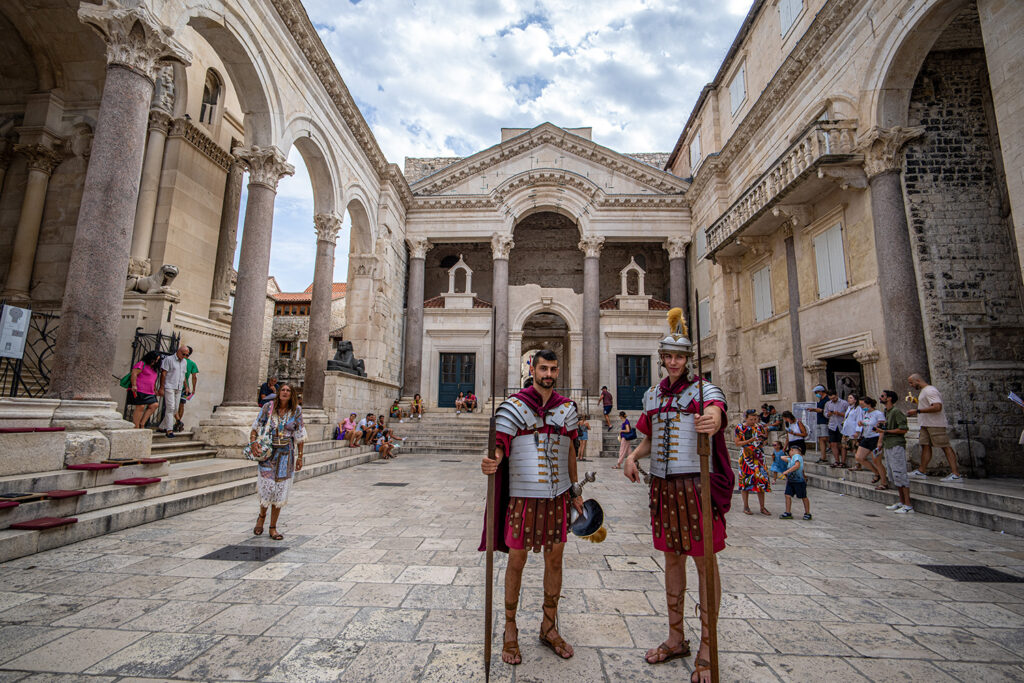
Split and Diocletian’s Palace
Split is the most practical starting point for a first trip, but it is also more unusual than many travelers expect.
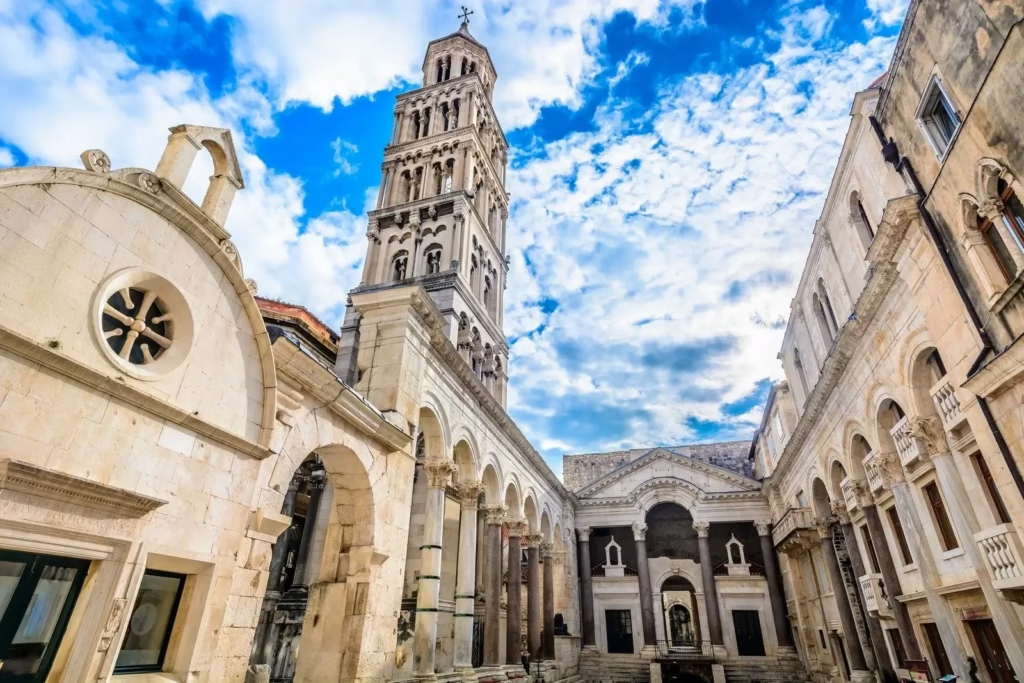
The historic core of Split grew inside and around Diocletian’s Palace. That is what makes it different from many old towns in Europe. This is not a separate archaeological zone outside the city. The palace became part of the living city, so today you move through Roman walls, medieval lanes, small squares, churches, homes, and cafés in the same area.
The best way to visit is slowly.
Walk through the Peristyle, the palace cellars, the cathedral area, the main gates, and the narrow lanes between them. Then step outside the core toward the Riva or Veli Varoš. That helps you understand why Split is not just a monument, but a city that still lives inside its Roman frame.
Split suits first-time visitors, weekend travelers, and anyone who wants the easiest transport base.
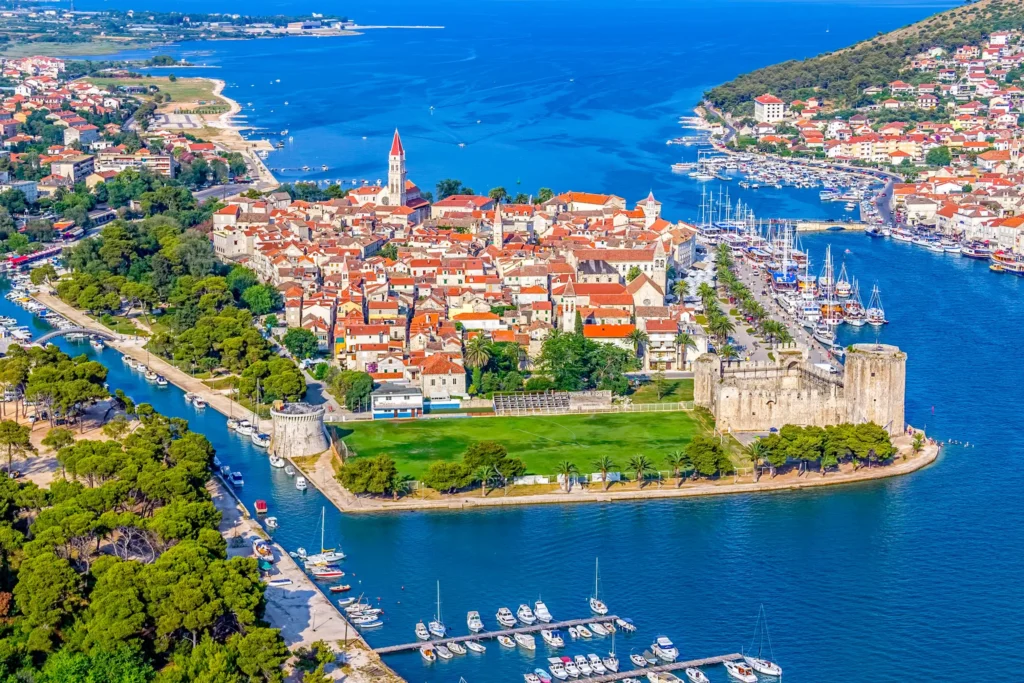
Trogir old town
Trogir is one of the easiest UNESCO day trips from Split and one of the most complete small historic towns on this coast.
Its old town sits on a small island and feels compact, walkable, and visually coherent. The street plan, cathedral, palaces, loggia, and waterfront all fit into a short visit, but the town still rewards a slower stay.
Trogir works especially well for travelers who want heritage without the scale and pace of Split. It is easier to absorb in a half day or full day. It also pairs well with a seafront stay in nearby areas if you want culture plus beach time.
If you like old town hotels, evening walks, and a smaller historic base, Trogir is a very strong choice in the county.
Stari Grad Plain on Hvar
Stari Grad Plain is one of the most distinctive UNESCO sites in the region because the story is in the landscape.
This is not a single monument. It is a cultural landscape on Hvar that has remained remarkably intact since Ionian Greeks from Paros organized the plain in the 4th century BC. Its historic field division and long tradition of growing grapes and olives are what make it special. You are seeing a landscape shaped by centuries of farming, not just a building.
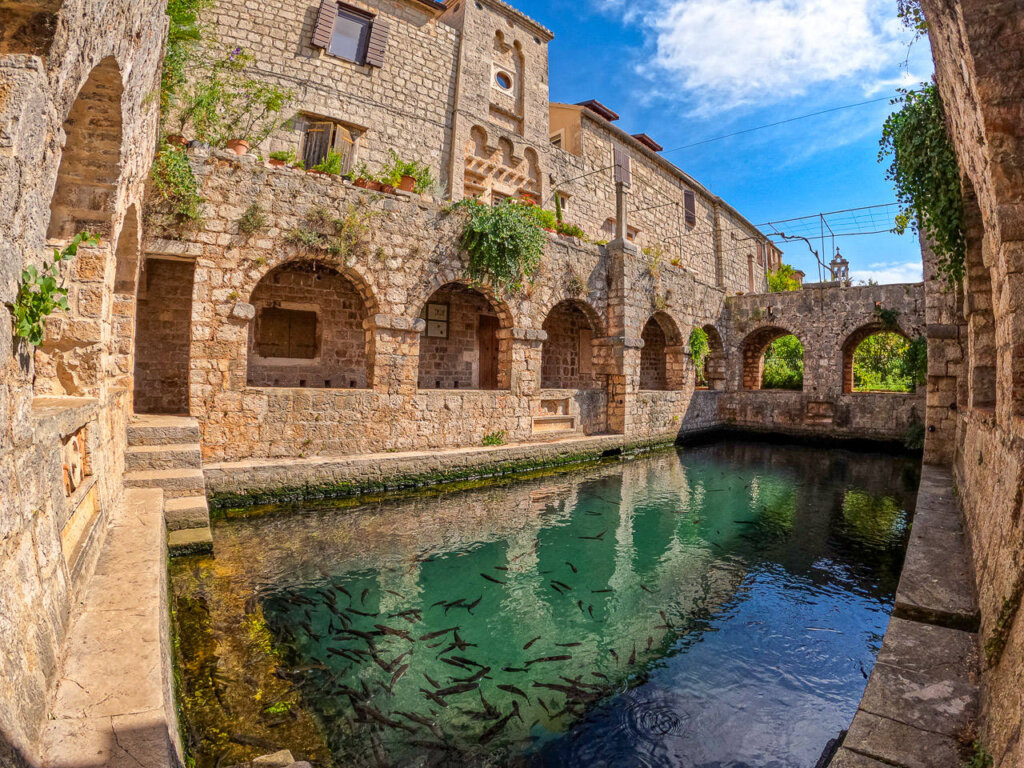
Many travelers understand it better when they combine it with Stari Grad town. Visit the plain by car or bike, then return to town for Tvrdalj, the waterfront, and a calmer Hvar atmosphere.
This site appeals most to travelers who like history with context. It is not about a dramatic photo stop. It is about seeing how farming, stone walls, olives, and vines shaped life over centuries.
Best history places beyond UNESCO
A fuller heritage trip in this region goes beyond the official UNESCO list.
Salona
Salona is one of the most important history places near Split.
It helps explain the wider Roman story behind Diocletian’s Palace and the region. If you want to understand Split better, Salona is one of the best add-on visits.
It suits travelers with a car, but it can also work as a focused half-day heritage outing from Split.
Klis Fortress
Klis Fortress is one of the strongest viewpoints and history places near Split.
It adds a military and strategic layer to the trip. The setting is dramatic, the views are wide, and it works well in the same broader route as Solin or Salona.
This is also a good stop for travelers who want history with stronger visual payoff.
Sinj old town
Sinj offers more than the Alka tradition.
It is worth visiting for its inland atmosphere, church landmarks, town center, and slower rhythm. It feels different from the coast and gives the article more range.
Stari Grad town
Stari Grad should not be reduced only to the plain.
The town itself is one of the most pleasant heritage bases on Hvar. It is calmer than Hvar Town, more rooted in history, and easier for travelers who want a slower trip.
Tvrdalj is one of the key cultural stops here, and the whole waterfront area is good for an evening walk.
Living traditions that make the region more interesting
A strong Split-Dalmatia County heritage trip should not stop at buildings. These traditions also help travelers decide the best season to visit and whether to stay on the coast, inland, or on Hvar.
Sinjska Alka
Sinjska Alka is one of the most famous traditions in inland Dalmatia.
It is a historic chivalric tournament held in Sinj and one of the county’s clearest examples of living UNESCO heritage. Even if you are not visiting during the event itself, Sinj still makes sense because the tradition shapes the town’s identity.
The Alka Museum can add context to the trip, and Sinj feels different from the coast. It is a good choice if you want to balance Roman and Venetian-style heritage with inland history.
Klapa singing
Klapa is one of the most recognizable cultural expressions of Dalmatia.
It adds atmosphere to evenings in Split, on Hvar, and in other coastal towns. It is not something you need to chase too hard. It is better when you come across it naturally in the right setting, where it makes the heritage side of the region feel more alive through music, mood, and local identity.
Za Križen on Hvar
Za Križen is one of the most important traditions on Hvar.
It takes place on Maundy Thursday night, when processions from six villages move in a circle across central Hvar. It is especially relevant for travelers visiting around Easter, but it also matters year-round as part of the island’s cultural identity. This is one of the reasons Hvar is much more than beaches and nightlife.
It shows that Hvar has depth, continuity, and living ritual culture beyond its beaches and summer image.
Hvar agave lace and traditional craft
Hvar also adds a craft tradition through its agave lace heritage. The UNESCO-recognized element is part of Croatian lacemaking, and the agave version is made only by the Benedictine nuns in Hvar Town.
That matters because it gives the island a more refined cultural layer. It also helps show that Hvar is more than a summer party destination.
Food as heritage
Food deserves its own heritage lens here.
The Mediterranean diet is also part of Croatia’s wider UNESCO-linked heritage story, and Split-Dalmatia County is a natural place to feel that through olive oil, wine, fish, greens, simple seasonal cooking, and shared meals. Hvar and Brač are especially strong islands for this angle.
This makes the trip feel richer and more grounded. Visitors do not only want to see history. They also want to taste it.
Stećci at Cista Velika
This is the least visited UNESCO element in the county, but it still adds depth for travelers building a broader inland route.
The local UNESCO component is Velika and Mala Crljivica at Cista Velika, part of the wider serial listing of Stećci Medieval Tombstone Graveyards. It is not usually a core stop on a classic coastal holiday, but it can fit well if you want to see more than Split, Trogir, and Hvar.
This stop makes the most sense for travelers doing a broader inland route by car, especially if they want to see a less obvious side of the county.
For most visitors, this is an optional heritage stop rather than a main highlight. Still, it matters because it expands the county’s UNESCO story beyond the coast and islands.
Where to stay for a heritage trip in Split-Dalmatia County
Choosing the right base matters more than trying to see everything too fast. This is one of the most important decisions for this trip because Split, Trogir, Stari Grad, and Sinj each suit a different style of heritage travel.
Stay in Split if you want the easiest base
Split is the best base for first-time visitors and short trips.
It gives you the strongest transport connections, a major UNESCO site on your doorstep, and simple day-trip access to Trogir, Salona, Klis, and even island routes.
This is the most practical option for short trips.
Check stays in Split if you want easy logistics and a historic core you can explore on foot.
Stay in Trogir if you want a smaller old town feel
Trogir is best for couples, short-stay travelers, and visitors who want heritage in a compact setting.
It also works well for travelers arriving near Split Airport. If you want to wake up close to a stone old town and keep the trip simple, Trogir is a smart base.
Check stays in Trogir if you want a more intimate heritage atmosphere.
Stay in Stari Grad if Hvar is part of the plan
If you want to include Stari Grad Plain properly, staying on Hvar makes sense.
Stari Grad is one of the best bases for heritage-focused island travel and slower island stays. It feels older, calmer, and more grounded than a fast nightlife-based stay.
Check stays in Stari Grad if you want Hvar with more history and less rush.
Stay in Sinj for a different side of the county
Sinj is best for return visitors who want inland culture, lower-key evenings, and a base outside the busiest coastal zones.
It is not the classic first-time base, but it can work very well if you want a different side of the county.
Simple ways to plan a Split-Dalmatia heritage trip
If you only have 2 to 3 days
Focus on:
Split old town and Diocletian’s Palace
Trogir as a day trip
one extra stop such as Klis or Salona
This gives you the strongest return for limited time.
If you have 4 to 5 days
Add Hvar to the plan.
A strong route is:
Split
Trogir
Salona or Klis
Stari Grad on Hvar
Stari Grad Plain
This version balances famous sights with deeper heritage.
If you have 6 to 7 days
Add Sinj and slow the pace.
This is where the trip becomes more than a checklist. You start to connect world heritage, living tradition, local food, and different landscapes in one route.
What to eat on a heritage-focused trip
Food also makes this kind of trip feel more complete and practical.
Look for:
soparnik
peka
Dalmatian pršut
local olive oil
island wine
simple seafood dishes on the coast
inland meat dishes around Sinj
seasonal vegetable plates and shared starters in konobas
This also makes the trip easier to imagine and plan.
Practical tips for visiting Split-Dalmatia County UNESCO sites
Split is the easiest arrival point for most travelers.
Trogir is one of the easiest heritage day trips in the county.
Hvar needs more planning because ferry timing shapes the day.
Stari Grad works better with an overnight stay than a rushed island dash.
Salona and Klis pair well together.
Summer is best for combining heritage and island travel, but it is the busiest season.
Spring and early autumn are often better for walking and slower sightseeing.
Inland stops such as Sinj add variety if you want more than the standard coast route.
Old towns often mean stone streets, stairs, and limited parking nearby.
A heritage trip works best when you choose two or three strong bases instead of changing hotels every night.
Who this heritage trip suits best
The best base changes by travel style.
Families often do well in Split or near Trogir because logistics are easier.
Couples often prefer Trogir or Stari Grad for atmosphere.
Budget travelers usually get the easiest transport value from Split, while inland stays can sometimes lower accommodation costs.
The region is also a good fit for travelers who want part culture trip and part beach holiday. That is one of its biggest strengths.
FAQs
What are the main UNESCO sites in Split-Dalmatia County?
The main highlights are Split, Trogir, and Stari Grad Plain on Hvar. The county also includes the Stećci site at Cista Velika as part of a wider UNESCO listing.
Is Split old town a UNESCO site?
Yes. The historic core of Split, centered on Diocletian’s Palace, is one of Croatia’s best-known UNESCO World Heritage areas.
Is Trogir worth visiting from Split?
Yes. Trogir is one of the easiest and most rewarding day trips from Split. It is compact, scenic, and easy to explore on foot.
What is special about Stari Grad Plain?
It is a UNESCO cultural landscape on Hvar. Its historic field pattern and traditional land use have survived for centuries.
Is Hvar only about nightlife?
No. Hvar also has major heritage value through Stari Grad Plain, old towns, religious traditions, and craft heritage.
Is Sinjska Alka a UNESCO site?
Sinjska Alka is UNESCO-recognized intangible heritage. It is a living tradition linked to the town of Sinj.
Where should I stay for a heritage trip?
Split is best for easy transport. Trogir suits travelers who want a smaller old town. Stari Grad is a strong choice for a heritage stay on Hvar.
Do I need a car for this heritage trip?
Not always. Split and Trogir are easy without a car, but a car helps for inland stops such as Sinj or Cista Velika and gives you more flexibility beyond the main coastal route.
Is Hvar realistic as a day trip, or is an overnight stay better?
Hvar can work as a day trip, but an overnight stay is usually better if you want to include both Stari Grad town and Stari Grad Plain without rushing.
What is the best season for this kind of trip?
Late spring and early autumn are often ideal. The weather is usually better for walking, and the crowds are lighter than in peak summer.
Can this trip work with beaches too?
Yes. That is one of the county’s biggest advantages. You can mix heritage sightseeing with coastal stays and swim stops.
How many days do I need for Split-Dalmatia County UNESCO sites?
A short trip can cover Split and Trogir. A better trip adds Hvar. A fuller heritage route works best with at least five to seven days.
Disclosure: This page may contain affiliate links. This means that we get a small commission from any purchase you make, at no additional cost to you!