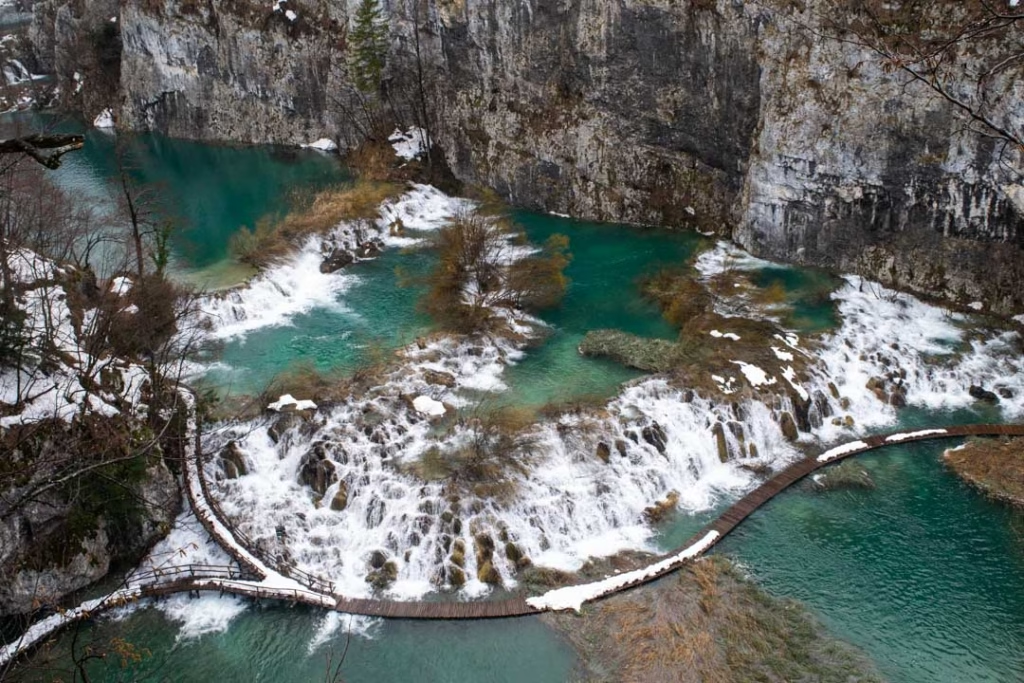
Dubrovnik-Neretva County is one of the best places in Croatia for a culture-led trip.
Most visitors start with Dubrovnik. That makes sense. The Old City of Dubrovnik is the county’s best-known UNESCO World Heritage site, and it remains the strongest reason to build a heritage itinerary here.
But the county offers much more than one famous old town.
You can add Korčula for its compact medieval core, Ston for walls and salt heritage, Cavtat for a calmer historic base, Konavle for living traditions, and the Neretva region for a very different cultural landscape. This creates a richer trip and helps you see the county beyond the busiest streets of Dubrovnik.
If your goal is to explore Dubrovnik-Neretva County heritage sites, this guide helps you focus on the places, traditions, and simple travel choices that matter most.
Explore This Guide
ToggleWhat counts as UNESCO in Dubrovnik-Neretva County?
Many visitors expect a long list of UNESCO places here. In practice, the county’s best-known UNESCO World Heritage site is the Old City of Dubrovnik.
There is also a second UNESCO World Heritage element in the county that many tourists miss: St. Barbara in Dubravka, Konavle, one of the Croatian component sites of the serial property Stećci Medieval Tombstone Graveyards.
Alongside those World Heritage links, the county also has an important UNESCO-recognised living tradition: the Festivity of Saint Blaise in Dubrovnik. That gives the county both major built heritage and a strong piece of living cultural heritage.
For most travelers, it makes more sense to see the county as a broader heritage route built around:
Dubrovnik Old Town
Saint Blaise traditions
St. Barbara in Dubravka, Konavle
Korčula Old Town
Ston and Mali Ston
Cavtat and Konavle
Narona and the Neretva region
Trsteno Arboretum
This gives you a more complete and rewarding trip through the county.
Dubrovnik: the UNESCO core of the county
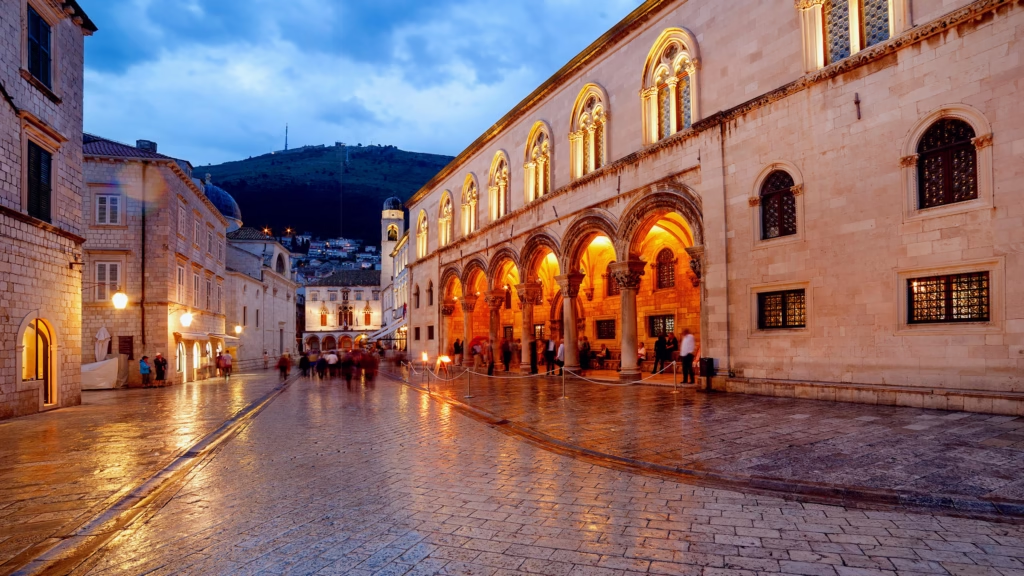
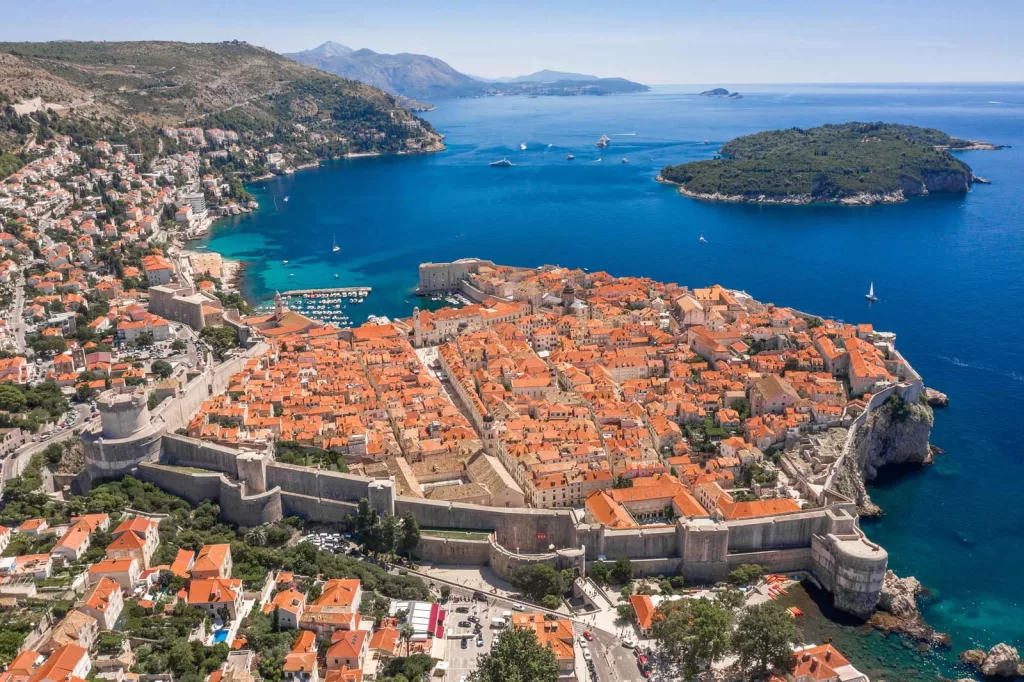
Old City of Dubrovnik
Dubrovnik is the obvious starting point for a heritage trip.
The old city is not only beautiful. It also has real historical weight. Within a compact area, you get fortifications, churches, palaces, monasteries, and stone streets that still feel like part of a complete urban whole rather than a few isolated monuments.
The most rewarding way to see it is slowly.
Start early and focus on a clear route instead of trying to tick off everything. A strong first-time walk usually includes:
Pile Gate
Stradun
Onofrio’s Fountain area
Franciscan Monastery
Sponza Palace
Rector’s Palace
Dubrovnik Cathedral
the harbour edge
a section of the walls or a fortress visit
This part of the county works especially well for travelers who enjoy walking, architecture, churches, museums, and layered history in a small area.
What makes Dubrovnik feel different
Dubrovnik is not just photogenic. It is unusually coherent.
Many Mediterranean towns have a beautiful square or a strong seafront. Dubrovnik gives you an entire walled setting that still reads clearly as a historic city. Gothic, Renaissance, and Baroque layers all appear within a short walk.
That is why even travelers who normally avoid museums often enjoy Dubrovnik’s heritage side.
The setting does much of the work for you.
Festivity of Saint Blaise
If you want to understand local identity, do not stop at stones and facades.
Saint Blaise, or Sveti Vlaho, is central to Dubrovnik’s cultural story. His image appears throughout the city, and the annual festivity remains one of the county’s most meaningful traditions.
For tourists, this matters because it shifts the trip from sightseeing into living heritage.
Even if you do not visit during the feast period, you will still notice how present Saint Blaise is in churches, statues, street names, and the old city’s visual language.
Best historic places beyond Dubrovnik
The wider county adds more depth to the trip and shows a broader side of southern Croatia’s heritage.
Korčula Old Town
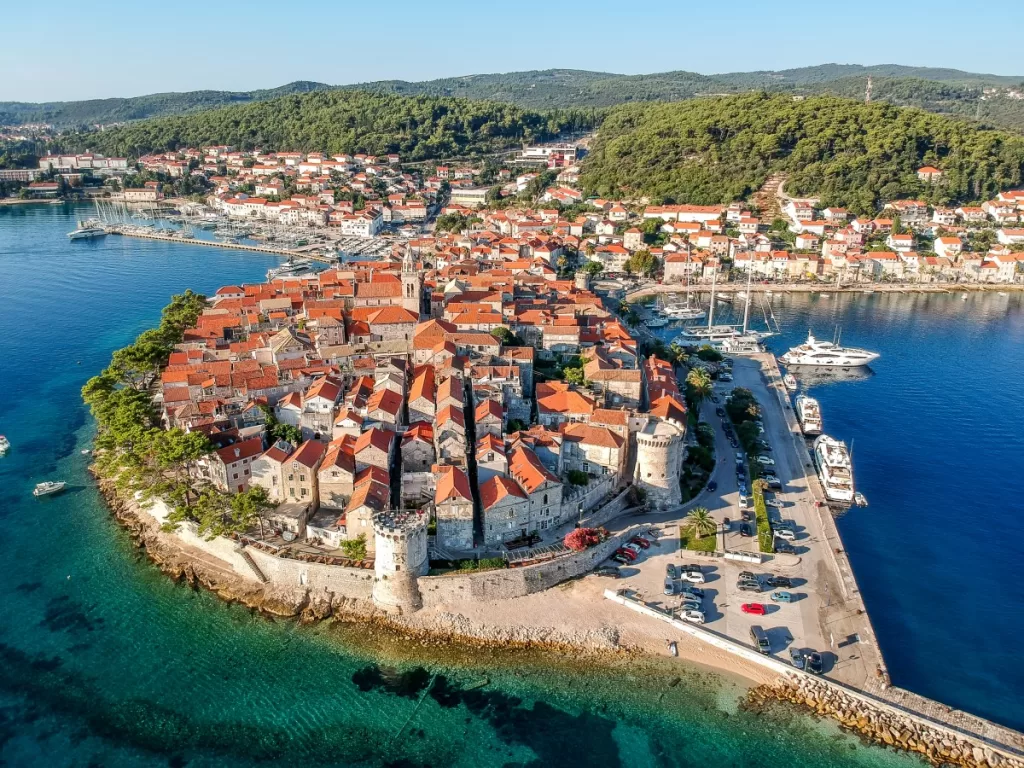
Korčula Town is one of the best historic places in Dubrovnik-Neretva County.
It is smaller than Dubrovnik, easier to manage, and very rewarding for travelers who prefer a compact old town with less pressure. The stone lanes, defensive edges, churches, and civic buildings make it one of the strongest cultural stops in southern Croatia.
What makes Korčula especially good is the balance.
You can explore the old town, stop for lunch, walk the waterfront, and still keep the day relaxed. It works well as a day trip in high season, but it makes more sense as an overnight base if culture is the main reason for your trip.
Check stays in Korčula Town if you want a walkable base in a compact historic setting.
Ston and Mali Ston
Ston gives you a different kind of heritage experience.
Instead of a polished city break atmosphere, you get walls, old salt heritage, and a landscape shaped by stone, sea, and food culture. The area feels practical, historic, and distinctive.
Mali Ston adds another layer with its oyster tradition. That is important because this stop is not only about monuments. It is also about a local way of life tied to the bay.
For many travelers, Ston works best as:
a half-day or full-day trip from Dubrovnik
a stop on the way across Pelješac
a one-night base for food and slower sightseeing
Cavtat
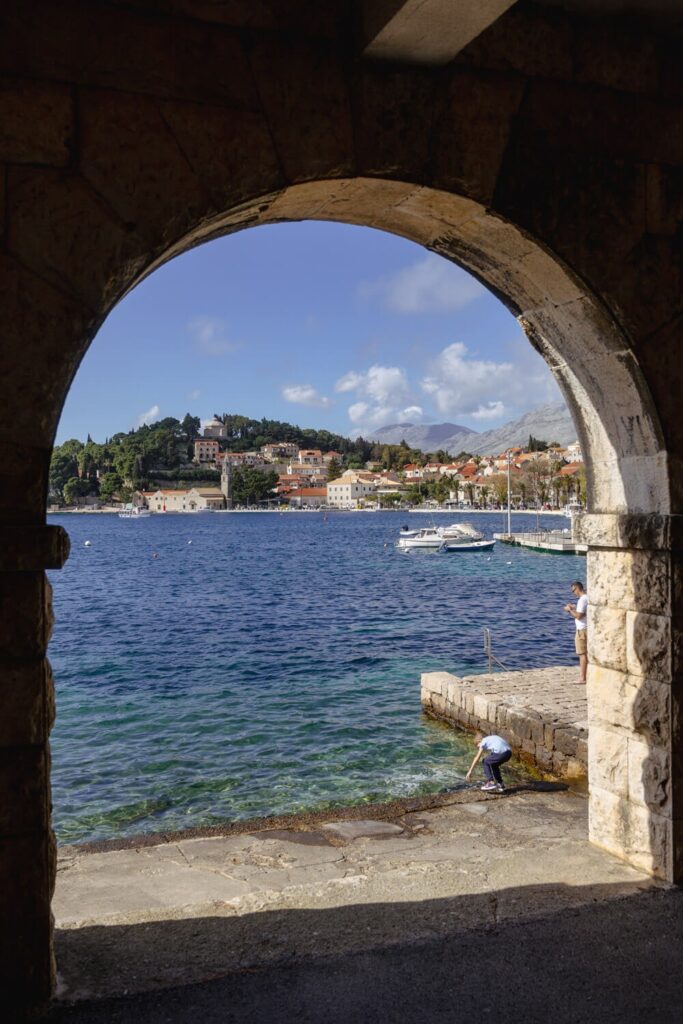
Cavtat is one of the smartest additions to this topic.
It has historic depth, a handsome waterfront, and a much calmer rhythm than Dubrovnik. It also connects well with the wider story of ancient Epidaurum and later regional history.
For tourists, Cavtat is useful because it combines culture with easier logistics. You can walk the old core, enjoy sea views, and still return to Dubrovnik when needed.
It is one of the best choices for travelers who want heritage without staying in the busiest part of the county.
Konavle, Čilipi, and Dubravka
Konavle adds both living heritage and a lesser-known UNESCO layer.
This is where traditional dress, embroidery, village customs, and folklore become more visible. Čilipi is especially relevant for travelers interested in local culture beyond city walls, as its folklore presentations are among the region’s best-known heritage experiences.
Konavle also includes St. Barbara in Dubravka, a UNESCO-listed stećci site. It is far less visited than Dubrovnik, but it matters if you want the fullest county-level UNESCO picture.
Konavle broadens the heritage picture. It shows that heritage in Dubrovnik-Neretva County is not only urban and medieval.
It is also rural, social, and still practiced.
Narona Archaeological Museum and Vid
If you want a more unusual heritage stop, look at Vid and the Narona Archaeological Museum.
This part of the county is often skipped by first-time visitors, but it adds Roman history and a very different inland feel. It works best for travelers already exploring the Neretva region or for repeat visitors who want something more specific than the standard Dubrovnik route.
This is not the county’s easiest stop, but it is one of its most distinctive.
Trsteno Arboretum
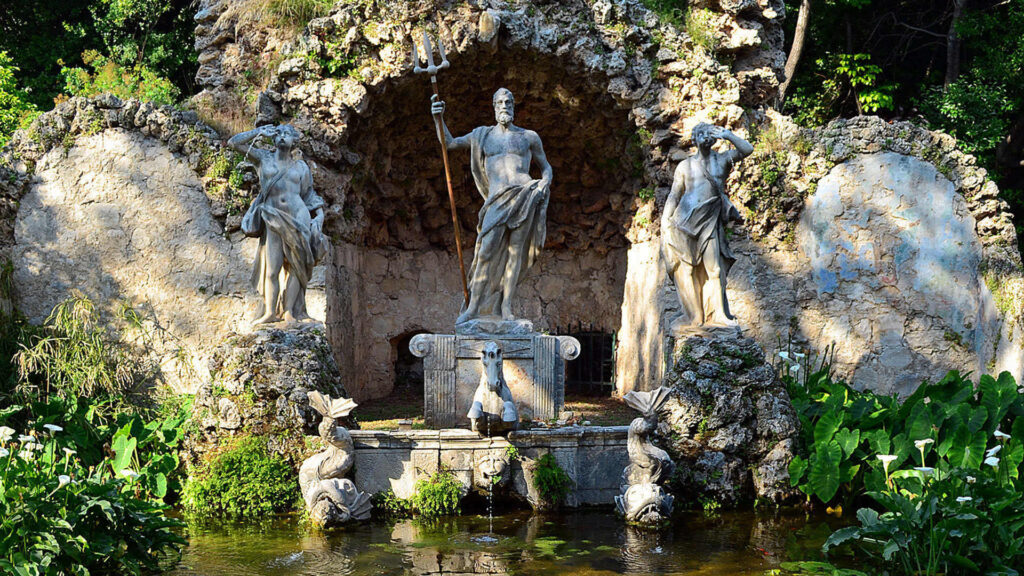
Trsteno is one of the easiest short additions from Dubrovnik.
It is not a full old-town stop like Korčula or Ston, but it brings a different heritage layer through gardens, a historic estate setting, and a long cultural landscape tradition. It suits travelers who want something calmer and greener without giving up the history angle.
Because of its short distance from Dubrovnik, it works especially well on a partial day.
Traditions and living heritage tourists can experience
The county’s traditions become clearest when you move beyond museums and monuments. These are the experiences that make the county feel alive.
Festivity of Saint Blaise in Dubrovnik
It is the clearest example of tradition, faith, civic identity, and public ritual coming together in Dubrovnik. If your trip aligns with the celebration period, it can reshape the whole tone of your visit.
Moreška in Korčula
Moreška is one of the county’s best-known heritage performances.
For tourists, it adds a memorable evening experience to Korčula rather than just another church or museum stop. It also gives the island a living cultural marker that feels local and rooted.
Konavle embroidery and folklore
Konavle is one of the best places to see heritage in everyday form.
Embroidery, costume, music, and village presentation matter here. This is not a large-scale sightseeing stop, but it adds authenticity and regional character.
Oyster culture in Mali Ston
Food belongs in this topic.
Mali Ston oysters are not just a famous dish. They are part of the local heritage landscape. They connect the bay, the settlements, and the food identity of southern Dalmatia in a way tourists can understand quickly.
Neretva boats and the Lađa tradition
The Neretva region offers a different cultural image of the county.
Traditional boats, river life, and the Lađa story add an important inland layer to the county’s cultural identity. They also show that Dubrovnik-Neretva County is more than its coastal old towns.
Simple itinerary ideas for a heritage trip
1 day
Stay in Dubrovnik and focus on the old city.
Walk the core monuments, add one museum, and finish with either the walls or Lovrijenac. This is the best option for first-timers with limited time.
2 days
Use Dubrovnik as your base.
Spend one day in Dubrovnik Old Town and one day in either Ston or Cavtat with Konavle. This gives you both major heritage and a calmer second day.
3 days
Split the trip between Dubrovnik and Korčula, or Dubrovnik and Pelješac.
This is where the county starts to feel richer. You move from headline sights into a more varied county route, with a clearer contrast between cities, islands, and inland heritage.
Once you know how many days you have, choosing the right base becomes much easier.
Where to stay for a heritage-focused trip
The best base depends on whether you want maximum sightseeing, better value, or a quieter waterfront stay.
Dubrovnik Old Town
Best for maximum atmosphere and short walking distances.
Choose this if you want to step straight into the heritage core and do not mind higher prices, stairs, and busier surroundings.
Check stays in Dubrovnik Old Town for maximum atmosphere and quick access to the sights.
Pile or Ploče
These areas work well for most first-time visitors.
You stay close to the old city but usually get easier arrivals and better room choice than inside the walls.
Check stays near Pile or Ploče for easy old city access and simpler arrivals.
Lapad
Lapad is a practical choice.
It suits travelers who want better hotel value, more space, and simple bus access into Dubrovnik’s historic centre.
Check stays in Lapad for better value and easy bus access to the historic centre.
Cavtat
Cavtat suits slower travelers, couples, and people who want heritage with a more relaxed waterfront base.
It is one of the smartest alternatives if Dubrovnik feels too intense.
Check stays in Cavtat for a quieter heritage base with easy access to Dubrovnik.
Korčula Town
This is the best island base for a heritage-focused trip.
Stay here if you want medieval atmosphere, evening walks, and a stop that feels substantial enough for at least one night.
Check stays in Korčula Town for a walkable island heritage base.
Ston or Mali Ston
Best for a short cultural-food stop.
This is a niche base, but a good one for travelers who prefer slower routes, local food, and a stop between Dubrovnik and the rest of Pelješac.
Check stays in Ston or Mali Ston for a slower food-and-history stop on Pelješac.
Best time to visit for heritage, traditions, and history
Spring and early autumn are usually the best seasons for this topic.
You get easier walking conditions, better sightseeing rhythm, and fewer pressure points than in peak summer.
Summer still works well, especially if you want festivals, fuller ferry connections, and a wider choice of events. The trade-off is heavier crowds in Dubrovnik.
Winter can suit repeat visitors who care more about atmosphere, churches, and quieter streets than island hopping.
The strongest months for most tourists are:
May
June
September
early October
Practical tips before you go
Start Dubrovnik early, especially if cruise traffic is expected.
Do not build the whole trip around only one old town.
If heritage matters most, add at least one stop beyond Dubrovnik.
Stay overnight on Korčula if the island is central to your plan.
Use Ston for a food-and-history stop, not only a photo break.
Check museum days and opening times before final planning.
Check ferry and catamaran schedules if you add Korčula, Mljet, or Lastovo.
Leave room for one living tradition, not only monuments.
FAQs
What UNESCO sites are in Dubrovnik-Neretva County?
The county’s best-known UNESCO World Heritage site is the Old City of Dubrovnik. It also includes St. Barbara in Dubravka, Konavle, as part of the serial World Heritage property Stećci Medieval Tombstone Graveyards, plus the UNESCO-recognised Festivity of Saint Blaise in Dubrovnik.
Is Dubrovnik Old Town the only major UNESCO highlight in the county?
No. It is still the county’s main UNESCO highlight for most visitors, but Konavle also has the St. Barbara stećci site as part of a UNESCO World Heritage serial property. Dubrovnik remains the most practical starting point for most culture trips.
What are the best historic places beyond Dubrovnik?
Korčula Old Town, Ston, Mali Ston, Cavtat, Trsteno, and the Narona area are the strongest additions. Each gives a different angle on the county’s history.
Is Korčula worth visiting for history lovers?
Yes. Korčula is one of the best heritage stops in southern Croatia. Its old town is compact, walkable, and easier to enjoy slowly than Dubrovnik in peak season.
Are the Ston Walls worth it?
Yes, especially if you enjoy historic fortifications and want a stop that also brings in local food culture. Ston works best when paired with Mali Ston and a relaxed lunch.
What traditions can tourists still experience in the county?
The strongest examples include the Festivity of Saint Blaise, Moreška in Korčula, Konavle folklore, and the oyster culture around Mali Ston. The Neretva boat tradition also adds a strong regional layer.
Where should I stay for a culture-focused trip?
Dubrovnik is the easiest base for first-timers. Cavtat suits a quieter trip, while Korčula Town is the best island base if heritage is a major part of your plan.
How many days do you need for Dubrovnik-Neretva County heritage sites?
Two days is enough for Dubrovnik plus one nearby cultural stop. Three to four days gives you a much better county-level trip with Korčula, Ston, or Cavtat included.
Is this area good for a couples trip?
Yes. It works especially well for couples who like old towns, sea views, evening walks, and food with a strong sense of place.
Can families enjoy this topic too?
Yes, if you keep the pace light. Dubrovnik walls, boat links, short fort visits, and a mix of old towns and waterfront stops can work well with children.
What is the best month for a heritage trip here?
May, June, September, and early October are usually the easiest months. They balance weather, sightseeing comfort, and a smoother overall pace.
Should you do only Dubrovnik or explore the wider county?
If time is very short, Dubrovnik alone still works. If you have at least three days, the wider county gives a much more complete heritage experience.
Disclosure: This page may contain affiliate links. This means that we get a small commission from any purchase you make, at no additional cost to you!