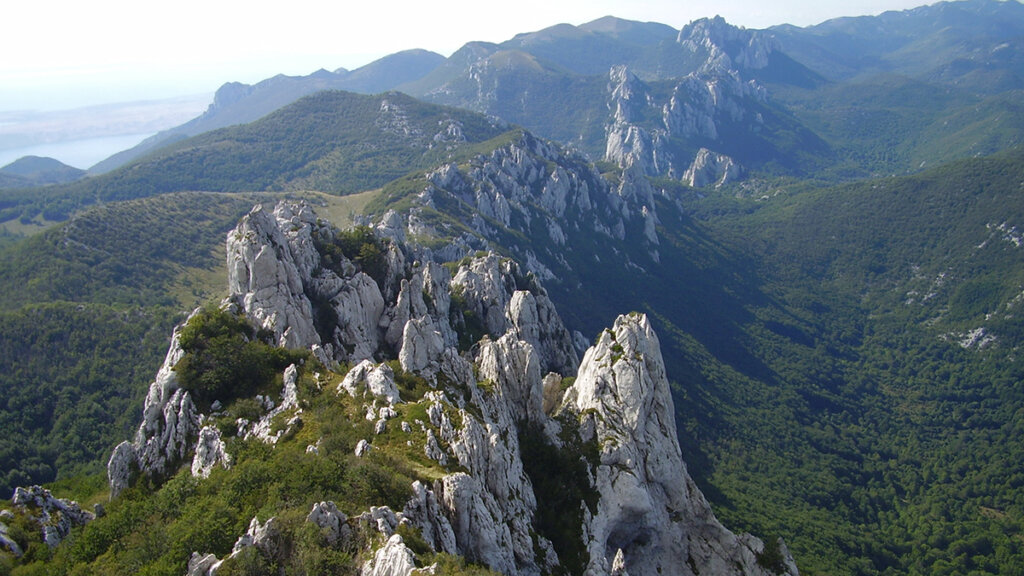
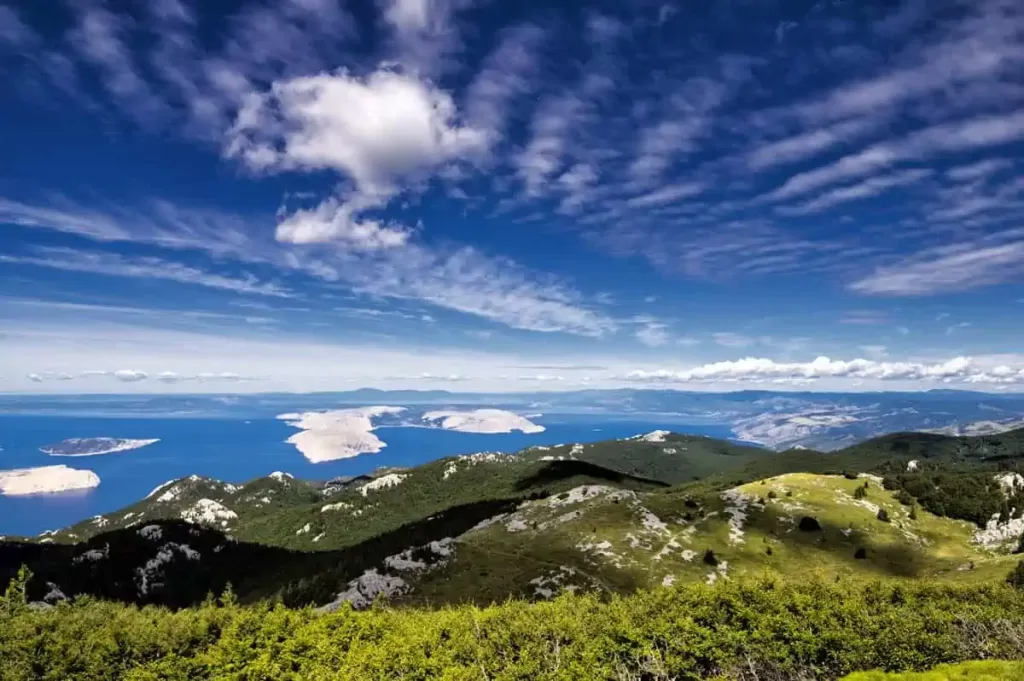
Sjeverni Velebit National Park is the wild, high part of Croatia’s longest mountain range. Rocky peaks rise above deep forests and look out over the Adriatic islands. This is not a busy sightseeing park but a quiet place for hiking, clean air and big horizons. If you like peaceful trails and simple mountain huts, Northern Velebit National Park is a perfect choice.
Use this article as your Sjeverni Velebit travel companion when planning your trip.
Explore This Guide
ToggleWhy visit Sjeverni Velebit National Park
Sjeverni Velebit sits in Lika-Senj County, between the coast and inland valleys. It protects the northern part of the Velebit range and forms the wild core of Velebit Nature Park.
You should visit if you want:
A cooler escape from the hot Adriatic coast in summer
Real mountain hiking without heavy crowds
Primeval beech forests and rich flora and fauna
A base for a longer Croatia hiking holiday
The park is also part of a UNESCO World Heritage listing of ancient beech forests. This underlines how special the ecosystems in Northern Velebit really are.
Main areas of Sjeverni Velebit
The park is not one compact valley. It stretches along a high ridge with several distinct areas that fit well into a one or two day visit. Most visitors explore two or three of these.
Zavižan and the Velebit Botanical Garden
The Zavižan area is the classic starting point for a Sjeverni Velebit day trip. You reach it from the Babić Siča entrance on a mountain road.
Here you find:
Zavižan mountain hut – a simple but legendary hut just below the ridge
Zavižan weather station – Croatia’s oldest high-mountain weather station
Velebit Botanical Garden (Velebitski botanički vrt) – a small alpine garden with short educational paths
From the hut you can climb Veliki Zavižan peak, stroll through the botanical garden, or follow parts of the famous Premužić Trail. In clear weather the views towards the islands are outstanding.
Premužić Trail
The Premužić Trail (Premužićeva staza) is the most famous Velebit hiking trail. It runs along the high ridge, with around 16 kilometres crossing Sjeverni Velebit National Park.
The trail was built in the 1930s with stone dry-wall techniques. It gently contours around cliffs and pinnacles, with many open views. Because the path avoids steep climbs, it is suitable for most reasonably fit walkers.
Many visitors choose a Premužić Trail day hike. The most popular section starts near Zavižan and heads south towards Alan. You walk through dwarf pine, rocky “cities” and grassy saddles. Every turn brings a new angle on the ridge or the sea.
Hajdučki i Rožanski kukovi
In the heart of the park lies the strict reserve of Hajdučki i Rožanski kukovi. This is the most rugged part of the mountain.
The landscape here looks almost unreal. Limestone towers, deep pits and sharp ridges form a true karst labyrinth. Within these slopes lie primeval beech forests that belong to the UNESCO beech forest network.
Access is limited and always on marked trails. It is not a place for casual off-trail wandering. Experienced hikers can reach it via longer routes from Zavižan, often passing the small Rossijevo shelter.
Štirovača valley and Alan hut
The southern part of Sjeverni Velebit National Park feels different. Instead of rocky peaks, you find a broad forested basin and gentle ridges.
Štirovača valley is a green depression with dense conifer forest and picnic spots
Alan mountain hut (Planinarski dom Alan) stands on a grassy saddle above the valley
From Alan you can join the Premužić Trail in both directions. You can also climb smaller peaks such as Alančić. This area is ideal if you like long but not too steep walks.
Veliki Lubenovac and old shepherd life
Veliki Lubenovac is a high karst field ringed by forest and rock. It was once an important summer pasture area.
You can still see remains of stone shepherd huts, walls and cisterns. Walking here gives a strong sense of traditional life on Velebit.
Hikes to Veliki Lubenovac usually start from the Premužić Trail or from nearby forest roads. The terrain is open and very scenic.
Kuća Velebita in Krasno
Krasno is the main village linked to Sjeverni Velebit. Park headquarters and the visitor centre, Kuća Velebita, stand here.
The visitor centre is modern and interactive. It explains the geology, wildlife and history of the mountain. It is a good stop on the way to the Babić Siča entrance or Štirovača, especially in bad weather.
Best hikes in Northern Velebit
There are many hiking trails in Sjeverni Velebit. Trails range from short family-friendly walks to full-day ridge hikes. Here are typical options for different fitness levels.
Easy walks near Zavižan
If you want a short walk with big views, stay around the Zavižan area.
Good options include:
Botanical Garden loop – a gentle path through alpine meadows and rock gardens
Viewpoint strolls around Zavižan mountain hut and weather station
These walks are ideal for families and anyone who wants a relaxed Sjeverni Velebit day trip.
Classic day hikes
For a full hiking day in Northern Velebit, consider:
Veliki Zavižan hike
Climb from the Zavižan area to the 1,676-metre summit. The path crosses forest, grass and rock, with a steeper final section. Views from the top stretch over the islands and far inland.
Premužić trail day hike
Start by Zavižan and follow the Premužić Trail south. Walk as far as time and fitness allow, then return the same way. You enjoy constant scenery without extreme elevation gain.
Štirovača hiking trails
From Štirovača valley you can follow marked forest paths and old roads. They are less dramatic than the ridge, but very peaceful.
Longer treks and traverses
Multi-day hikers can link Zavižan, Alan and Baške Oštarije. This creates a longer Velebit hiking trail with nights in mountain huts.
You can also include side trips to peaks like Mali Rajinac or to Veliki Lubenovac. These routes require good planning, solid gear and experience.
Safety tips for hiking in Sjeverni Velebit
Conditions in Sjeverni Velebit can change quickly. Always treat it as a serious mountain area.
Keep these tips in mind:
Check the Northern Velebit weather forecast before each hike
Wear proper hiking boots and layered clothing
Carry water, snacks and a map or GPS with offline maps
Start early in the day, especially in autumn
Do not leave marked trails, especially in Hajdučki i Rožanski kukovi
In winter and early spring, snow and ice can linger on shaded slopes. Unless you are an experienced winter hiker, choose another season.
Nature, wildlife and UNESCO forests
Sjeverni Velebit National Park protects a rare mix of habitats. Within a small area you move from dense beech forest to open grassland, then to bare rock.
Flora and fauna of Sjeverni Velebit
The flora includes many alpine and endemic species. The Velebit Botanical Garden highlights some of them, but you will also see them along the trails.
Wildlife in Northern Velebit is rich and shy. Brown bears, wolves and lynx all live here. You are unlikely to meet them, but it is good to know you are in true wilderness.
You may see chamois on rocky slopes, deer in forests and many birds of prey. In summer the meadows are full of insects and butterflies.
UNESCO beech forests and karst landscape
The primeval beech forests of Hajdučki i Rožanski kukovi belong to the UNESCO beech forest network. These are some of the best preserved mountain forests in Europe.
The park is also a fine example of a karst landscape. Caves, pits and narrow sinkholes cut through the limestone. Most are hidden and not open to casual visitors, but they shape the whole area.
This combination of forests and karst makes Sjeverni Velebit special among Croatia’s national parks.
When to visit and Northern Velebit weather
Northern Velebit has a true mountain climate. It is always cooler than the coast and often wetter. Sudden fog, wind and rapid drops in temperature are common, even in mid summer.
Main visiting season
The park is normally open to visitors from the beginning of May until the end of November, depending on snow cover. Snow can still block higher roads and trails in early May and again from late October.
Late spring (May–June) – fresh green forests, flowers and cool air
Summer (July–August) – more stable weather but afternoon storms are possible
Autumn (September–early November) – colourful forests and clear views, but shorter days and cooler nights
Always check Northern Velebit weather forecasts before driving up. Temperatures can drop quickly, even in August.
Winter in Sjeverni Velebit
In winter, deep snow covers the park. Roads to Babić Siča and Zavižan often close.
Winter visits are mainly for experienced mountaineers with special equipment.
How to get to Sjeverni Velebit National Park
Sjeverni Velebit sits between the coastal road and the A1 motorway. You can reach it from several directions.
Sjeverni Velebit from Senj and the coast
Senj is the main coastal gateway. From Senj you drive south along the Adriatic Highway, then turn inland near Sveti Juraj.
The road climbs steeply to the Oltari pass. From there you continue towards Krasno or towards the Babić Siča entrance.
This route gives dramatic views over the sea. It is a classic part of a sea and mountains holiday from Senj.
Sjeverni Velebit from Otočac and inland Lika
From the A1 motorway you exit at Otočac. A winding local road leads from Otočac through forests to Krasno.
This is the best approach if you are coming from Zagreb, Plitvice Lakes or inland Lika. It avoids the sometimes busy coastal road.
Public transport options
Public buses reach Senj and Otočac. From there you may find local buses or seasonal routes to Krasno.
However, services change and can be rare. For a flexible Sjeverni Velebit itinerary a car is strongly recommended.
Park entrances and roads
The main entrance for Zavižan and the botanical garden is Babić Siča. Here you buy your ticket and get information.
From Babić Siča, about seven to eight kilometres of non-asphalt mountain road climb to the Zavižan area. The road is narrow but manageable for normal cars in dry conditions.
Another road leads from Krasno to Štirovača and then, by gravel, to Alan. Driving is slower here, so leave extra time.
Always respect signs and gates. Many forest roads are closed to private traffic.
Sjeverni Velebit ticket prices and practical tips
Ticket prices for Sjeverni Velebit National Park change from time to time. There are different rates for adults, children and groups.
For the latest Sjeverni Velebit ticket prices, check official park information before your visit. Buying a ticket supports trail maintenance and nature protection.
Practical tips:
Bring cash or a card, but do not expect wide payment options
Carry enough water and snacks; there are no shops in the park
Mobile signal can be weak in some valleys
Start your hikes early, especially on hot or stormy days
Where to stay for Sjeverni Velebit
There are no classic hotels inside Northern Velebit National Park. Accommodation is in nearby villages and towns.
Mountain huts inside the park
For a true Sjeverni Velebit hiking holiday, you can stay in simple huts.
Zavižan mountain hut – dorm-style rooms, water and basic facilities
Alan mountain hut (Planinarski dom Alan) – similar standard, perfect for multi-day hikes
Huts are usually run by mountaineering clubs. Booking methods and opening dates vary, so plan ahead.
Krasno accommodation
Krasno is the closest village to the park. It works well as a base for one or two days.
You will find small guesthouses, private rooms and apartments. From Krasno you can easily reach Kuća Velebita, Babić Siča entrance and Štirovača.
Senj and Sveti Juraj on the coast
Senj is the main coastal base for Sjeverni Velebit. You can swim in the sea in the morning and hike in the mountains in the afternoon.
Senj offers hotels, apartments and campsites. Nearby Sveti Juraj is smaller and quieter, but even closer to the road up to the park.
Otočac and the Gacka Valley
Otočac lies inland, near the Gacka River. It is a good base if you are also visiting Plitvice Lakes.
From here you can drive up to Krasno and Sjeverni Velebit, then continue south or north on the motorway. The Gacka Valley adds fishing, cycling and gentle walks to your trip.
Jablanac and Karlobag
Jablanac and Karlobag sit south of Senj on the coast. From here you can reach the Alan side of the park.
These small coastal places are convenient if you combine Northern Velebit trekking with island trips to Pag or Rab. They also suit a longer Karlobag Velebit road trip.
When choosing where to stay for Sjeverni Velebit, decide if you prefer sea views, mountain villages or a mix of both.
Who will enjoy Sjeverni Velebit
Sjeverni Velebit is not a theme park. It is a quiet, serious mountain area.
You will enjoy it if you are:
A hiker who prefers wild ridges to crowded viewpoints
A nature lover who likes forests, flora and fauna
A photographer who wants clean air and long views
A family with older children used to mountain paths
If you want easy boardwalks and cafés, other Croatian parks may suit you more. If you want silence, this is your place.
Sample Sjeverni Velebit itinerary
One-day visit from the coast
Drive from Senj or Sveti Juraj to Babić Siča
Visit Kuća Velebita in Krasno on the way if time allows
Continue to Zavižan area and park
Walk the botanical garden loop and climb a nearby viewpoint
If you have energy, add a short section of the Premužić Trail
Return to the coast for a swim and dinner
Two-day hiking break
Day 1
Base in Krasno or Senj. Visit Zavižan, hike to Veliki Zavižan peak and explore the garden. Stay overnight in Zavižan hut or return to your base.
Day 2
Drive to Štirovača and then to Alan. Walk a there-and-back section of the Premužić Trail or climb Alančić. Enjoy ridge views, then descend to the coast or inland base.
This short Northern Velebit itinerary fits well into a longer Croatia road trip. You can combine it with islands, Plitvice Lakes or Paklenica.
FAQs
Is Sjeverni Velebit suitable for beginners?
Yes, if you choose short marked trails near Zavižan or Štirovača and watch the weather. Avoid long ridge hikes in bad conditions.
Do I need special equipment for Northern Velebit hiking?
You need solid hiking shoes, warm layers, rain protection and enough water. For longer or high-level routes, trekking poles and a map are very useful.
Can I visit Sjeverni Velebit as a day trip from the coast?
Yes. Many people stay in Senj, Sveti Juraj, Jablanac or Karlobag and drive up for the day. Allow plenty of time for the mountain roads.
Is Sjeverni Velebit good for families?
It can be, for active families with hiking experience. Choose shorter routes and keep children close, as cliffs and pits are never far away.
Are there restaurants in the park?
There are no classic restaurants inside the national park. Bring food with you and eat in villages such as Krasno, Senj or Otočac afterwards.
Can I camp in Sjeverni Velebit National Park?
Wild camping is generally not allowed. Use official accommodation in huts, villages or coastal campsites instead.
Plan your Sjeverni Velebit hiking holiday
If you want a wild corner of Croatia with few crowds, put Sjeverni Velebit National Park on your map. Choose a base in Krasno, Senj, Otočac or along the coast. Pick one or two key hikes, check the weather, and pack proper gear.
With a bit of planning you can enjoy quiet trails, UNESCO beech forests and huge views over the Adriatic. It is one of the best places in Croatia to feel sea and mountains in a single trip.
Disclosure: This page may contain affiliate links. This means that we get a small commission from any purchase you make, at no additional cost to you!