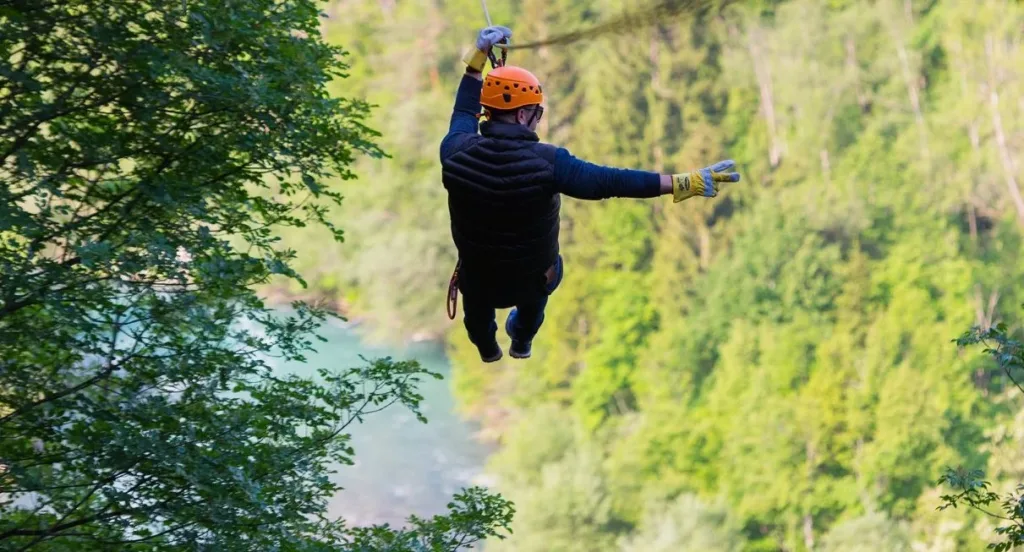
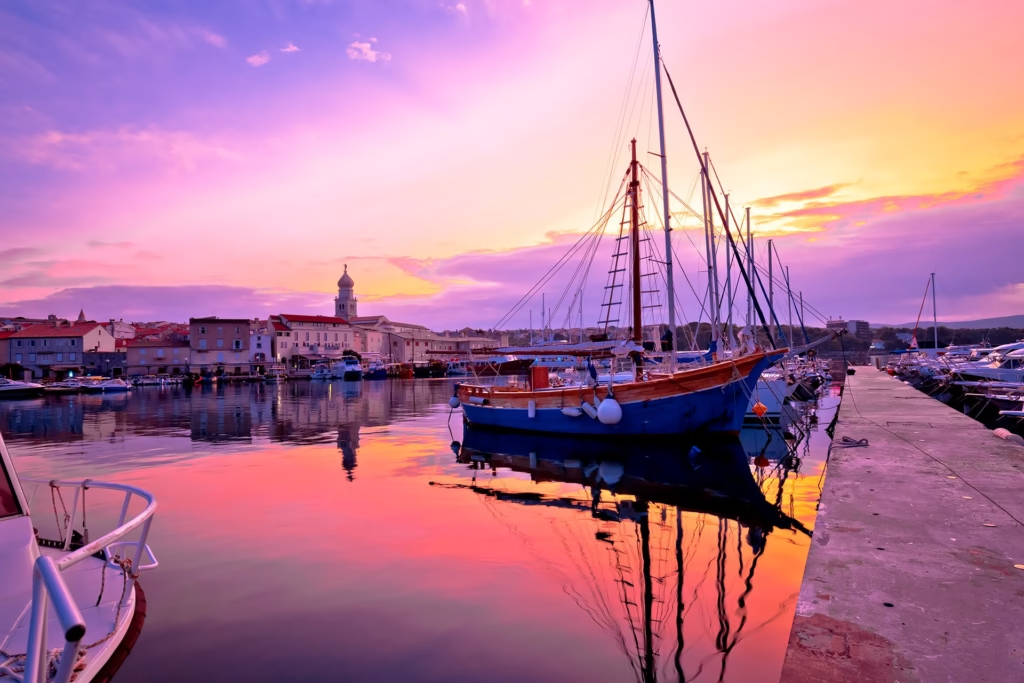
Istria is often known for beaches, summer towns, and seafood by the sea. That image is true, but it is incomplete.
In Croatian Istria, travelers can combine history, culture, old towns, Roman monuments, and inland villages in one relatively compact trip. You can visit a UNESCO-listed basilica in Poreč, walk through Roman streets in Pula, climb into hilltop towns like Motovun and Hum, and find small churches with remarkable frescoes in the inland villages.
That mix makes Istria a strong choice for a cultural road trip, a weekend break, or a longer base guide with day trips. It also works well for travelers who want more than one type of holiday. You can spend the morning in a medieval town and still end the day by the sea.
Explore This Guide
ToggleWhat UNESCO heritage is actually in Istria
In Istria, it helps to separate officially listed UNESCO heritage from the wider group of historic places that make the region such a rewarding cultural trip.
Many travelers search for Istria UNESCO sites and expect a long list. In reality, the most important point is to understand what is officially UNESCO and what is simply major heritage.
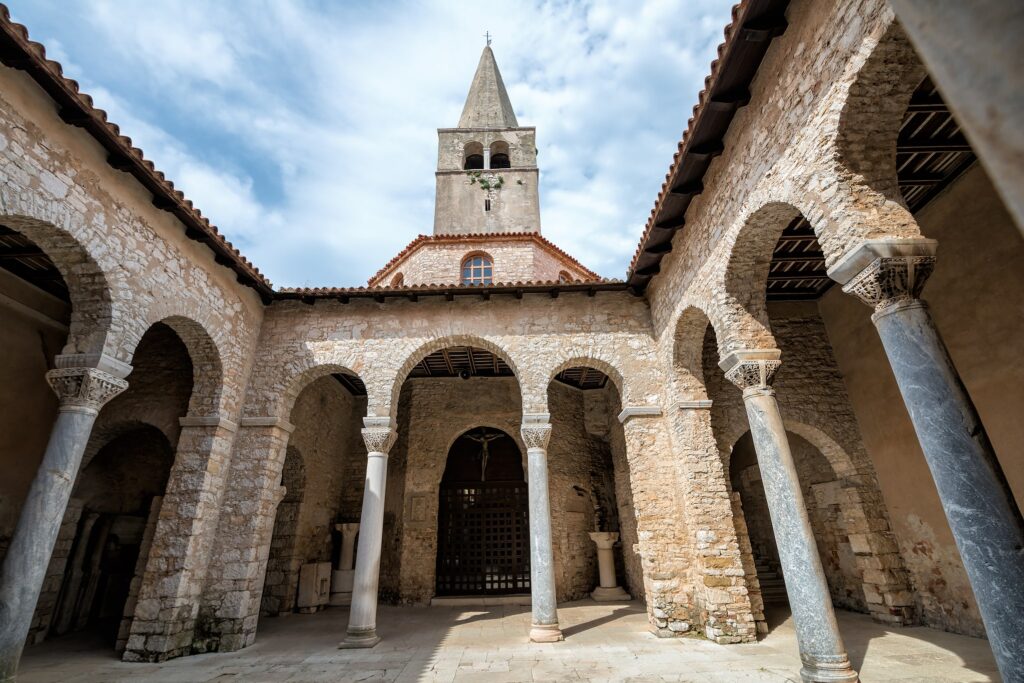
The main UNESCO World Heritage site in Croatian Istria is the Episcopal Complex of the Euphrasian Basilica in the Historic Centre of Poreč.
This is the clearest UNESCO highlight in the region. It is the cultural anchor for any heritage-focused trip to Istria.
There are also other UNESCO-related heritage layers in the region:
Two-part singing and playing in the Istrian scale is inscribed on UNESCO’s Representative List of the Intangible Cultural Heritage of Humanity
The Batana Ecomuseum project in Rovinj-Rovigno is included in UNESCO’s Register of Good Safeguarding Practices
The City of Motovun appears on Croatia’s UNESCO Tentative List, which is different from full UNESCO inscription.
That distinction is good to know because it shows what is officially listed, what is culturally important, and what is part of the wider heritage story.
Best heritage sites in Istria
Euphrasian Basilica in Poreč
If you only visit one UNESCO place in Istria, make it this one.
The Euphrasian Basilica is the cultural heart of Poreč and one of the most important early Christian monuments in Croatia. The complex stands inside the historic core, so it is easy to combine with a slow walk through the old streets, the waterfront, and lunch in town.
What makes it special is not only the church itself. The wider complex gives more depth to the visit, and the mosaics are the detail most travelers remember.
Poreč also works very well for first-time visitors because the heritage is easy to access. You do not need a full day of driving or complicated planning.
Rovinj old town and Batana heritage
Rovinj is usually discussed as one of the prettiest towns in Croatia. It is also one of the most atmospheric heritage stops in Istria.
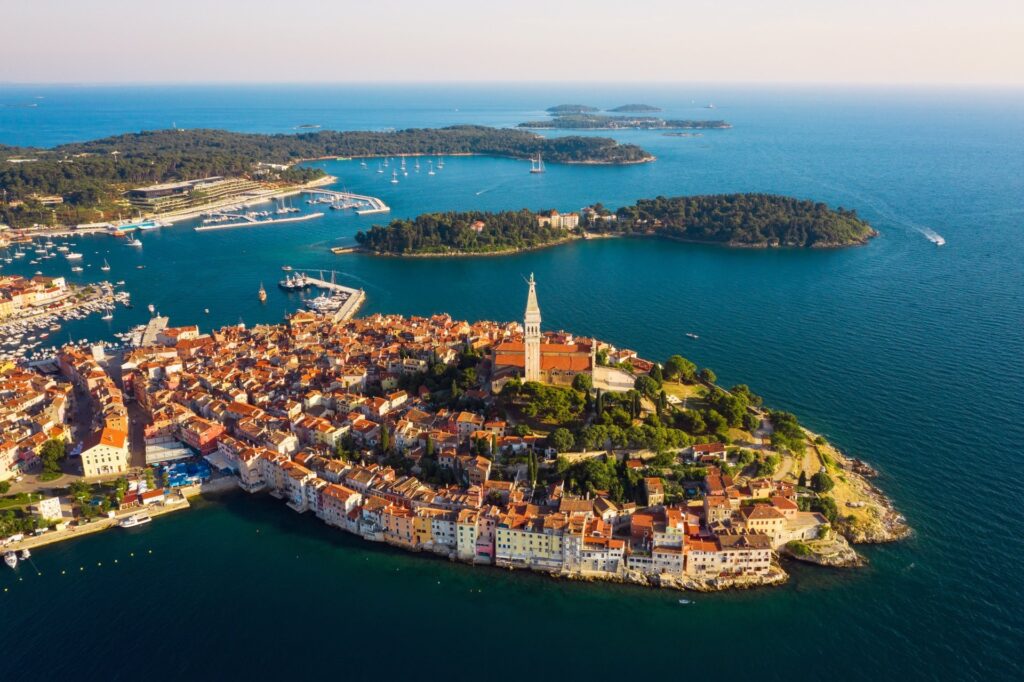
Its old town rises above the sea in a tight cluster of stone streets, steps, arches, and viewpoints. The visual reward is immediate, but the town also carries a strong story of local identity, maritime culture, and tradition.
The Batana Ecomuseum adds another layer. It focuses on the traditional wooden fishing boat called the batana and the living culture around it. That makes Rovinj a strong stop if you want heritage that still feels connected to local life.
Rovinj also works well in a heritage itinerary because it adds maritime history, church views, and a very walkable old core rather than only postcard scenery.
Climb up to the Church of St. Euphemia for one of the best views in Istria. The plateau above the old town is a simple but memorable stop.
Pula Arena and Roman Pula
Pula is often the biggest surprise for culture-focused travelers. Many come for a short stop and realize the city deserves more time.
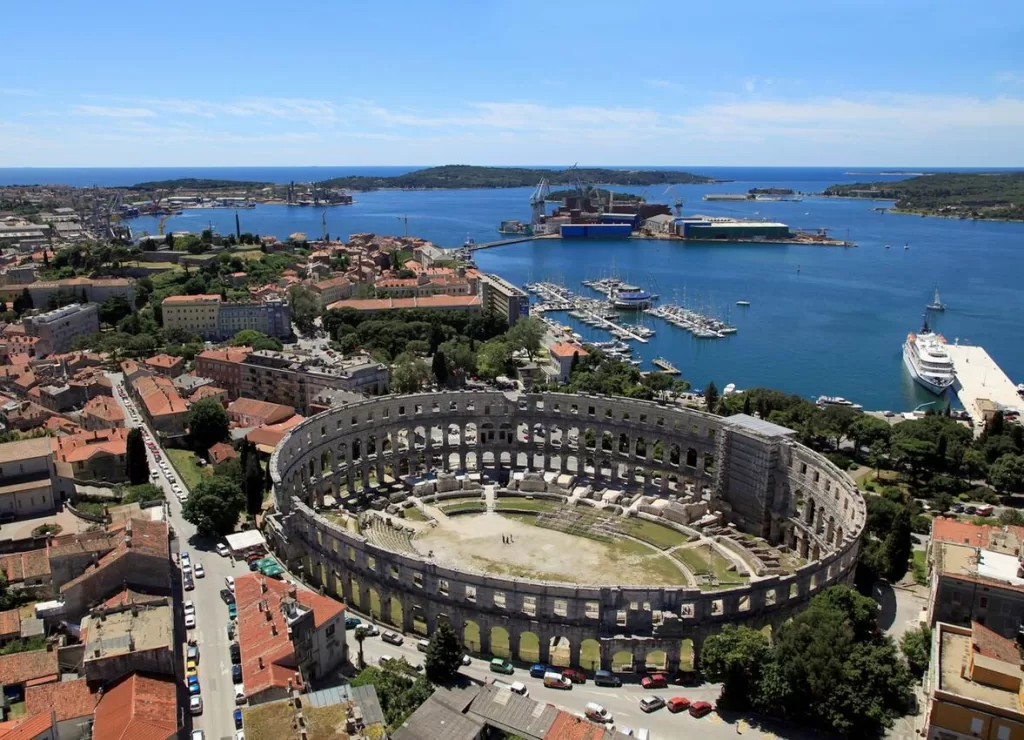
The Arena is not UNESCO, but it is still one of the essential historical sites in Istria. It is the landmark that gives Pula its strongest visual identity.
Do not stop with the amphitheatre alone. Pula works best when you treat it as a Roman walking city.
Look for:
the Temple of Augustus
the Arch of the Sergii
the old Roman street layout
smaller archaeological details around the center
This gives the city more depth than a quick photo stop.
Pazin Castle and central Istria
Pazin is a strong stop for readers who want a practical inland base with history.
The castle stands above the Pazin Pit, where the Pazinčica River disappears underground, and creates one of the most dramatic historical settings in Istria. The town is less polished than Rovinj or Poreč, but that is part of its appeal. It feels more central, more local, and more connected to inland routes.
Pazin works well if you want to combine:
castle heritage
museums
short drives to hill towns
truffle and wine areas
a less coastal, more practical base
Motovun
Motovun is one of the most famous hill towns in inland Istria. It sits high above the Mirna valley and is one of the best places to understand why inland Istria feels so different from the coast.
The approach is part of the experience. Roads wind through vineyards, olive groves, and truffle country before you reach the old walls.
Motovun is especially good for:
couples
heritage weekend breaks
inland food and wine trips
scenic short stays
The City of Motovun is on Croatia’s UNESCO Tentative List. That makes it UNESCO-related, but not officially inscribed.
Hum, Roč, and Glagolitic heritage
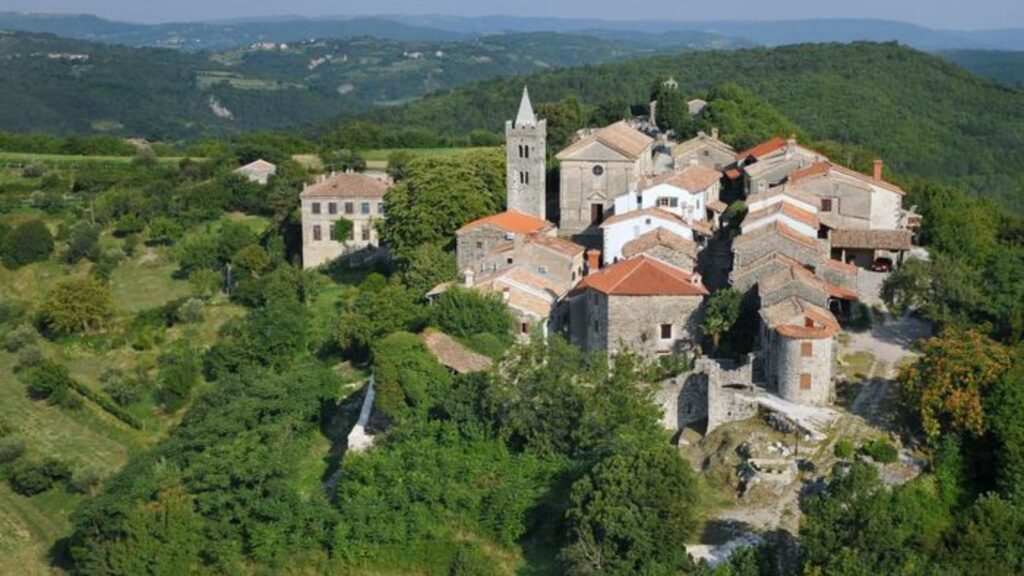
Hum is often promoted as the smallest town in the world. That label brings visitors, but the real value is the wider cultural route around it.
The road from Roč to Hum follows the Glagolitic Lane, often called Glagolitic Alley, a symbolic route dedicated to the Glagolitic script and literacy heritage. This turns a simple inland drive into a themed cultural experience.
Roč deserves time too. It helps the area feel less like a one-photo stop and more like a real heritage day trip.
This part of Istria is ideal for travelers who like:
lesser-known inland routes
village atmosphere
cultural stops without crowds
short scenic drives
Beram frescoes
Some of Istria’s most memorable heritage is hidden in small places.
Beram is one of the best examples. The Church of St. Mary of the Rocks, locally called St. Mary na Škriljinah, is known for its late Gothic frescoes, including the famous Dance of Death scene.
This is not a big-city monument. It is a quieter cultural stop that reveals a different side of Istria.
It works especially well in a route with Pazin, Gračišće, or inland villages nearby.
Dvigrad ruins
Dvigrad is one of the most atmospheric abandoned sites in Istria.
The ruined medieval town stands inland, not far from the Lim area, and feels very different from polished coastal centers. You come here for mood, silence, stone ruins, and a stronger sense of time passing.
It is a good stop for:
history lovers
photographers
couples doing scenic inland drives
travelers who want something less obvious than the coast
How to plan an Istria heritage itinerary
A strong Istria cultural itinerary does not need to be rushed. The region is compact, but the best trips leave room for food stops, viewpoints, and old-town wandering.
One-day heritage route
If you only have one day, keep it simple.
Choose one of these combinations:
Poreč and Rovinj for UNESCO, old town atmosphere, and coastal ease
Pula and Rovinj for Roman heritage and a romantic old town
Pazin, Motovun, and Hum for inland history and village culture
Two-day itinerary
A two-day trip gives much better balance.
Day 1:
Poreč
Rovinj
evening by the sea
Day 2:
Pazin
Motovun
Hum or Roč
This route combines UNESCO heritage, Roman and Venetian influences, inland scenery, and food culture.
Three-day cultural road trip
With three days, Istria starts to feel complete.
A useful structure is:
Day 1: Poreč and Rovinj
Day 2: Pula and nearby Roman heritage
Day 3: Pazin, Beram, Motovun, Hum, or Dvigrad
That allows one coastal day, one city-focused day, and one inland day.
Where to stay in Istria for culture and day trips
Where you stay matters as much as the sights themselves.
Coastal bases suit travelers who want walkable evenings and easy access to major towns, while inland bases work better for slower drives, hill towns, and food-focused routes.
Travelers rarely book a trip based only on monuments. They also want the right base.
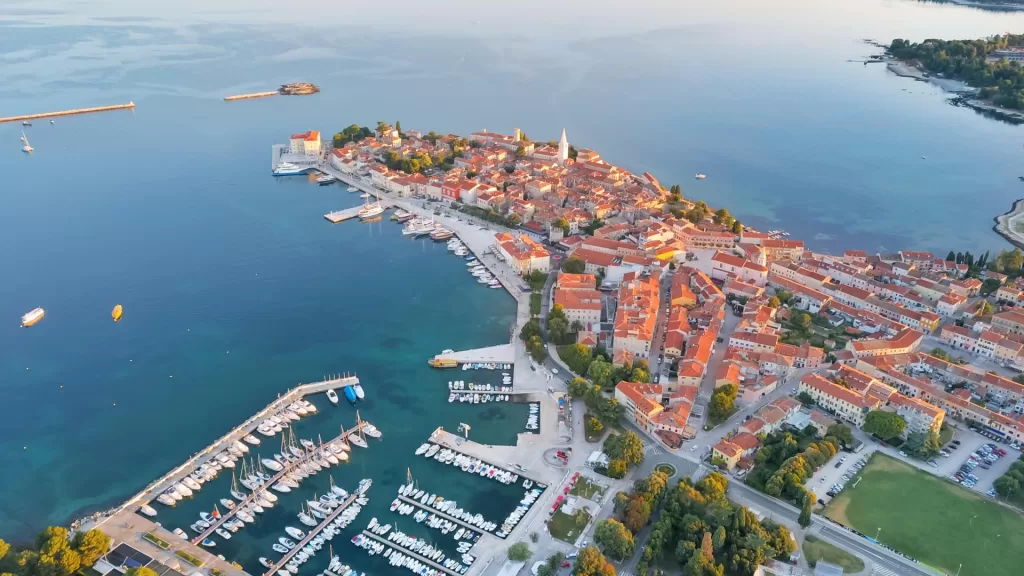
Stay in Poreč for the clearest UNESCO base
Poreč is the easiest choice for first-time visitors who want the strongest UNESCO connection.
You can walk through the historic core, visit the Euphrasian Basilica, enjoy the seafront, and still make day trips to Rovinj, Motovun, or inland villages.
This base suits:
first-timers
short breaks
travelers without complex planning
visitors who want culture with easy evenings
Check stays in Poreč if you want the clearest UNESCO base.
Stay in Rovinj for atmosphere and romantic heritage
Rovinj is ideal for travelers who want heritage in a more emotional, scenic setting.
It suits couples especially well. The old town feels intimate, photogenic, and memorable in the morning and evening light.
The trade-off is that Rovinj can feel less central for some inland routes than Pazin.
Check stays in Rovinj if atmosphere matters as much as sightseeing.
Stay in Pula for Roman history and easy access
Pula makes sense for travelers who want a city base, Roman landmarks, and easier arrival logistics.
It is a practical option for:
history lovers
travelers arriving by plane
visitors mixing culture and beaches
shorter trips with less driving
Check stays in Pula if Roman sites are your top priority.
Stay near Pazin, Motovun, or Livade for inland Istria
This is the best choice for readers who want hill towns, truffle country, village roads, and slower heritage travel.
It works especially well in spring and autumn, when inland Istria feels at its best.
Choose this area if you want:
central driving access
food and wine focus
less coastal crowd pressure
more local inland character
Istria traditions and local culture to experience
Istria heritage is not only about buildings.
The region becomes more interesting when you connect monuments with living culture. That is what makes the trip feel fuller and more memorable.
Look for these layers while planning:
two-part singing and playing in the Istrian scale
Glagolitic heritage in Roč and Hum
batana maritime tradition in Rovinj
truffle culture in inland Istria
local pasta such as fuži and pljukanci
Malvazija and Teran wine culture
olive oil tastings
konobas in historic inland villages
A heritage trip in Istria becomes stronger when you include food and local atmosphere. A basilica in the morning and a truffle lunch later is a better memory than a checklist of sights.
Practical tips for visiting Istria history places
A few simple choices make the trip easier.
Base yourself by region rather than trying to sleep somewhere different every night
Use coastal towns for walkability and evening atmosphere
Use inland bases for slower road trips and food stops
Start early for old towns with limited parking
Expect some churches and smaller heritage sites to have limited access
Keep plans flexible for small museums and seasonal opening patterns
Combine one major sight with one smaller village stop each day
Wear proper shoes for stone streets, steps, and uneven surfaces
If you are traveling in peak summer, inland stops can feel calmer than the busiest coastal centers.
When is the best time for an Istria heritage trip
Istria works in every season, but some months are better for this specific article angle.
Spring
Spring is one of the best times for a heritage trip.
The weather is usually pleasant for walking, inland drives look fresh and green, and towns feel easier to enjoy without peak-season pressure.
Summer
Summer is the easiest season if you want to combine culture with beaches.
The downside is heat and higher crowd levels, especially in popular coastal towns.
Autumn
Autumn is excellent for culture, food, wine, and truffle season.
This is one of the strongest times for inland Istria and short romantic stays.
Winter
Winter can suit travelers who prefer quiet old towns and slow travel. The main caution is reduced opening hours at some smaller sites.
Is Istria good for families, couples, or budget travelers
Yes, but the best areas differ.
For families
Choose Poreč or Pula if you want easier logistics, more services, and the option to mix sightseeing with simple beach breaks.
For couples
Choose Rovinj or Motovun for atmosphere, views, and slower evenings.
For budget travelers
Use a practical inland base or stay just outside the most famous historic centers. Day trips still work well by car.
Final thoughts on the best heritage sites in Istria
The best cultural trips in Istria are not about one monument. They are about contrast.
You can see UNESCO heritage in Poreč, Roman history in Pula, maritime tradition in Rovinj, frescoes in Beram, castle history in Pazin, and medieval hill towns in central Istria. That variety is what makes the region so rewarding.
If you want a trip that blends history, scenery, food, and easy day drives, Istria is one of the best regions in Croatia to choose.
For first-timers, Poreč is the easiest heritage base. For couples, Rovinj or Motovun usually feels most memorable. For travelers who want hill towns, truffles, and scenic inland routes, Pazin, Motovun, or Livade make the strongest starting points.
Check stays in inland Istria if you want hill towns, truffles, and a slower heritage route.
FAQs
What UNESCO sites are in Istria?
In Croatian Istria, the main UNESCO World Heritage site is the Episcopal Complex of the Euphrasian Basilica in Poreč. The region also has UNESCO-related intangible heritage and safeguarding heritage connections.
Is Pula Arena a UNESCO site?
No, Pula Arena is not a UNESCO World Heritage site. It is still one of the most important Roman landmarks in Istria.
Is the Euphrasian Basilica worth visiting?
Yes. It is the clearest UNESCO highlight in Istria and one of the region’s most important cultural attractions. It also sits inside the easy-to-walk old town of Poreč.
Is Motovun a UNESCO site?
Motovun is on Croatia’s UNESCO Tentative List. That means it is recognized as a candidate site, but it is not fully inscribed.
What are the best historical places in Istria Croatia?
The top places usually include Poreč, Pula, Rovinj, Motovun, Pazin, Hum, Beram, and Dvigrad. Together they cover Roman, medieval, religious, and living heritage.
What is the Istrian scale?
It is a distinctive style of two-part singing and playing connected with the Istrian peninsula. It is inscribed on UNESCO’s Representative List of the Intangible Cultural Heritage of Humanity.
Where should I stay in Istria for culture?
Poreč is the best UNESCO base, Rovinj is the best for atmosphere, Pula suits Roman history, and Pazin or Motovun work well for inland routes.
Can you visit inland Istria without a car?
It is possible to see some places without a car, but a car makes heritage travel much easier. Many of the best inland stops are more practical with flexible driving.
How many days do you need for an Istria heritage trip?
Two to three days is a good starting point. That gives enough time for one coastal day, one inland day, and a more relaxed pace.
When is the best time to visit Istria for history and culture?
Late spring and early autumn are usually the best periods. May, June, September, and October often give the best mix of weather, atmosphere, and driving conditions.
Are Istria heritage sites good for couples?
Yes. Rovinj and Motovun are especially good for couples because they combine scenery, old streets, viewpoints, and strong food-and-wine options.
Can you combine beaches and heritage in Istria?
Yes. That is one of Istria’s strongest advantages. Poreč, Rovinj, and Pula make it easy to mix old towns and sea time in the same trip.
Disclosure: This page may contain affiliate links. This means that we get a small commission from any purchase you make, at no additional cost to you!