Croatia uses a 230V electricity supply with a frequency of 50Hz. Standard wall sockets are Type F, also known as Schuko sockets, while two-pin Type C Europlugs fit these sockets as well.
Most travellers arriving from continental Europe can use their devices without an adapter. Visitors from the UK, Ireland, the US, Canada, Australia and several other countries will need a travel adapter. A voltage converter is only necessary when a device is not designed for 230V electricity.
Explore This Guide
ToggleCroatia Electricity: Quick Answer
- Standard voltage: 230V
- Frequency: 50Hz
- Standard socket: Type F or Schuko
- Compatible plug: Type C or Europlug
- Adapter needed: Depends on your home country
- Voltage converter needed: Only for devices that do not support 230V
Always check the electrical label on your charger or appliance before plugging it in.
What Plug Type Is Used in Croatia?
The standard socket in Croatia is Type F, which is widely used across continental Europe. It has two round openings and grounding contacts on the sides.
A Type C Europlug has two thinner round pins and fits into a Type F socket. This is why travel information often describes Croatia as using both Type C and Type F plugs.
The official Croatian tourism website identifies Type F as Croatia’s standard socket.
Plugs with flat pins, such as those used in the US, Canada and Australia, will not fit Croatian sockets without an adapter. UK and Irish three-pin plugs also require an adapter.
Do You Need a Travel Adapter for Croatia?
Whether you need an adapter depends on the shape of the plug used in your home country. An adapter changes the plug shape so that it fits the socket, but it does not change the voltage.
Travellers from Continental Europe
Most visitors from countries including Germany, Austria, Slovenia, France, Spain, the Netherlands and many other parts of continental Europe will not need an adapter.
Devices fitted with a Type C Europlug or a compatible Type F plug can normally be connected directly to Croatian sockets.
Travellers from the UK and Ireland
The UK and Ireland use Type G plugs with three rectangular pins. These do not fit Croatian sockets.
You will need a Type G to Type F European travel adapter. Because the UK, Ireland and Croatia use a similar voltage and frequency, a voltage converter is not normally required.
The same advice generally applies to visitors from Malta and Cyprus, where Type G plugs are also used.
Travellers from the US and Canada
The US and Canada primarily use Type A and Type B plugs with flat pins, so a European travel adapter is required.
There is also an important voltage difference. Electricity in the US and Canada is normally supplied at around 120V, while Croatia uses 230V.
Many phone, laptop and camera chargers support both systems. However, devices designed only for 110–120V must not be plugged directly into a Croatian socket, even when using an adapter.
Travellers from Australia and New Zealand
Australia and New Zealand use Type I plugs, which do not fit Croatian sockets. A European travel adapter is therefore required.
Both countries use a voltage similar to Croatia, so most devices only need a plug adapter rather than a voltage converter.
Travellers from Switzerland and Italy
Two-pin Type C Europlugs commonly used in Switzerland and Italy will normally work in Croatia.
However, some Swiss Type J and Italian Type L plugs may not fit a Type F socket. Check the exact plug on your device and bring a European adapter if necessary.
Travel Adapter or Voltage Converter?
A travel adapter and a voltage converter perform different functions.
- A travel adapter changes the shape of the plug.
- A voltage converter changes the electrical voltage supplied to the device.
A universal travel adapter does not automatically convert voltage. Check the product information carefully before using it with a device designed for a different voltage.
Croatia follows the European mains standard of approximately 230V at 50Hz.
How to Check Whether Your Device Will Work
Look for an electrical label on the charger, power supply or device. It is often printed in small letters near the input connection.
If the label says:
- INPUT: 100–240V, 50/60Hz: The device can normally be used in Croatia. You only need an adapter if the plug does not fit.
- INPUT: 220–240V, 50Hz: The device is compatible with Croatian voltage. An adapter may still be needed for the plug.
- INPUT: 110–120V, 60Hz: Do not plug it directly into a Croatian socket. Use a suitable manufacturer-approved converter or leave the device at home.
A converter must also be rated for the power consumption of the appliance. A small converter intended for electronics may not safely support a high-power hairdryer or styling tool.
Charging Phones, Laptops and Cameras
Most modern phone, tablet, laptop, camera and smartwatch chargers are dual-voltage and support an input range of 100–240V.
This means that an iPhone, Android phone, laptop or camera can usually be charged safely in Croatia. Travellers whose plugs do not fit Croatian sockets will only need a suitable adapter.
Do not assume that every hotel or apartment will provide USB sockets. Bring your regular wall charger and consider using a reliable multi-port USB charger if you need to charge several low-power devices.
Hairdryers and Other High-Power Appliances
Hairdryers, hair straighteners, curling irons, electric kettles and other heating appliances use considerably more power than phone or laptop chargers.
Some travel appliances are dual-voltage, but many products sold in the US and Canada are designed only for 110–120V. Using one of these appliances with only a plug adapter can damage the device and create a safety risk.
Check the voltage label before travelling. If the appliance is not compatible with 230V, it is often easier and safer to:
- use a hairdryer supplied by your hotel or apartment;
- bring a dual-voltage travel appliance; or
- buy a suitable appliance after arriving in Europe.
High-power voltage converters can be heavy and must be rated for the wattage of the appliance.
Where to Buy a Travel Adapter in Croatia
It is best to buy the correct adapter before travelling, especially if you will be staying on an island or in a small coastal village.
Adapters may also be available from:
- airport shops;
- electronics stores;
- larger supermarkets;
- travel accessory shops;
- some hotel reception desks.
Selection may be limited outside larger towns, and hotels are not guaranteed to have an adapter available. Pack one in advance if you know your plug will not fit.
Electricity Safety Tips
Use your devices carefully, particularly when combining adapters, chargers and extension leads.
- Check the voltage and frequency printed on every device.
- Use a reliable adapter suitable for Type F European sockets.
- Check the adapter’s maximum power rating.
- Do not connect several high-power appliances to one adapter.
- Avoid stacking multiple adapters or extension leads.
- Keep chargers and electrical devices away from water.
- Do not use damaged plugs, loose sockets or exposed cables.
- Ask your host or hotel staff if a socket appears damaged or unusually hot.
- Use only designated electrical connections at campsites, marinas and outdoor facilities.
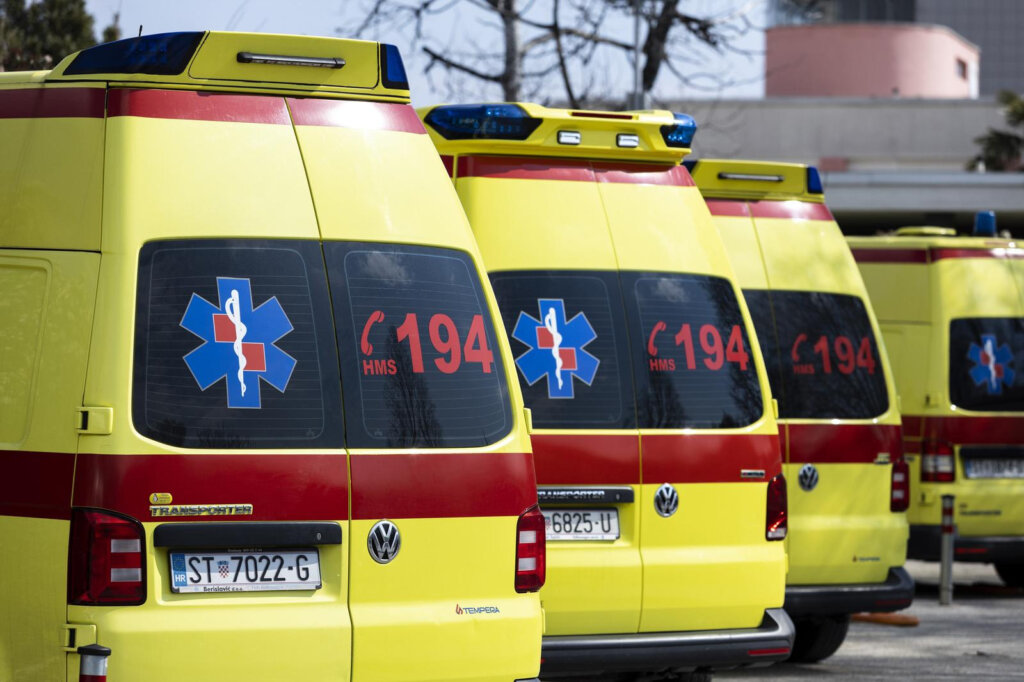
If you smell burning, see sparks or suspect an electrical fire, disconnect the power only if it is safe to do so and contact the property owner. Call Croatia’s 112 emergency number when there is an immediate danger to people or property.
What to Do During a Power Outage
If the electricity stops working only in your room or apartment, contact your host or hotel reception first. The problem may be caused by a tripped circuit breaker or an issue limited to the property.
For a wider local outage, information about planned interruptions may be available on the official HEP ODS power outage page. The page is in Croatian and requires users to select the relevant distribution area.
Short power interruptions do not normally require emergency assistance. Call 112 only when the outage is connected to a fire, electrical injury or another immediate safety risk.
Frequently Asked Questions
What plug adapter do I need for Croatia?
Choose an adapter compatible with European Type F sockets. It should have two round pins on the side that connects to the Croatian socket.
Does Croatia use the same plugs as the rest of Europe?
Croatia uses the same Type F sockets found across much of continental Europe. However, not every European country uses the same plug. Visitors from the UK, Ireland, Malta, Cyprus and some travellers from Switzerland or Italy may still need an adapter.
Can I charge my phone in Croatia?
Most modern phone chargers support 100–240V and can be used safely in Croatia. Check the charger label. If the plug does not fit a Type F socket, you will need an adapter.
Do UK travellers need an adapter in Croatia?
Yes. UK Type G plugs do not fit Croatian Type F sockets. UK devices usually do not need a voltage converter because both countries use a similar voltage.
Do US travellers need a voltage converter in Croatia?
It depends on the device. Chargers marked 100–240V normally need only a plug adapter. Devices marked only 110V or 120V require an appropriate voltage converter and should never be plugged directly into a Croatian socket.
Will my hairdryer work in Croatia?
A hairdryer marked 220–240V or 100–240V should work. A model designed only for 110–120V should not be used without a properly rated converter. Using the hairdryer provided by your accommodation is often the safer and easier option.
Do Croatian hotels provide travel adapters?
Some hotels may lend adapters to guests, but this service is not guaranteed. Bring your own adapter if your plugs are not compatible with Type F sockets.
Continue Planning Your Croatia Trip
Electricity is only one part of preparing for your holiday. Find out how to use mobile data, Wi-Fi and eSIM services in our guide to staying connected in Croatia.
For transport, accommodation and other essential information, continue with the complete Croatia trip-planning guide or review the most important emergency services in Croatia.